Romanzero
1851
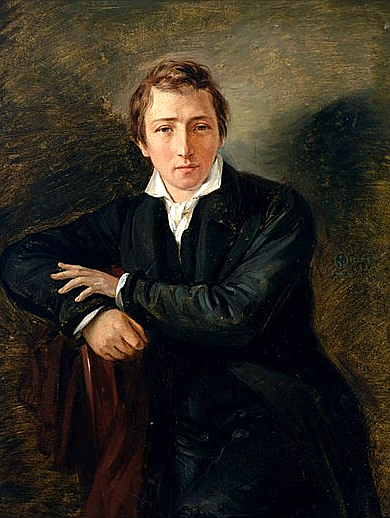
Heinrich Heine's final collection, published in 1851 when the poet lay dying in his Paris 'mattress grave,' contains some of the most celebrated verses in the German language. Romanzero moves from the legendary Rhine (the siren Loreley, her hair unbound, singing her fatal song) to the banquet of Belshazzar, where writing appears on the wall and the king learns his empire will be weighed and found wanting. There are ballads of tragic kings and melancholy elephants, lovers and thieves, all rendered in Heine's distinctive voice: tender and savage, ironic and heartbroken. This is poetry written by a man who knew he was losing his mind to syphilis, who had already lost his health, his homeland, and the woman he loved yet could not marry. Yet the collection is not merely elegiac. It crackles with wit, skewers the petty and powerful alike, and celebrates beauty even as it acknowledges mortality. Few poets have managed to be so funny and so sad in the same breath. Romanzero is Heine's testament: the work he considered his finest poetic achievement, and the book the Nazis burned first.
Editions
X-Ray
“Glockenklang erfüllt die Luft, Und der Pöbel Vivat! ruft.””
— Heinrich Heine
Link to this book
Add a free, dofollow link to Lex on your blog, forum, syllabus, or reading list.

<a href="https://lex-books.com/book/romanzero-6d787c01-93ba-43ea-81eb-01026452efda"><img src="https://lex-books.com/badges/read-on-lex.svg" alt="Read Romanzero by Heinrich Heine free on Lex" width="160" height="40"></a>[](https://lex-books.com/book/romanzero-6d787c01-93ba-43ea-81eb-01026452efda)[url=https://lex-books.com/book/romanzero-6d787c01-93ba-43ea-81eb-01026452efda][img]https://lex-books.com/badges/read-on-lex.svg[/img][/url]Read Romanzero by Heinrich Heine free on Lex: https://lex-books.com/book/romanzero-6d787c01-93ba-43ea-81eb-01026452efdaCite this book
Reading this edition for a paper or guide? Copy a citation.
Heine, Heinrich. Romanzero. Lex, lex-books.com/book/romanzero-6d787c01-93ba-43ea-81eb-01026452efda.Heine, H. (1851). Romanzero. Lex. https://lex-books.com/book/romanzero-6d787c01-93ba-43ea-81eb-01026452efdaHeine, Heinrich. Romanzero. Lex. https://lex-books.com/book/romanzero-6d787c01-93ba-43ea-81eb-01026452efda.