Psychotherapy
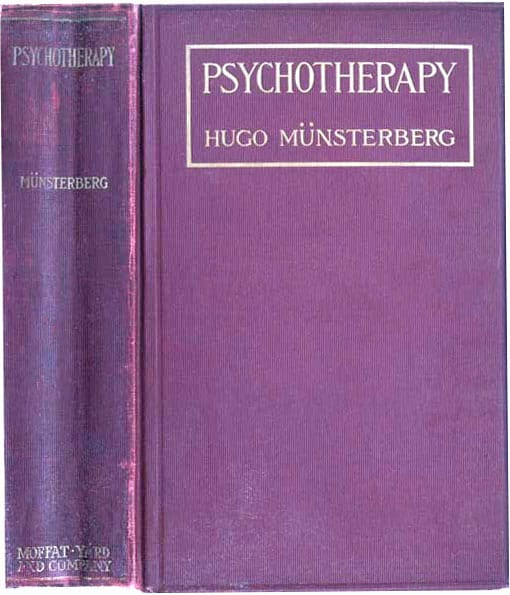
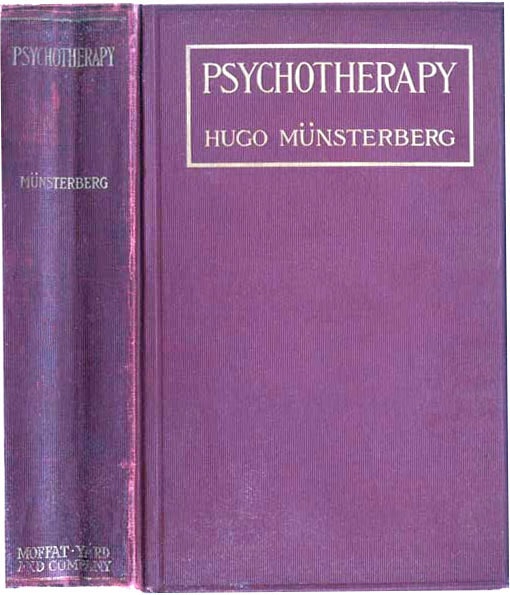
In 1909, Harvard psychologist Hugo Münsterberg undertook an ambitious task: to persuade the medical establishment that the human mind deserved scientific rigor in its treatment. Psychotherapy was then a fledgling concept, tangled in mysticism and moral philosophy, and Münsterberg wanted to liberate it. He argues for what he calls the "dual nature" of psychological influence, distinguishing between the purposive (our goals and intentions) and the causal (the scientific forces shaping us). A minister may offer comfort, but a physician must understand the psychological mechanisms underlying illness. This book is Münsterberg's passionate case for incorporating psychology into medical education, for treating the mind with the same empirical seriousness as the body. It remains a fascinating window into the birth of modern psychotherapy, capturing both the optimism and the resistance that greeted psychology's push into medicine.
Editions

X-Ray
“Treatment of diseases by influence on the mind is as old as human history, but it has attained at various times very different degrees of importance.””
— Hugo Münsterberg
“attained at various times very different degrees of importance.””
— Hugo Münsterberg
Link to this book
Add a free, dofollow link to Lex on your blog, forum, syllabus, or reading list.

<a href="https://lex-books.com/book/psychotherapy-a1bde8d6-cdd4-490a-8cc5-a5495c295918"><img src="https://lex-books.com/badges/read-on-lex.svg" alt="Read Psychotherapy by Hugo Münsterberg free on Lex" width="160" height="40"></a>[](https://lex-books.com/book/psychotherapy-a1bde8d6-cdd4-490a-8cc5-a5495c295918)[url=https://lex-books.com/book/psychotherapy-a1bde8d6-cdd4-490a-8cc5-a5495c295918][img]https://lex-books.com/badges/read-on-lex.svg[/img][/url]Read Psychotherapy by Hugo Münsterberg free on Lex: https://lex-books.com/book/psychotherapy-a1bde8d6-cdd4-490a-8cc5-a5495c295918Cite this book
Reading this edition for a paper or guide? Copy a citation.
Münsterberg, Hugo. Psychotherapy. Lex, lex-books.com/book/psychotherapy-a1bde8d6-cdd4-490a-8cc5-a5495c295918.Münsterberg, H. (n.d.). Psychotherapy. Lex. https://lex-books.com/book/psychotherapy-a1bde8d6-cdd4-490a-8cc5-a5495c295918Münsterberg, Hugo. Psychotherapy. Lex. https://lex-books.com/book/psychotherapy-a1bde8d6-cdd4-490a-8cc5-a5495c295918.