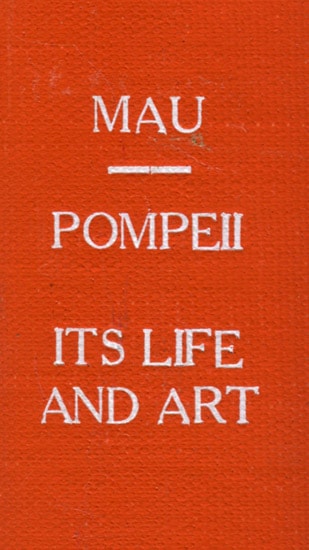
Pompeii, Its Life and Art
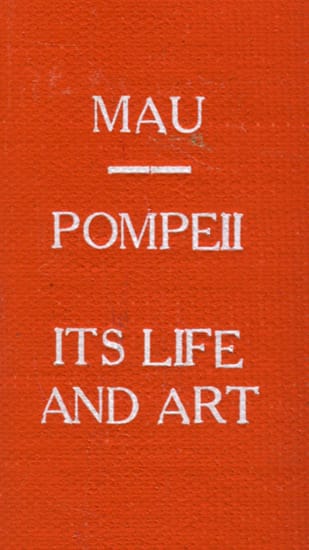
Pompeii, Its Life and Art
Translated by Francis W. (Francis Willey) Kelsey
August Mau spent decades walking the buried streets of Pompeii, and this book is the result of that intimate knowledge. Written in 1899 by a German archaeologist who devoted his career to the site, it reconstructs a city frozen in ash not merely as an archaeological curiosity, but as a living community where people built homes, decorated walls with vivid paintings, gathered in baths and theaters, and navigated the ordinary dramas of Roman life. Mau sets the stage with the city's geography and prosperity, then moves through its urban development, the lives of its inhabitants, and the artistic treasures that survived the eruption. What distinguishes this work from mere guidebook prose is Mau's personal engagement with the ruins. He writes not from dusty archives but from direct observation, breathing life into fragmentary walls and faded frescoes. Though nearly 130 years old, the book remains essential for anyone who wants to understand Pompeii not as a tourist attraction or archaeological showcase, but as a place where humans once woke, argued, loved, and built something worth preserving.
Editions
X-Ray
German archaeologist and author who spent 25 years studying Pompeii. He holds a unique place among scholars of Pompeian antiquities and made numerous contributions to the literature.
University of Michigan professor who translated Mau's work into English. He made modifications and additions to make the work more suitable for English readers.
Director of Pompeii excavations from 1860-1875 who revolutionized archaeological methods. He introduced systematic excavation and the current administrative system for preserving discoveries.
Wealthy Pompeian priestess who built a large exchange building for fullers. She was daughter of Lucius Eumachius and mother of Marcus Numistrius Fronto.
About Pompeii, Its Life and Art
Chapter Summaries
- I
- Describes Pompeii's geographical location on a lava stream from Vesuvius, its role as a seaport for the Sarno plain, and the natural beauty of its setting. The chapter establishes the physical context that made Pompeii an ideal location for a city.
- II
- Traces Pompeii's history from its Oscan origins through Samnite conquest to Roman colonization under Sulla. Details the city's government, economy, and population, including evidence of Jewish and possibly Christian inhabitants.
- III
- Recounts the eruption of Vesuvius on August 24-26, 79 AD, based primarily on Pliny the Younger's eyewitness accounts. Describes how pumice stone and volcanic ash buried the city and killed approximately 2,000 inhabitants.
Key Themes
- Archaeological Methodology
- Mau emphasizes the importance of systematic excavation and scientific analysis. The work demonstrates how careful study of building materials, construction techniques, and architectural periods can reveal the historical development of an ancient city.
- Roman Urban Life
- The book reveals the complexity of daily life in a Roman provincial city, from government administration and religious practices to commerce and entertainment. It shows how public and private spaces were organized to serve the community's needs.
- Cultural Transformation
- Pompeii's evolution from an Oscan settlement to a Greek-influenced city to a Roman colony illustrates the cultural changes that swept through Italy. Each period left its architectural and artistic mark on the city.
Characters
- August Mau(major)
- German archaeologist and author who spent 25 years studying Pompeii. He holds a unique place among scholars of Pompeian antiquities and made numerous contributions to the literature.
- Francis W. Kelsey(major)
- University of Michigan professor who translated Mau's work into English. He made modifications and additions to make the work more suitable for English readers.
- Giuseppe Fiorelli(major)
- Director of Pompeii excavations from 1860-1875 who revolutionized archaeological methods. He introduced systematic excavation and the current administrative system for preserving discoveries.
- Eumachia(major)
- Wealthy Pompeian priestess who built a large exchange building for fullers. She was daughter of Lucius Eumachius and mother of Marcus Numistrius Fronto.
- Marcus Holconius Rufus(major)
- Prominent Pompeian magistrate who served as duumvir multiple times. He and Marcus Holconius Celer rebuilt parts of the Large Theatre during Augustus's reign.
- Gaius Quinctius Valgus(major)
- Wealthy Roman colonist and duumvir who built both the Small Theatre and Amphitheatre. He acquired vast wealth during Sulla's reign of terror.
Link to this book
Add a free, dofollow link to Lex on your blog, forum, syllabus, or reading list.

<a href="https://lex-books.com/book/pompeii-its-life-and-art-3854e4f1-e959-4f68-b014-1862443c3843"><img src="https://lex-books.com/badges/read-on-lex.svg" alt="Read Pompeii, Its Life and Art by August Mau free on Lex" width="160" height="40"></a>[](https://lex-books.com/book/pompeii-its-life-and-art-3854e4f1-e959-4f68-b014-1862443c3843)[url=https://lex-books.com/book/pompeii-its-life-and-art-3854e4f1-e959-4f68-b014-1862443c3843][img]https://lex-books.com/badges/read-on-lex.svg[/img][/url]Read Pompeii, Its Life and Art by August Mau free on Lex: https://lex-books.com/book/pompeii-its-life-and-art-3854e4f1-e959-4f68-b014-1862443c3843Cite this book
Reading this edition for a paper or guide? Copy a citation.
Mau, August. Pompeii, Its Life and Art. Lex, lex-books.com/book/pompeii-its-life-and-art-3854e4f1-e959-4f68-b014-1862443c3843.Mau, A. (n.d.). Pompeii, Its Life and Art. Lex. https://lex-books.com/book/pompeii-its-life-and-art-3854e4f1-e959-4f68-b014-1862443c3843Mau, August. Pompeii, Its Life and Art. Lex. https://lex-books.com/book/pompeii-its-life-and-art-3854e4f1-e959-4f68-b014-1862443c3843.