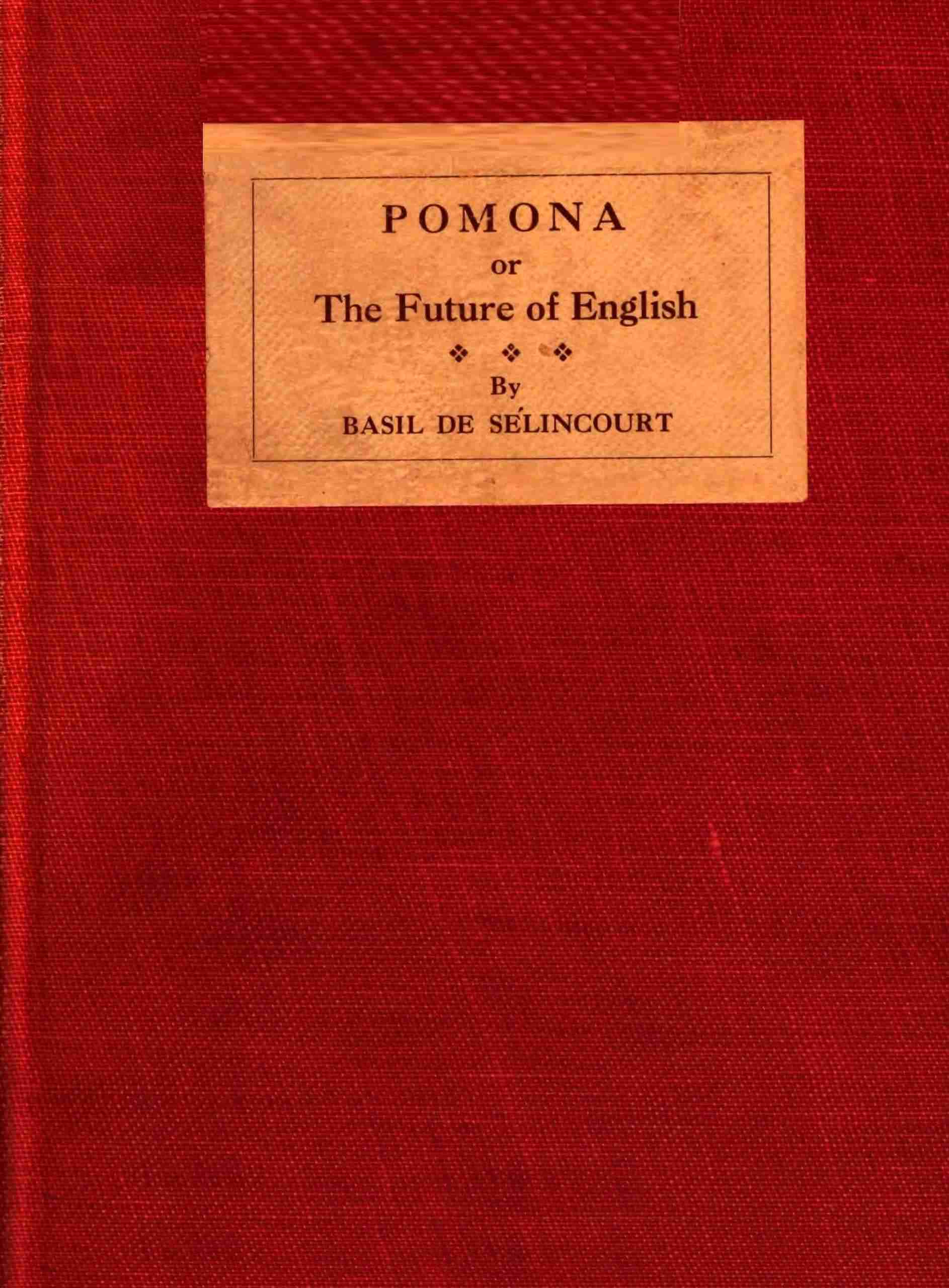
Pomona; Or, The Future of English
1928
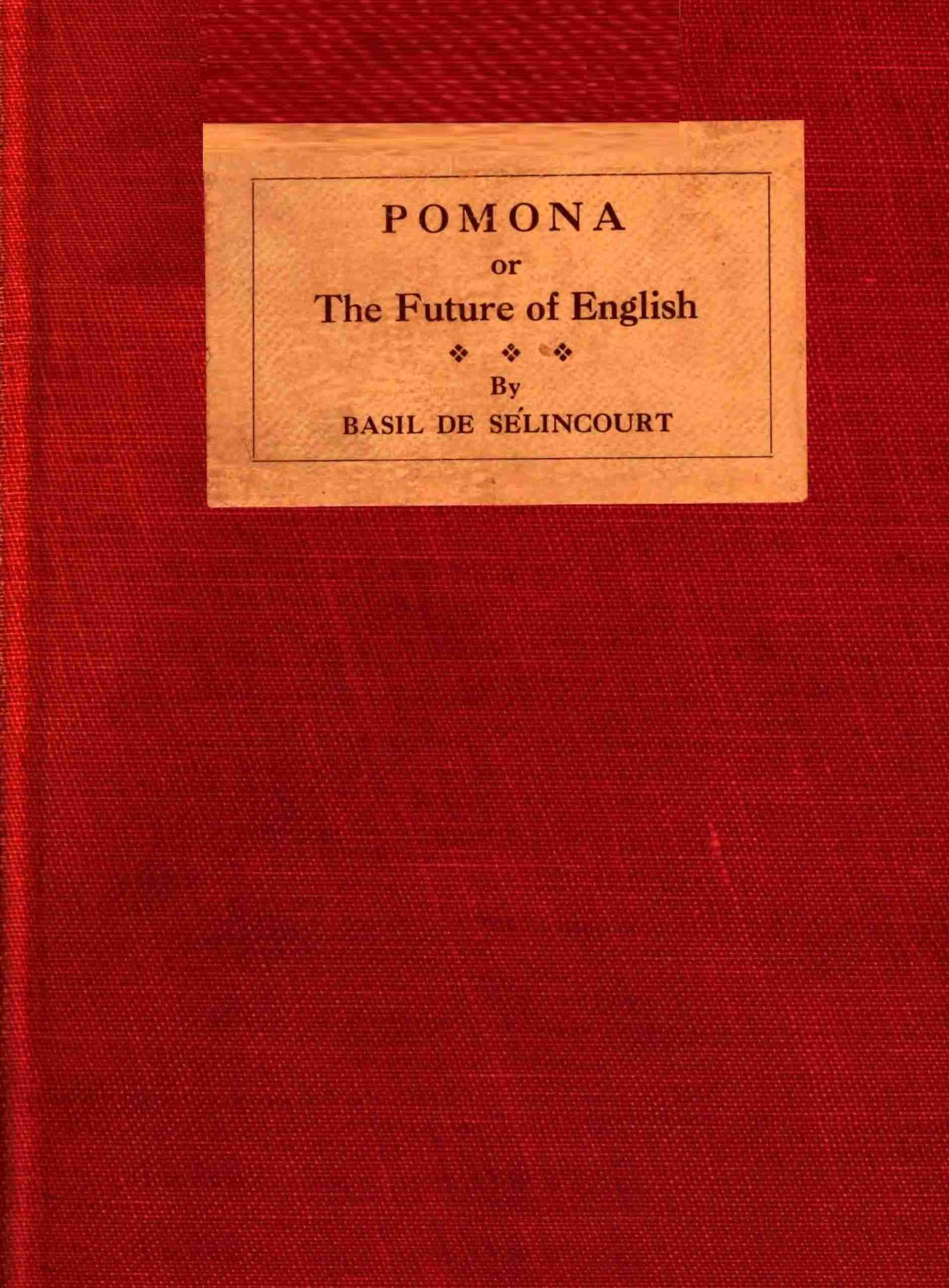
In 1928, Basil De Selincourt turned his gaze forward and asked a simple, unsettling question: what becomes of English? Written before radio reshaped speech, before cinema globalized accent, before the internet invented an entirely new dialect, this slender volume reads now like a time capsule from a more innocent age of prophecy. De Selincourt examines language as a living thing, one that feeds on tradition while being starved by modernity. He traces how English absorbs, adapts, and occasionally devours its own history, arguing that the language's remarkable elasticity might be its greatest strength. His prose carries the gentle melancholy of a scholar watching his subject mutate beyond recognition, yet he refuses despair. The book sparkles with prescient observations alongside charming blind spots, offering a window into linguistic anxieties that remain remarkably current. It is a book for anyone who has ever wondered whether the language we speak today will still be recognizable to our grandchildren, and whether that recognition matters at all.
Editions
X-Ray
“Nature comprehends the visible and invisible Creatures of the Whole universe. What we call Nature especially, is the universal fire or Anima Mundi, filling the whole system of the Universe, and therefore is a Universal Agent, omnipresent, and endowed with an unerring instinct, and manifests itself in fire and Light. It is the First creature of Divine Omnipotence.””
— Basil De Selincourt
Link to this book
Add a free, dofollow link to Lex on your blog, forum, syllabus, or reading list.

<a href="https://lex-books.com/book/pomona-or-the-future-of-english-49d24dbf-b015-4bc8-9bcf-4ecef1d3911a"><img src="https://lex-books.com/badges/read-on-lex.svg" alt="Read Pomona; Or, The Future of English by Basil De Selincourt free on Lex" width="160" height="40"></a>[](https://lex-books.com/book/pomona-or-the-future-of-english-49d24dbf-b015-4bc8-9bcf-4ecef1d3911a)[url=https://lex-books.com/book/pomona-or-the-future-of-english-49d24dbf-b015-4bc8-9bcf-4ecef1d3911a][img]https://lex-books.com/badges/read-on-lex.svg[/img][/url]Read Pomona; Or, The Future of English by Basil De Selincourt free on Lex: https://lex-books.com/book/pomona-or-the-future-of-english-49d24dbf-b015-4bc8-9bcf-4ecef1d3911aCite this book
Reading this edition for a paper or guide? Copy a citation.
Selincourt, Basil De. Pomona; Or, The Future of English. Lex, lex-books.com/book/pomona-or-the-future-of-english-49d24dbf-b015-4bc8-9bcf-4ecef1d3911a.Selincourt, B. D. (1928). Pomona; Or, The Future of English. Lex. https://lex-books.com/book/pomona-or-the-future-of-english-49d24dbf-b015-4bc8-9bcf-4ecef1d3911aSelincourt, Basil De. Pomona; Or, The Future of English. Lex. https://lex-books.com/book/pomona-or-the-future-of-english-49d24dbf-b015-4bc8-9bcf-4ecef1d3911a.