Poetry
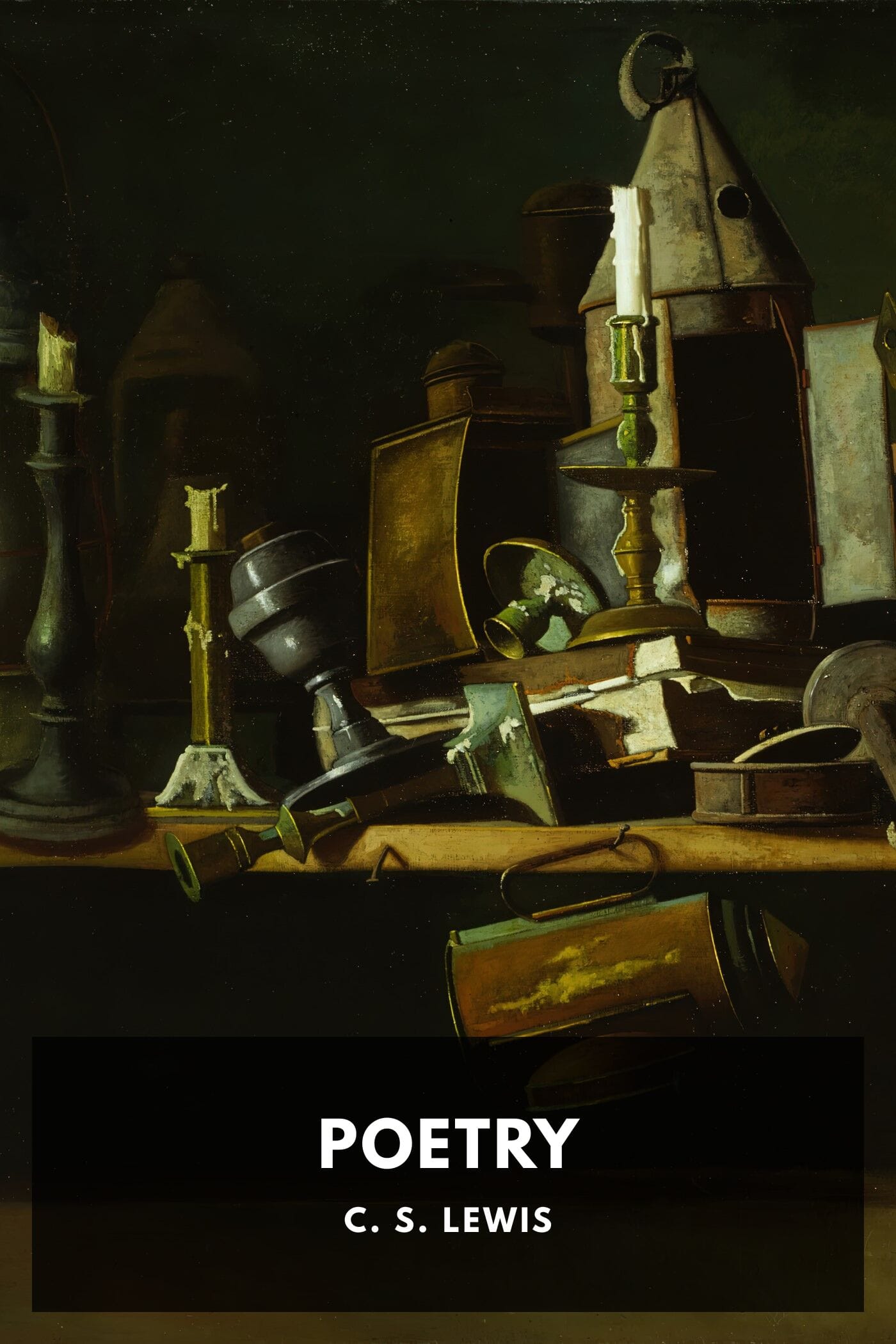
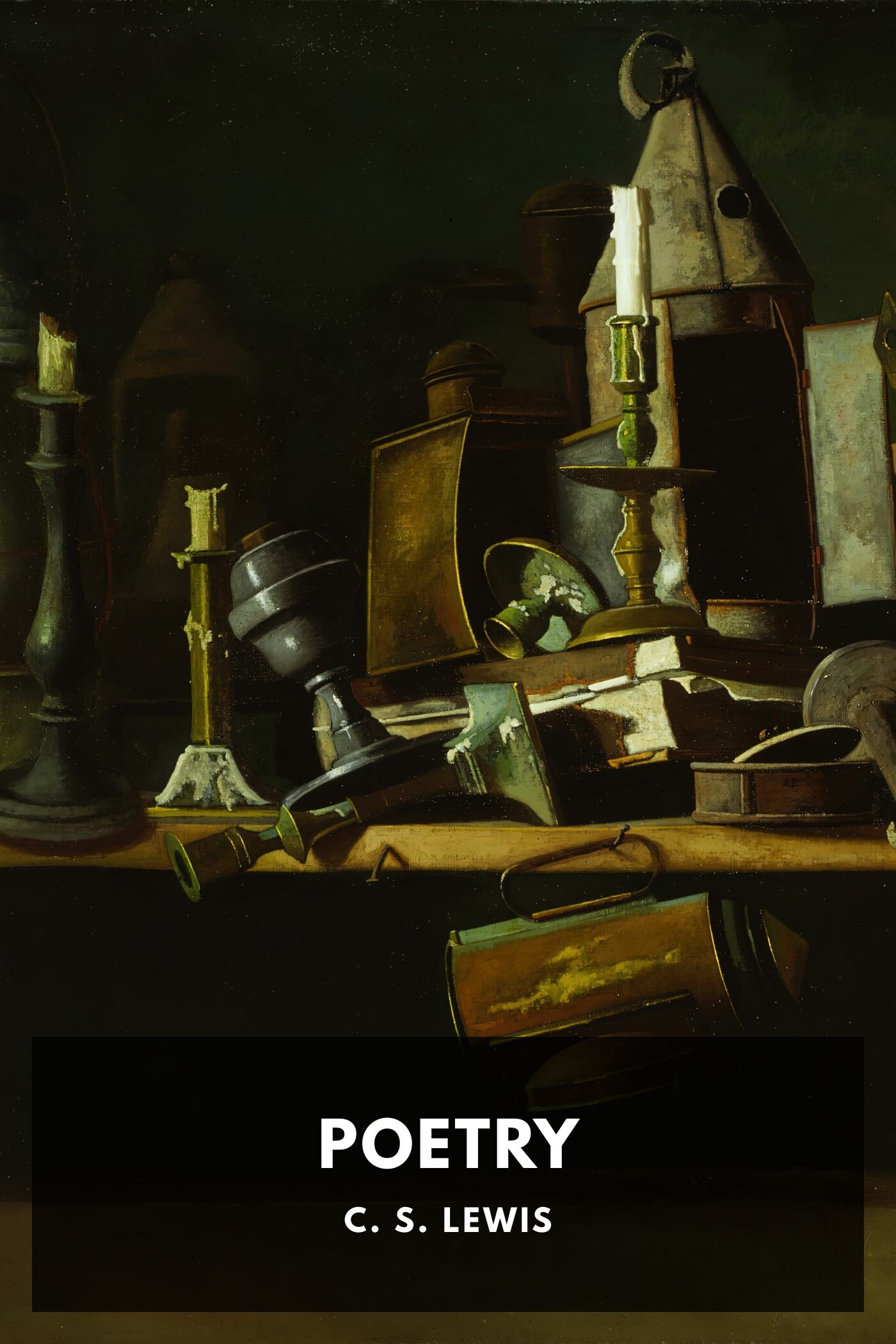
Before Narnia and the Christian apologetics, C.S. Lewis grappled with a world devoid of divine comfort. This collection showcases his earliest poetic endeavors, primarily *Spirits in Bondage* and *Dymer*, penned during his staunch agnostic phase. *Spirits in Bondage* offers a cycle of poems that paint nature as indifferent, even malevolent, reflecting a profound cynicism. *Dymer*, a lengthy narrative poem, chronicles the tragic odyssey of its namesake, exiled into a world of unimaginable trials and temptations, ultimately illustrating a universe that offers little solace or redemption.
Editions
X-Ray
A young man from the Perfect City who breaks free from its rigid control and embarks on a quest for freedom and love. He evolves from a conformist student to a rebellious seeker, ultimately facing his destiny in a final battle.
A mysterious female figure who appears to Dymer in various forms - first as a physical lover in the palace, later as a spiritual guide. She represents both earthly desire and divine truth.
A red-haired hunchback who leads a violent revolution inspired by Dymer's initial act of rebellion. He represents the destructive potential of unchecked freedom and becomes increasingly tyrannical.
An elderly magician who lives in isolation, obsessed with dreams and the occult. He tries to seduce Dymer away from reality into a world of magical illusions but is ultimately revealed as mad and dangerous.
About Poetry
Chapter Summaries
- Prologue
- The poet invokes the image of ancient Phoenician sailors singing as they voyage to unknown lands, comparing his own poetic journey to their exploration of mysterious territories beyond the known world.
- I
- A voice claiming to be Nature herself declares her dominion over all life, encompassing both beauty and destruction, creation and death, presenting herself as the ultimate reality.
- II
- Set in the trenches of World War I, the poem describes a soldier's disillusionment as he watches a plane fly toward the moon, realizing that war has stripped away his capacity for dreams and beauty.
Key Themes
- Freedom vs. Control
- The tension between individual liberty and social order runs throughout both works. Dymer escapes the Perfect City's rigid control but discovers that absolute freedom can lead to chaos and destruction.
- The Corruption of Innocence
- Both collections explore how innocence is lost through experience. In 'Spirits in Bondage,' war destroys youthful idealism, while in 'Dymer,' the protagonist's awakening leads to unintended consequences.
- Nature vs. Civilization
- Lewis contrasts the artificial constraints of civilization with the wild freedom of nature. However, he shows that both can be sources of beauty and terror.
Characters
- Dymer(protagonist)
- A young man from the Perfect City who breaks free from its rigid control and embarks on a quest for freedom and love. He evolves from a conformist student to a rebellious seeker, ultimately facing his destiny in a final battle.
- The Beloved/The Spirit(major)
- A mysterious female figure who appears to Dymer in various forms - first as a physical lover in the palace, later as a spiritual guide. She represents both earthly desire and divine truth.
- Bran(antagonist)
- A red-haired hunchback who leads a violent revolution inspired by Dymer's initial act of rebellion. He represents the destructive potential of unchecked freedom and becomes increasingly tyrannical.
- The Master(major)
- An elderly magician who lives in isolation, obsessed with dreams and the occult. He tries to seduce Dymer away from reality into a world of magical illusions but is ultimately revealed as mad and dangerous.
- The Angel/Sentry(major)
- A celestial warrior who guards the boundaries between worlds. He arms Dymer for the final battle and represents divine justice and cosmic order.
- The Monster(antagonist)
- The offspring of Dymer and the Spirit, a terrible beast that represents the destructive consequences of Dymer's actions. It embodies the shadow side of desire and freedom.
Link to this book
Add a free, dofollow link to Lex on your blog, forum, syllabus, or reading list.

<a href="https://lex-books.com/book/poetry-a3d71f3a-cb38-4daa-806a-be49e0e65471"><img src="https://lex-books.com/badges/read-on-lex.svg" alt="Read Poetry by C. S. Lewis free on Lex" width="160" height="40"></a>[](https://lex-books.com/book/poetry-a3d71f3a-cb38-4daa-806a-be49e0e65471)[url=https://lex-books.com/book/poetry-a3d71f3a-cb38-4daa-806a-be49e0e65471][img]https://lex-books.com/badges/read-on-lex.svg[/img][/url]Read Poetry by C. S. Lewis free on Lex: https://lex-books.com/book/poetry-a3d71f3a-cb38-4daa-806a-be49e0e65471Cite this book
Reading this edition for a paper or guide? Copy a citation.
Lewis, C. S.. Poetry. Lex, lex-books.com/book/poetry-a3d71f3a-cb38-4daa-806a-be49e0e65471.Lewis, C. S. (n.d.). Poetry. Lex. https://lex-books.com/book/poetry-a3d71f3a-cb38-4daa-806a-be49e0e65471Lewis, C. S.. Poetry. Lex. https://lex-books.com/book/poetry-a3d71f3a-cb38-4daa-806a-be49e0e65471.






![Birds and Nature, Vol. 12 No. 1 [June 1902]illustrated by Color Photography](/_next/image?url=https%3A%2F%2Fd3b2n8gj62qnwr.cloudfront.net%2FCOVERS%2Fgutenberg_covers75k%2Febook-47881.png&w=3840&q=75)