Philoctète: Le Traité Du Narcisse. La Tentation Amoureuse. El Hadj
1898
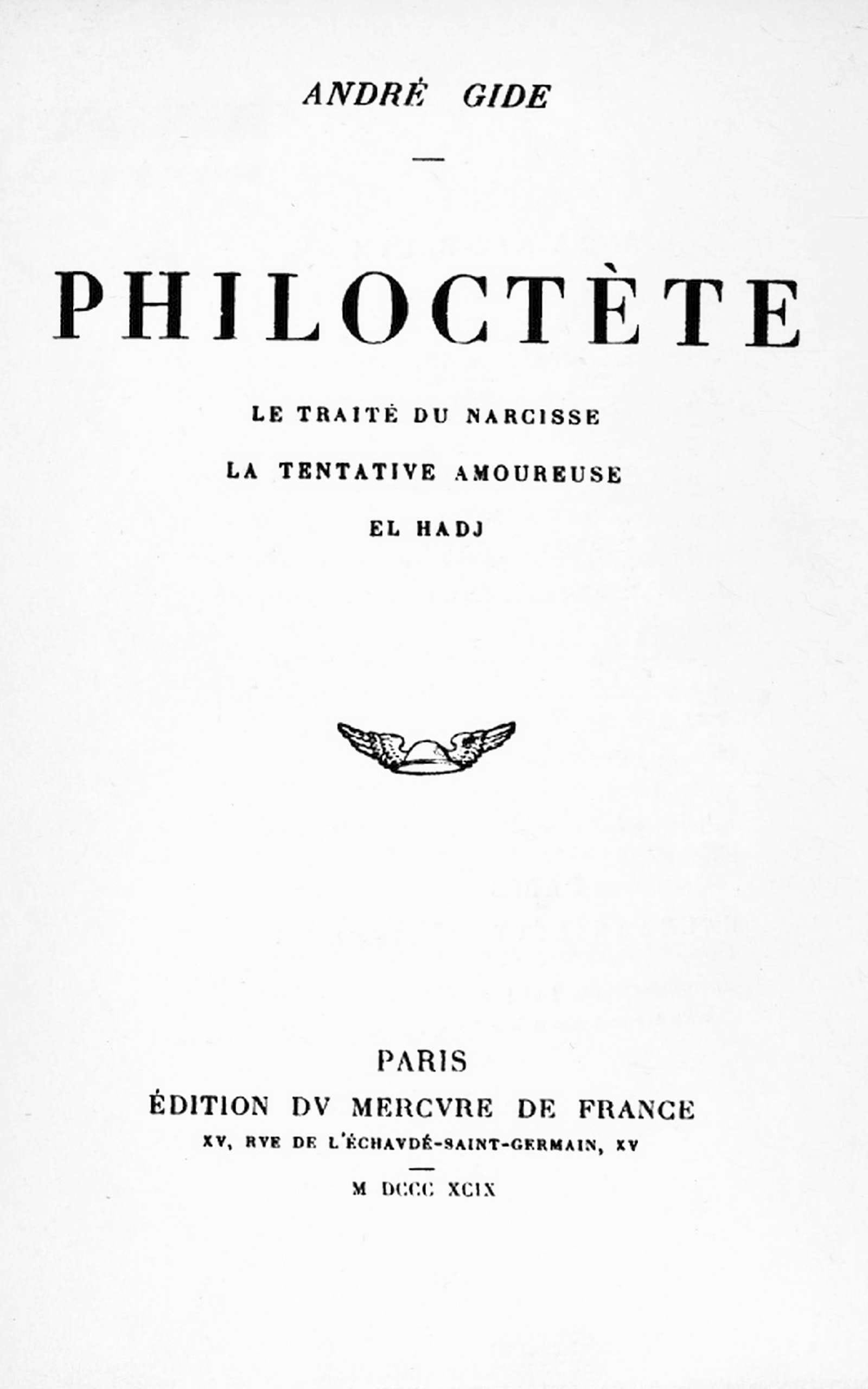
Philoctète: Le Traité Du Narcisse. La Tentation Amoureuse. El Hadj
1898
André Gide's 1898 collection gathers three provocative works that interrogate desire, duty, and the self. The centerpiece, Philoctète, reimagines the Greek legend of the wounded archer abandoned on a desolate island: Ulysse and young Néoptolème arrive to coax the powerful bow from a man destroyed by the Greeks' betrayal, yet the boy recoils at the deception required. What unfolds is not simple heroism but a tense ethical wrestling match between patriotic necessity and personal integrity. Meanwhile, the Narcissus Treatise dissects self-love as both spiritual death and perverse knowledge, and El Hadj inverts the prodigal son parable into something far darker: a defeated man who returns home not in repentance but in collapse, only to guide his younger brother toward the freedom he himself squandered. Across these texts, Gide dismantles moral certainties, exposing the comfortable lies we tell ourselves about virtue, sacrifice, and what it means to truly return.
Editions
X-Ray
“Un gest ca s-o posezi ajunge s-o destrame.””
— André Gide
Link to this book
Add a free, dofollow link to Lex on your blog, forum, syllabus, or reading list.

<a href="https://lex-books.com/book/philoct-te-le-trait-du-narcisse-la-tentation-amoureuse-el-hadj-3a270eff-c2f0-4aed-90de-143cb7c44688"><img src="https://lex-books.com/badges/read-on-lex.svg" alt="Read Philoctète: Le Traité Du Narcisse. La Tentation Amoureuse. El Hadj by André Gide free on Lex" width="160" height="40"></a>[](https://lex-books.com/book/philoct-te-le-trait-du-narcisse-la-tentation-amoureuse-el-hadj-3a270eff-c2f0-4aed-90de-143cb7c44688)[url=https://lex-books.com/book/philoct-te-le-trait-du-narcisse-la-tentation-amoureuse-el-hadj-3a270eff-c2f0-4aed-90de-143cb7c44688][img]https://lex-books.com/badges/read-on-lex.svg[/img][/url]Read Philoctète: Le Traité Du Narcisse. La Tentation Amoureuse. El Hadj by André Gide free on Lex: https://lex-books.com/book/philoct-te-le-trait-du-narcisse-la-tentation-amoureuse-el-hadj-3a270eff-c2f0-4aed-90de-143cb7c44688Cite this book
Reading this edition for a paper or guide? Copy a citation.
Gide, André. Philoctète: Le Traité Du Narcisse. La Tentation Amoureuse. El Hadj. Lex, lex-books.com/book/philoct-te-le-trait-du-narcisse-la-tentation-amoureuse-el-hadj-3a270eff-c2f0-4aed-90de-143cb7c44688.Gide, A. (1898). Philoctète: Le Traité Du Narcisse. La Tentation Amoureuse. El Hadj. Lex. https://lex-books.com/book/philoct-te-le-trait-du-narcisse-la-tentation-amoureuse-el-hadj-3a270eff-c2f0-4aed-90de-143cb7c44688Gide, André. Philoctète: Le Traité Du Narcisse. La Tentation Amoureuse. El Hadj. Lex. https://lex-books.com/book/philoct-te-le-trait-du-narcisse-la-tentation-amoureuse-el-hadj-3a270eff-c2f0-4aed-90de-143cb7c44688.