Parish Priests and Their People in the Middle Ages in England
1898
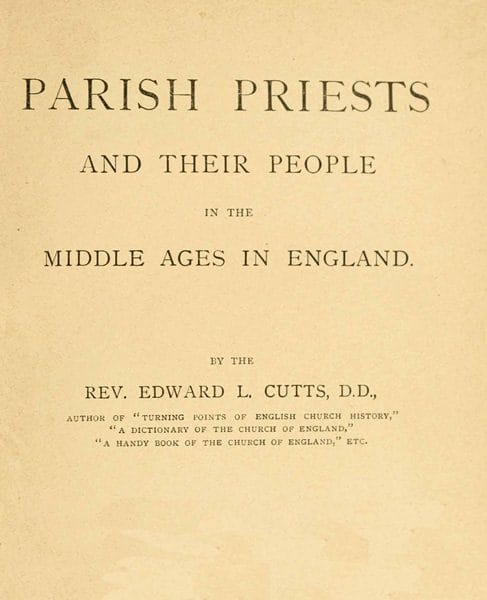
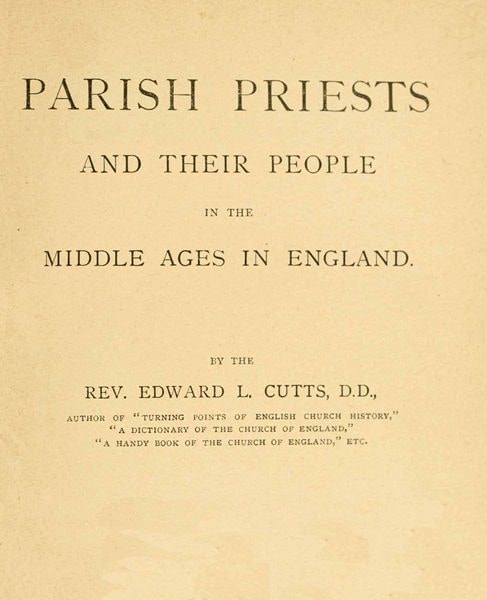
Parish Priests and Their People in the Middle Ages in England
1898
What did it actually mean to be a parish priest in medieval England, to hold the spiritual keys to a village, to navigate between bishop and brewer, to baptize the newborns and bury the dead for decades on end? Edward Lewes Cutts drew on original documents, church records, and chroniclers to reconstruct the lived reality of the medieval clergy and their congregations, from the first tentative spread of Christianity among the Anglo-Saxons through the upheavals of the Reformation. This is not institutional history from on high but a granular portrait of how faith was practiced, disputed, and endured in the parish church and the surrounding fields and cottages. Cutts examines the organization of parochial life, the training and character of the clergy, the customs and expectations of the laity, and the gradual transformation of English society as Christianity took root and then splintered. For anyone curious about the real texture of medieval religious life, beyond the cathedrals and the controversies, this book offers an irreplaceable glimpse into the souls of ordinary priests and the communities they served.
Editions
X-Ray
The author and historian who compiled this comprehensive study of medieval English parish life. He was a Doctor of Divinity and author of several works on English Church history.
The Italian missionary who brought Christianity to Kent in 597 AD. He established the first English church and became the first Archbishop of Canterbury.
The first English king to convert to Christianity, ruling Kent from 560-616 AD. He provided protection and resources to Augustine's mission.
Archbishop of Canterbury (668-690) who organized the English Church into a unified province. He established diocesan boundaries and promoted parochial organization.
About Parish Priests and Their People in the Middle Ages in England
Chapter Summaries
- 1
- Describes pre-Christian Anglo-Saxon England as a sparsely populated land of forests and marshes. The Anglo-Saxon invaders brought Germanic religious practices including worship of Woden and other gods, with few structural temples and a limited priesthood serving mainly royal centers.
- 2
- Chronicles how Christianity came to the Anglo-Saxon kingdoms through royal conversion, beginning with Augustine in Kent and spreading through missionary bishops like Aidan, Felix, and Birinus. The conversion was typically top-down, with kings accepting Christianity as a mark of civilization.
- 3
- Details the rapid multiplication of monasteries across England as centers of learning and evangelization. Many were founded by royal and noble families and became hereditary institutions, but most were destroyed by Danish invasions and later restored under Edgar and Dunstan.
Key Themes
- Religious Conversion and Cultural Transformation
- The book explores how Christianity transformed Anglo-Saxon England from a pagan society into a Christian civilization. This process involved not just individual conversions but the complete restructuring of social, legal, and cultural institutions around Christian principles.
- Institutional Development and Organization
- Cutts traces the evolution of church organization from simple missionary stations to a complex hierarchical system of dioceses, parishes, and monasteries. This theme shows how religious institutions adapted to serve growing populations and changing social needs.
- Social Mobility Through the Church
- The medieval Church provided unprecedented opportunities for advancement regardless of birth. Even serfs could become bishops through education and merit, making the Church a powerful force for social mobility in an otherwise rigid feudal system.
Characters
- Edward Lewes Cutts(protagonist)
- The author and historian who compiled this comprehensive study of medieval English parish life. He was a Doctor of Divinity and author of several works on English Church history.
- Augustine of Canterbury(major)
- The Italian missionary who brought Christianity to Kent in 597 AD. He established the first English church and became the first Archbishop of Canterbury.
- King Ethelbert of Kent(major)
- The first English king to convert to Christianity, ruling Kent from 560-616 AD. He provided protection and resources to Augustine's mission.
- Theodore of Tarsus(major)
- Archbishop of Canterbury (668-690) who organized the English Church into a unified province. He established diocesan boundaries and promoted parochial organization.
- Wilfrid of York(major)
- Influential bishop who opposed Theodore's reforms and appealed to Rome. He founded monasteries at Ripon and Hexham and converted the South Saxons.
- Bede the Venerable(major)
- The great historian and scholar of Jarrow monastery who chronicled early English Church history. His writings provide primary source material for understanding the conversion period.
Link to this book
Add a free, dofollow link to Lex on your blog, forum, syllabus, or reading list.

<a href="https://lex-books.com/book/parish-priests-and-their-people-in-the-middle-ages-in-england-f8177a8b-1cd5-4c7d-a2e9-5b2b84ea6091"><img src="https://lex-books.com/badges/read-on-lex.svg" alt="Read Parish Priests and Their People in the Middle Ages in England by Edward Lewes Cutts free on Lex" width="160" height="40"></a>[](https://lex-books.com/book/parish-priests-and-their-people-in-the-middle-ages-in-england-f8177a8b-1cd5-4c7d-a2e9-5b2b84ea6091)[url=https://lex-books.com/book/parish-priests-and-their-people-in-the-middle-ages-in-england-f8177a8b-1cd5-4c7d-a2e9-5b2b84ea6091][img]https://lex-books.com/badges/read-on-lex.svg[/img][/url]Read Parish Priests and Their People in the Middle Ages in England by Edward Lewes Cutts free on Lex: https://lex-books.com/book/parish-priests-and-their-people-in-the-middle-ages-in-england-f8177a8b-1cd5-4c7d-a2e9-5b2b84ea6091Cite this book
Reading this edition for a paper or guide? Copy a citation.
Cutts, Edward Lewes. Parish Priests and Their People in the Middle Ages in England. Lex, lex-books.com/book/parish-priests-and-their-people-in-the-middle-ages-in-england-f8177a8b-1cd5-4c7d-a2e9-5b2b84ea6091.Cutts, E. L. (1898). Parish Priests and Their People in the Middle Ages in England. Lex. https://lex-books.com/book/parish-priests-and-their-people-in-the-middle-ages-in-england-f8177a8b-1cd5-4c7d-a2e9-5b2b84ea6091Cutts, Edward Lewes. Parish Priests and Their People in the Middle Ages in England. Lex. https://lex-books.com/book/parish-priests-and-their-people-in-the-middle-ages-in-england-f8177a8b-1cd5-4c7d-a2e9-5b2b84ea6091.