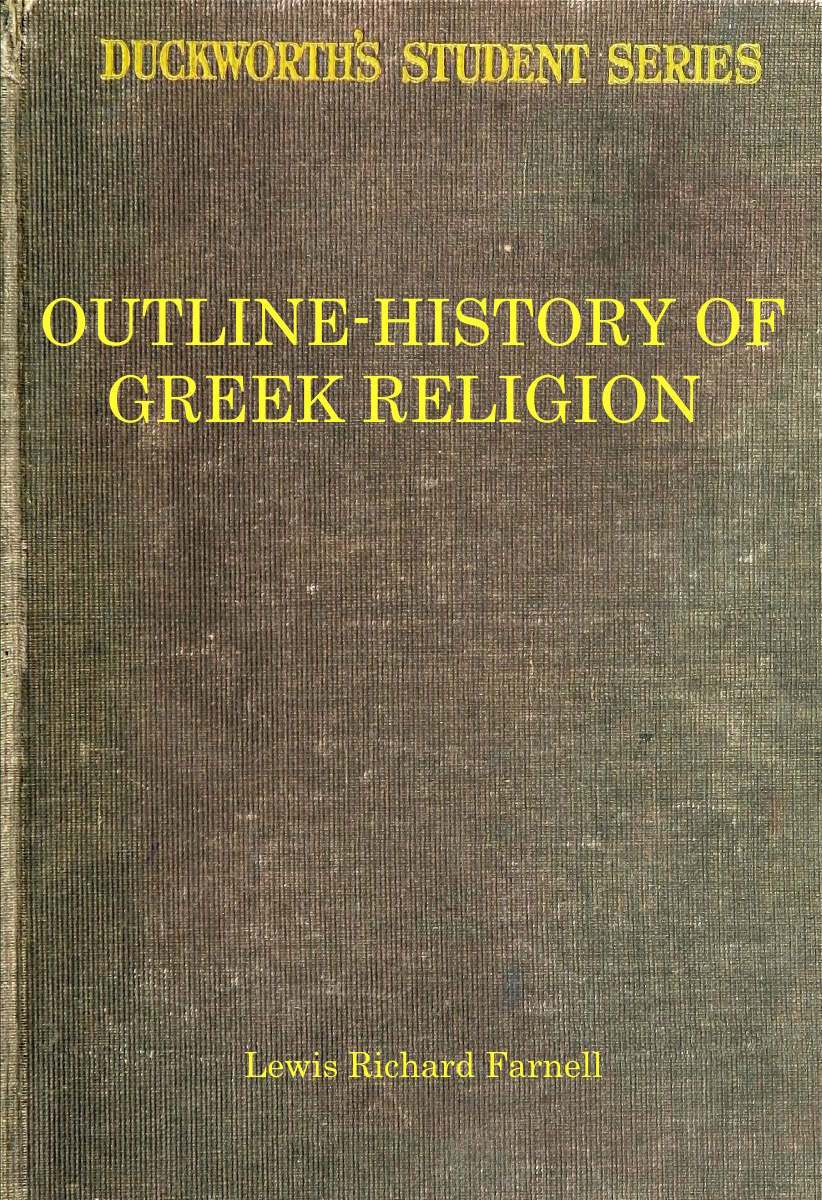
Outline-History of Greek Religion
1921
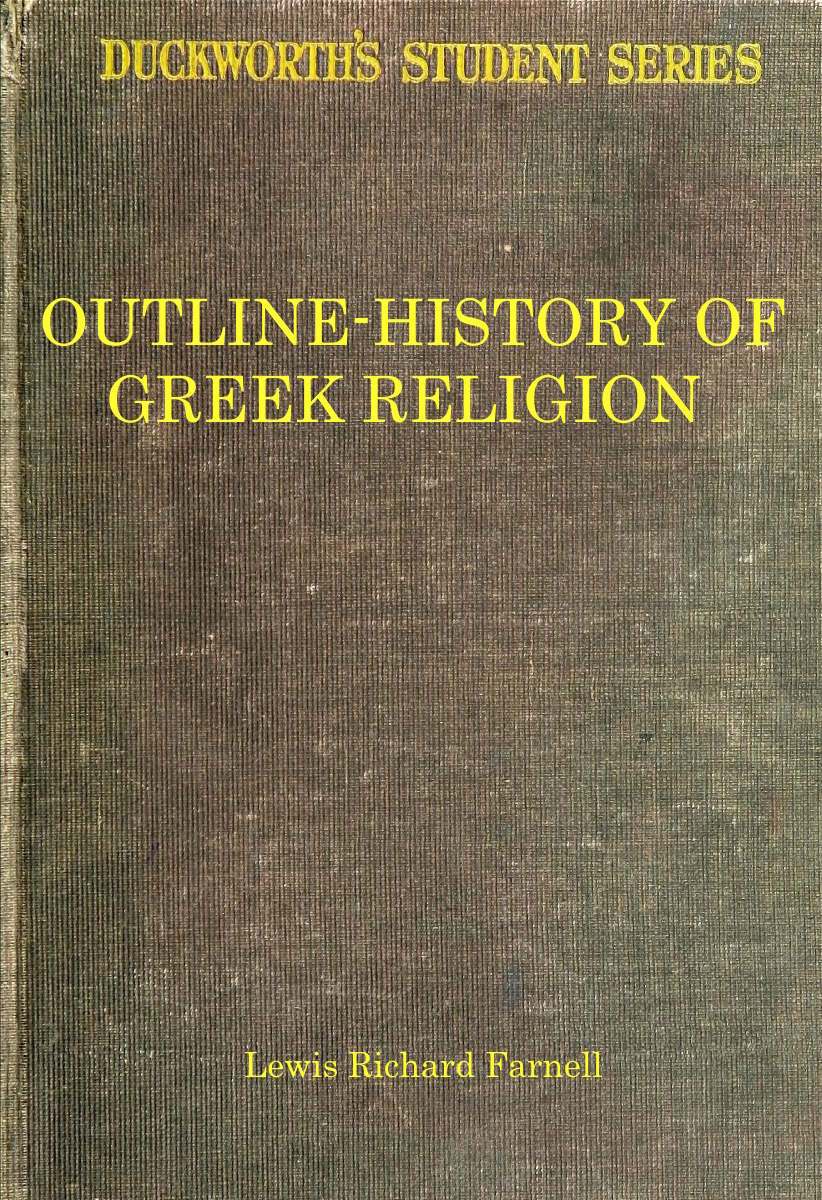
Outline-History of Greek Religion
1921
Farnell's masterwork demolishes the fiction that Greek religion was merely mythology. Drawing on archaeological evidence, ancient literature, and artistic representations, he reconstructs the living, breathing spiritual world of the Greeks across centuries: the mystery cults of Eleusis, the ecstatic rituals of Dionysus, the complex theology of the Olympian pantheon, and the local variations that made Greek religion endlessly rich and surprising. This is not a catalog of gods and myths, but an investigation into how actual Greeks worshipped, sacrificed, debated, and transformed their religious understanding over time. Farnell writes with the conviction that understanding Greek religion requires taking its practitioners seriously as religious actors, not just as characters in someone else's story. The result is a work that reveals how the Greeks invented, borrowed, synthesized, and abandoned religious ideas across centuries of cultural evolution. Essential for anyone who wants to move beyond mythology into the deeper, stranger, more human world of ancient Greek belief.
Editions
X-Ray
The overarching subject of the book, representing the evolving religious temperament, practices, and beliefs of the Greek people from prehistoric times to the Græco-Roman period.
The supreme Sky-God, Father of Gods and men, guardian of righteousness, and a central figure in the Olympian pantheon, whose cult evolved from tribal to Pan-Hellenic.
An oracular God of northern origin, associated with music, arts, purification, and colonization, whose influence grew significantly in the second period.
Goddess of war, arts, and counsel, a civic protector who achieved supremacy in Athens and became a Madonna-like figure in later art.
About Outline-History of Greek Religion
Chapter Summaries
- I
- This chapter introduces the scientific study of Greek religion, distinguishing it from mere mythology. It thoroughly details the literary sources, including epic, lyric, tragic drama, prose writers (philosophers, historians, orators), later scholiasts, and early Christian Fathers, emphasizing their value and limitations. It also highlights monumental sources like inscriptions and art as crucial for understanding religious consciousness and ritual.
- II
- This chapter defines the prehistoric period (second millennium B.C.) and examines Homeric religion as an advanced polytheism with anthropomorphic, moralized deities and refined rituals. It then delves into pre-Homeric influences, including Aryan immigrants, Minoan-Mycenæan religion (Great Goddess, aniconic ritual), and the blend of Northern and Mediterranean elements. It also discusses early family and political religion, the ethical dimension, and cruder elements like animal-worship, functional deities, animism, magic, and human sacrifice.
- III
- This period marks the introduction of Dionysos worship from Thrace and its integration into Hellenic religion, alongside the shaping influence of epic and lyric poetry on anthropomorphism. It details the rise of idolatry, the impact of the Polis on civic and family cults, the growing importance of hero-cult, and the significant role of the Delphic oracle in purification and colonization. The chapter concludes with the emergence of the Great Games, sixth-century philosophy (Pythagoras, Xenophanes, Herakleitos), and the origins of tragic drama.
Key Themes
- Anthropomorphism and Idealization
- The book highlights anthropomorphism as the dominant bias of the Hellenic religious imagination, shaping divinities in the glorified image of man. This was intensified by epic poetry and especially by religious art, which evolved ideal forms of beauty, strength, and majesty, making the gods more relatable but also limiting the development of a more immaterial religion.
- Evolution of Religious Forms
- The text traces Greek religion from prehistoric animism, theriomorphism, and polydaimonism to an advanced personal theism. It shows how cruder, older forms persisted alongside higher developments, and how the Hellenic spirit gradually refined and moralized its deities and rituals, though never fully abandoning its primitive roots.
- Syncretism and Cultural Fusion
- Greek polytheism is presented as a blend of Northern (Aryan) and Mediterranean (Minoan-Mycenæan) elements from its earliest stages. Later, especially after Alexander, the 'theocrasia' or fusion of Eastern and Western divinities became a striking phenomenon, leading to a broader, more humanitarian religious imagination and paving the way for monotheistic ideas.
Characters
- Hellenic Spirit / Greek Polytheism(protagonist)
- The overarching subject of the book, representing the evolving religious temperament, practices, and beliefs of the Greek people from prehistoric times to the Græco-Roman period.
- Zeus(supporting)
- The supreme Sky-God, Father of Gods and men, guardian of righteousness, and a central figure in the Olympian pantheon, whose cult evolved from tribal to Pan-Hellenic.
- Apollo(supporting)
- An oracular God of northern origin, associated with music, arts, purification, and colonization, whose influence grew significantly in the second period.
- Athena(supporting)
- Goddess of war, arts, and counsel, a civic protector who achieved supremacy in Athens and became a Madonna-like figure in later art.
- Dionysos(supporting)
- A Thracian immigrant deity of wine, frenzy, and ecstasy, whose worship was initially wild but later tamed and integrated into Hellenic civic and mystic religion.
- Demeter(supporting)
- The Earth-Goddess of corn, whose Aryan descent is noted, and who is central to the Eleusinian Mysteries.
Link to this book
Add a free, dofollow link to Lex on your blog, forum, syllabus, or reading list.

<a href="https://lex-books.com/book/outline-history-of-greek-religion-125bbb75-9cda-47b6-bf9d-c1ee507b7919"><img src="https://lex-books.com/badges/read-on-lex.svg" alt="Read Outline-History of Greek Religion by Lewis Richard Farnell free on Lex" width="160" height="40"></a>[](https://lex-books.com/book/outline-history-of-greek-religion-125bbb75-9cda-47b6-bf9d-c1ee507b7919)[url=https://lex-books.com/book/outline-history-of-greek-religion-125bbb75-9cda-47b6-bf9d-c1ee507b7919][img]https://lex-books.com/badges/read-on-lex.svg[/img][/url]Read Outline-History of Greek Religion by Lewis Richard Farnell free on Lex: https://lex-books.com/book/outline-history-of-greek-religion-125bbb75-9cda-47b6-bf9d-c1ee507b7919Cite this book
Reading this edition for a paper or guide? Copy a citation.
Farnell, Lewis Richard. Outline-History of Greek Religion. Lex, lex-books.com/book/outline-history-of-greek-religion-125bbb75-9cda-47b6-bf9d-c1ee507b7919.Farnell, L. R. (1921). Outline-History of Greek Religion. Lex. https://lex-books.com/book/outline-history-of-greek-religion-125bbb75-9cda-47b6-bf9d-c1ee507b7919Farnell, Lewis Richard. Outline-History of Greek Religion. Lex. https://lex-books.com/book/outline-history-of-greek-religion-125bbb75-9cda-47b6-bf9d-c1ee507b7919.