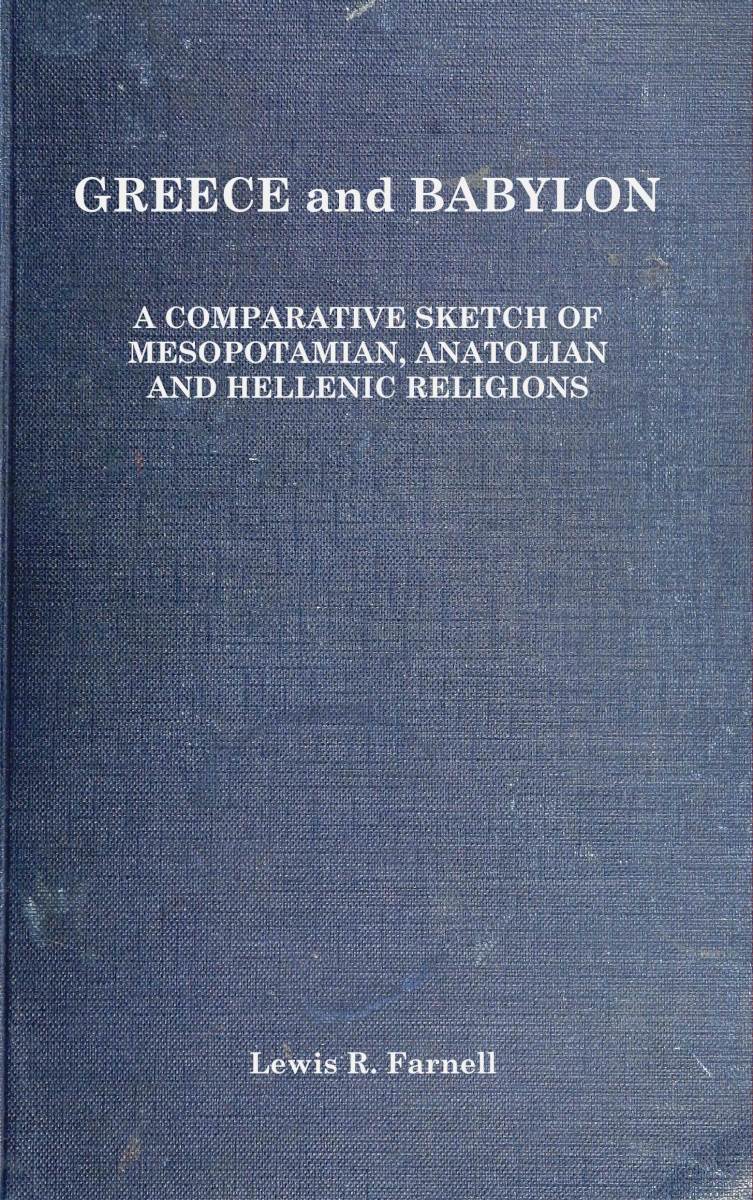
Greece and Babylon: A Comparative Sketch of Mesopotamian, Anatolian and Hellenic Religions
1911
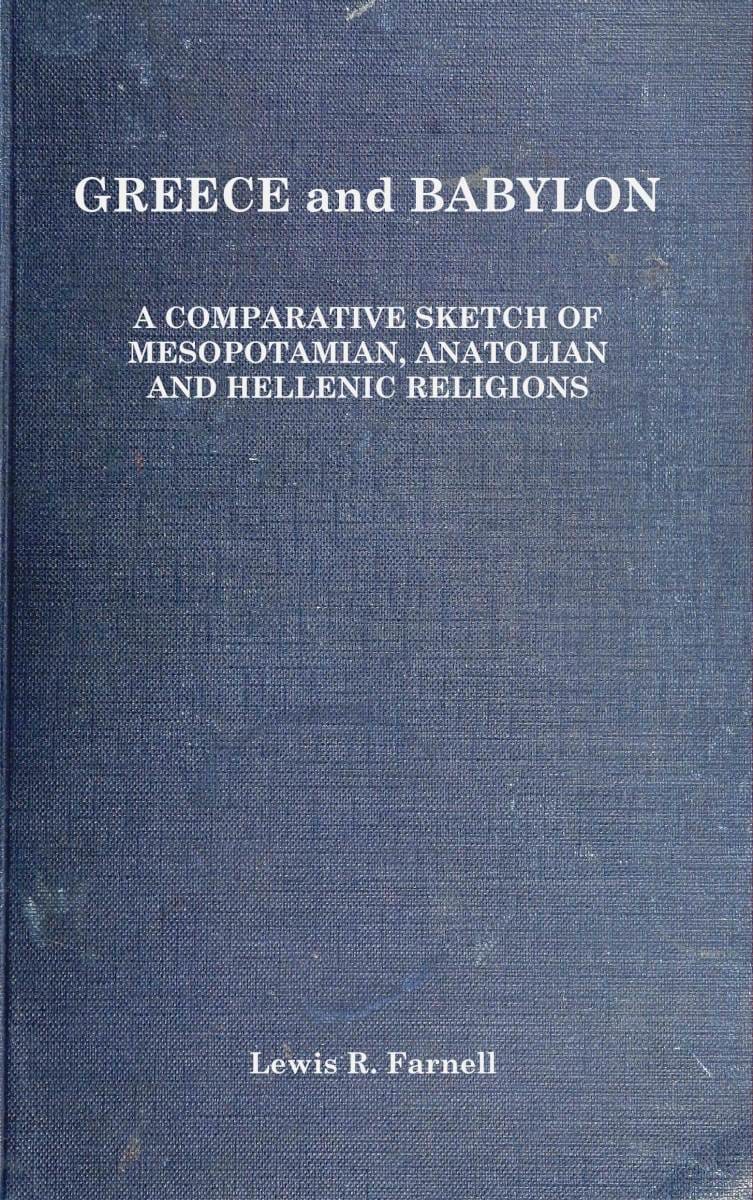
Greece and Babylon: A Comparative Sketch of Mesopotamian, Anatolian and Hellenic Religions
1911
A scholarly historical account written in the early 20th century. This work delves into the religious systems of ancient Greece, Mesopotamia, and Anatolia, examining their similarities and differences in beliefs, rituals, and the evolution of deities. Farnell seeks to unpack the interconnections between these cultures, highlighting the complexities of their spiritual practices and the influence of one on another. The opening of the book serves as an inaugural lecture by Farnell as the first Wilde Lecturer in Natural and Comparative Religion, where he outlines his intended exploration of these ancient religions. He emphasizes the importance of establishing a methodological framework to investigate how Hellenic religion may have borrowed from or interacted with Mesopotamian and Anatolian beliefs. Farnell acknowledges the vastness of this subject, discusses the necessity of comparative study, and proposes a focus on specific elements like the nature of divinity, morality, and ritual practices across these cultures, setting the stage for a nuanced comparative analysis throughout the text.
Editions
X-Ray
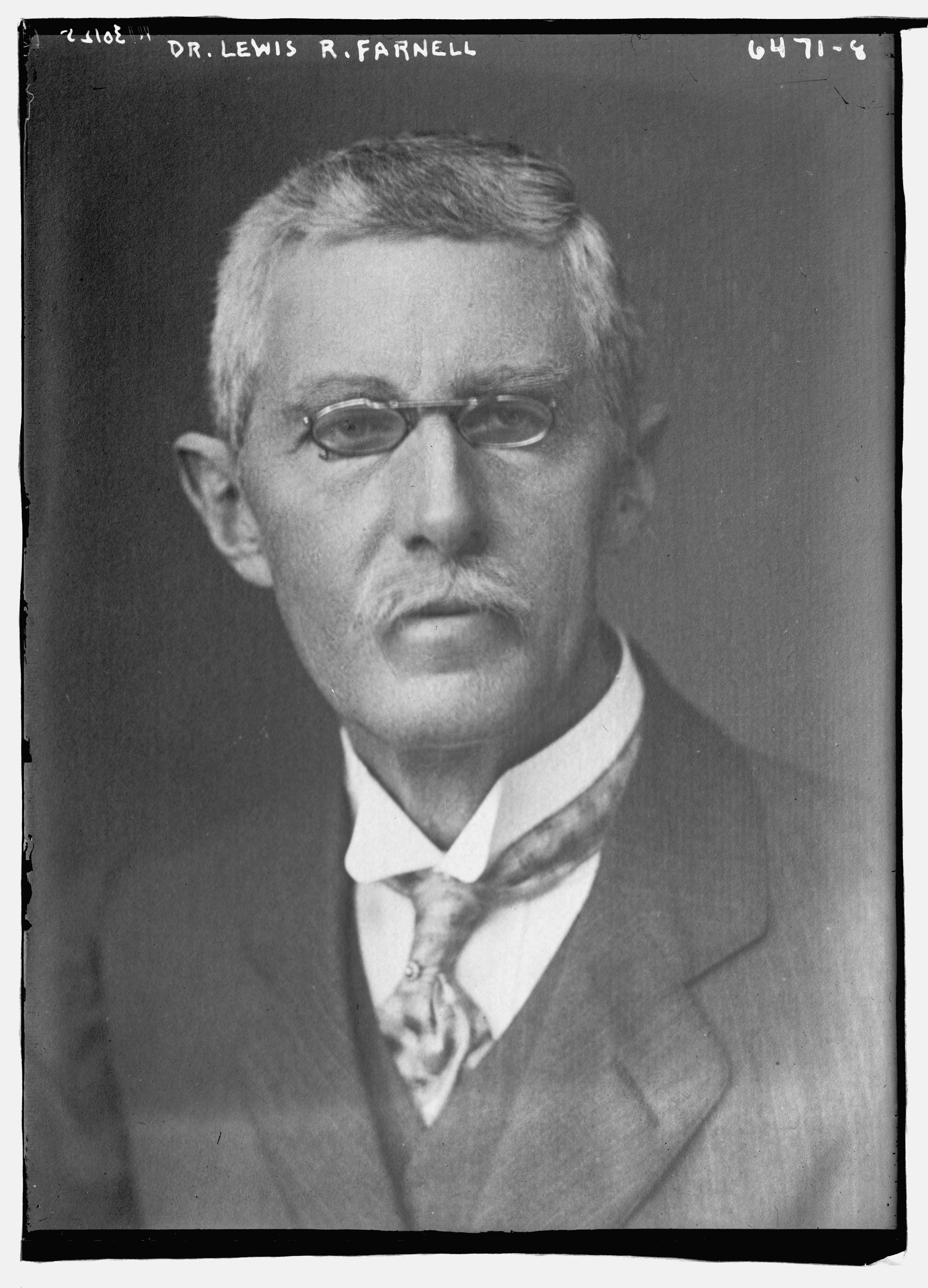
The first Wilde Lecturer in Natural and Comparative Religion at Oxford University. A scholar dedicated to comparing ancient Mediterranean religions, particularly examining whether Greek religion was influenced by Mesopotamian traditions.
The generous founder of the Wilde Lectureship in Natural and Comparative Religion at Oxford University. His endowment made possible the first official university teaching in comparative religion.
Ancient Babylonian king whose legal code provides crucial evidence for understanding Mesopotamian religion and society. Depicted as receiving divine inspiration from the sun-god Shamash.
Babylonian sun-god and deity of justice. A central figure in Mesopotamian religion who maintained his nature-significance while developing complex ethical attributes.
About Greece and Babylon: A Comparative Sketch of Mesopotamian, Anatolian and Hellenic Religions
Chapter Summaries
- 1
- Farnell introduces his role as the first Wilde Lecturer and outlines his approach to comparative religion. He explains his focus on higher forms of religion rather than primitive anthropology, and establishes Greek religion as his point of departure for comparing Mediterranean religious systems.
- 2
- The author defines the central question of Mesopotamian influence on Greek religion and outlines the evidence to be examined. He emphasizes the need to determine when Aryan tribes entered Greece and what religious traditions they brought, while noting the precariousness of theories about religious borrowing.
- 3
- Farnell argues that both Mesopotamian and Greek religions had evolved beyond primitive animism to worship personal deities by the second millennium BC. He critiques the distinction between 'nature religions' and 'ethical religions' as unsound, proposing instead to examine the degree of personality in cult-objects.
Key Themes
- Religious Independence vs. Influence
- The central question of whether Greek religion developed independently or borrowed significantly from Eastern traditions. Farnell systematically examines evidence for Mesopotamian influence on early Greek religious practices.
- Anthropomorphism vs. Theriomorphism
- The contrast between human-shaped and animal-shaped divine representations across cultures. Greek religion shows stronger anthropomorphic tendencies compared to the more unstable anthropomorphism of Mesopotamian traditions.
- Divine Personality and Power
- How different cultures conceived of divine beings as personal entities with complex moral and spiritual attributes. Both Greek and Mesopotamian religions had evolved beyond primitive animism to worship personal deities.
Characters
- Lewis R. Farnell(protagonist)
- The first Wilde Lecturer in Natural and Comparative Religion at Oxford University. A scholar dedicated to comparing ancient Mediterranean religions, particularly examining whether Greek religion was influenced by Mesopotamian traditions.
- Dr. Henry Wilde(minor)
- The generous founder of the Wilde Lectureship in Natural and Comparative Religion at Oxford University. His endowment made possible the first official university teaching in comparative religion.
- Hammurabi(major)
- Ancient Babylonian king whose legal code provides crucial evidence for understanding Mesopotamian religion and society. Depicted as receiving divine inspiration from the sun-god Shamash.
- Shamash(major)
- Babylonian sun-god and deity of justice. A central figure in Mesopotamian religion who maintained his nature-significance while developing complex ethical attributes.
- Ishtar(major)
- Great Babylonian goddess of war and fertility, described as both virgin and mother. Represents the complex nature of Mesopotamian divine personalities.
Link to this book
Add a free, dofollow link to Lex on your blog, forum, syllabus, or reading list.

<a href="https://lex-books.com/book/greece-and-babylon-a-comparative-sketch-of-mesopotamian-anatolian-and-hellenic-r-9b09b311-5771-4235-af40-fbd34649865c"><img src="https://lex-books.com/badges/read-on-lex.svg" alt="Read Greece and Babylon: A Comparative Sketch of Mesopotamian, Anatolian and Hellenic Religions by Lewis Richard Farnell free on Lex" width="160" height="40"></a>[](https://lex-books.com/book/greece-and-babylon-a-comparative-sketch-of-mesopotamian-anatolian-and-hellenic-r-9b09b311-5771-4235-af40-fbd34649865c)[url=https://lex-books.com/book/greece-and-babylon-a-comparative-sketch-of-mesopotamian-anatolian-and-hellenic-r-9b09b311-5771-4235-af40-fbd34649865c][img]https://lex-books.com/badges/read-on-lex.svg[/img][/url]Read Greece and Babylon: A Comparative Sketch of Mesopotamian, Anatolian and Hellenic Religions by Lewis Richard Farnell free on Lex: https://lex-books.com/book/greece-and-babylon-a-comparative-sketch-of-mesopotamian-anatolian-and-hellenic-r-9b09b311-5771-4235-af40-fbd34649865cCite this book
Reading this edition for a paper or guide? Copy a citation.
Farnell, Lewis Richard. Greece and Babylon: A Comparative Sketch of Mesopotamian, Anatolian and Hellenic Religions. Lex, lex-books.com/book/greece-and-babylon-a-comparative-sketch-of-mesopotamian-anatolian-and-hellenic-r-9b09b311-5771-4235-af40-fbd34649865c.Farnell, L. R. (1911). Greece and Babylon: A Comparative Sketch of Mesopotamian, Anatolian and Hellenic Religions. Lex. https://lex-books.com/book/greece-and-babylon-a-comparative-sketch-of-mesopotamian-anatolian-and-hellenic-r-9b09b311-5771-4235-af40-fbd34649865cFarnell, Lewis Richard. Greece and Babylon: A Comparative Sketch of Mesopotamian, Anatolian and Hellenic Religions. Lex. https://lex-books.com/book/greece-and-babylon-a-comparative-sketch-of-mesopotamian-anatolian-and-hellenic-r-9b09b311-5771-4235-af40-fbd34649865c.