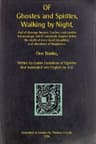
Of Ghostes and Spirites, Walking by Night: And of Straunge Noyses, Crackes, and Sundrie Forewarnings, Which Commonly Happen Before the Death of Men: Great Slaughters, and Alterations of Kingdoms

Of Ghostes and Spirites, Walking by Night: And of Straunge Noyses, Crackes, and Sundrie Forewarnings, Which Commonly Happen Before the Death of Men: Great Slaughters, and Alterations of Kingdoms
Translated by Robert, -1585? Harrison
In 1569, a Swiss Protestant theologian attempted something daring: he sat down to write the first systematic English-language explanation of ghosts, and he did not flinch from the task. Ludwig Lavater's treatise tackles apparitions, strange noises in the night, death warnings, and the omens that precede great slaughters and political upheavals. But this is no collection of ghost stories. It is a rigorous work of theology, written to rescue the phenomena from what Lavater sees as dangerous superstition and willful misinterpretation. He argues that many reported encounters spring not from spirits walking among the living, but from human imagination, fear, and the natural world misunderstood. Yet he does not dismiss the supernatural entirely. Scripture must be the arbiter. Reason must be the tool. The result is a fascinating window into how educated Protestants in Shakespeare's England actually thought about the boundary between the seen and unseen world. The full title itself reads like a spell, and the book retains its power to unsettle and illuminate in equal measure. For readers curious about the roots of ghost literature, the history of belief, or the early modern mind at work, this is an essential and strangely moving artifact.
Editions
Link to this book
Add a free, dofollow link to Lex on your blog, forum, syllabus, or reading list.

<a href="https://lex-books.com/book/of-ghostes-and-spirites-walking-by-night-and-of-straunge-noyses-crackes-and-sund-095af70e-af10-4aa8-ad90-aab3fb9b51e9"><img src="https://lex-books.com/badges/read-on-lex.svg" alt="Read Of Ghostes and Spirites, Walking by Night: And of Straunge Noyses, Crackes, and Sundrie Forewarnings, Which Commonly Happen Before the Death of Men: Great Slaughters, and Alterations of Kingdoms by Ludwig Lavater free on Lex" width="160" height="40"></a>[](https://lex-books.com/book/of-ghostes-and-spirites-walking-by-night-and-of-straunge-noyses-crackes-and-sund-095af70e-af10-4aa8-ad90-aab3fb9b51e9)[url=https://lex-books.com/book/of-ghostes-and-spirites-walking-by-night-and-of-straunge-noyses-crackes-and-sund-095af70e-af10-4aa8-ad90-aab3fb9b51e9][img]https://lex-books.com/badges/read-on-lex.svg[/img][/url]Read Of Ghostes and Spirites, Walking by Night: And of Straunge Noyses, Crackes, and Sundrie Forewarnings, Which Commonly Happen Before the Death of Men: Great Slaughters, and Alterations of Kingdoms by Ludwig Lavater free on Lex: https://lex-books.com/book/of-ghostes-and-spirites-walking-by-night-and-of-straunge-noyses-crackes-and-sund-095af70e-af10-4aa8-ad90-aab3fb9b51e9Cite this book
Reading this edition for a paper or guide? Copy a citation.
Lavater, Ludwig. Of Ghostes and Spirites, Walking by Night: And of Straunge Noyses, Crackes, and Sundrie Forewarnings, Which Commonly Happen Before the Death of Men: Great Slaughters, and Alterations of Kingdoms. Lex, lex-books.com/book/of-ghostes-and-spirites-walking-by-night-and-of-straunge-noyses-crackes-and-sund-095af70e-af10-4aa8-ad90-aab3fb9b51e9.Lavater, L. (n.d.). Of Ghostes and Spirites, Walking by Night: And of Straunge Noyses, Crackes, and Sundrie Forewarnings, Which Commonly Happen Before the Death of Men: Great Slaughters, and Alterations of Kingdoms. Lex. https://lex-books.com/book/of-ghostes-and-spirites-walking-by-night-and-of-straunge-noyses-crackes-and-sund-095af70e-af10-4aa8-ad90-aab3fb9b51e9Lavater, Ludwig. Of Ghostes and Spirites, Walking by Night: And of Straunge Noyses, Crackes, and Sundrie Forewarnings, Which Commonly Happen Before the Death of Men: Great Slaughters, and Alterations of Kingdoms. Lex. https://lex-books.com/book/of-ghostes-and-spirites-walking-by-night-and-of-straunge-noyses-crackes-and-sund-095af70e-af10-4aa8-ad90-aab3fb9b51e9.