Now It Can Be Told
1920
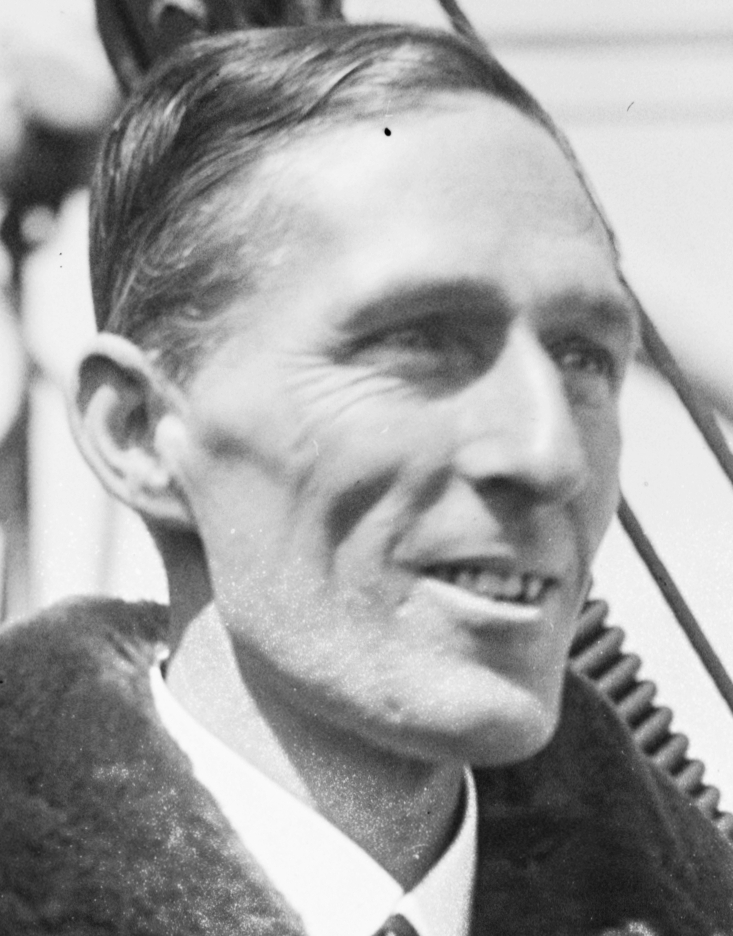
This is the book Philip Gibbs was forbidden from writing while the war was still being fought. As a British war correspondent embedded with the Expeditionary Force, he witnessed what censors would not allow the public to know. Now, in the aftermath of the armistice, he tells the truth. Gibbs follows the British from the desperate early retreat through the grinding horror of trench warfare, depicting young men transformed by mechanized slaughter, civilian populations uprooted by the passage of armies, and the sheer scale of modern industrial killing. He writes not as a commentator arguing what should have been done, but as a chronicler faithful to what he saw. The result is both memorial and indictment: a vivid, harrowing account of courage and cost, of the terrible things done in the name of duty. Over a century later, this remains essential witness. Gibbs was there, he saw it, and now he could finally tell it.
Editions

X-Ray
“Lip service to Christian ethics was not good enough as an argument for this. Either the heart of the world must be changed by a real obedience to the gospel of Christ or Christianity must be abandoned for a new creed which would give better results between men and nations””
— Philip Gibbs
“Life was good out of the line in that September of '15. The land of France was full of beauty, with bronzed corn-stooks in the fields, and scarlet poppies in the grass, and a golden sunlight on old barns and on little white churches and in orchards heavy with fruit. It was good to go into the garden of a French chateau and pluck a rose and smell its sweetness, and think back to England, where other roses were blooming. England!... And in a few days”
— Philip Gibbs
“I do not blame Lord French. I have no right to blame him, as I am not a soldier nor a military expert. He did his best, with the highest motives. The blunders he made were due to ignorance of modern battles. Many other generals made many other blunders, and our men paid with their lives. Our High Command had to learn by mistakes, by ghastly mistakes, repeated often, until they became visible to the military mind and were paid for again by the slaughter of British youth. One does not blame. A writing-man, who was an observer and recorder, like myself, does not sit in judgment. He has no right to judge. He merely cries out, “O God! … O God!” in remembrance of all that agony and that waste of splendid boys who loved life, and died.””
— Philip Gibbs
“They were kind-hearted little sluts with astounding courage.””
— Philip Gibbs
“Strange words to hear in a cavalry mess! Strange turmoil in the souls of men! They were the same words I had heard from London boys in Ypres, spoken just as crudely. But many young gentlemen who spoke those words have already forgotten them or would deny them.””
— Philip Gibbs
“The politicians are the guilty ones," said one cavalry officer. "I am all for revolution after this bloody massacre. I would hang all politicians, diplomats, and so-called statesmen with strict impartiality." "I'm for the people," said another. "The poor, bloody people, who are kept in ignorance and then driven into the shambles when their rulers desire to grab some new part of the earth's surface or to get their armies going because they are bored with peace." "What price Christianity?" asked another, inevitably. "What have the churches done to stop war or preach the gospel of Christ? The Bishop of London, the Archbishop of Canterbury, all those conventional, patriotic, cannon”
— Philip Gibbs
“It is a the belief of many brooding minds that almost as great as the direct guilt of the German war lords was the guilt of the whole political society of Europe, whose secret diplomacy (unrevealed to the peoples) was based upon hatred and fear and rivalry, in play for imperial power and the world's markets, as common folk play dominoes for penny points, and risking the lives of common folk in a gamble for enormous stakes of territory, imperial prestige, the personal vanity of politicians, the vast private gain of trusts and profiteers. To keep the living counters quiet, to make them jump into the pool of their own free will at the word "Go," the statesmen, diplomats, trusts, and profiteers debauch the name of patriotism, raise the watchword of liberty, and play upon the ignorance of the mob easily, skillfully, by inciting them to race hatred, by inflaming the brute-passion in them, and by concocting a terrible mixture of false idealism and self-interest, so that simple minds quick to respond to sentiment, as well as those quick to hear the call of the beast, rally shoulder to shoulder and march to the battlegrounds under the spell of that potion.””
— Philip Gibbs
“about the German boy's throat and tried to strangle him and to stop another dreadful cry. The second officer made haste. He thrust his revolver close to the””
— Philip Gibbs
“We do trust you”
— Philip Gibbs
Link to this book
Add a free, dofollow link to Lex on your blog, forum, syllabus, or reading list.

<a href="https://lex-books.com/book/now-it-can-be-told-e457cbea-81fc-4f70-ae18-59e05a6cad31"><img src="https://lex-books.com/badges/read-on-lex.svg" alt="Read Now It Can Be Told by Philip Gibbs free on Lex" width="160" height="40"></a>[](https://lex-books.com/book/now-it-can-be-told-e457cbea-81fc-4f70-ae18-59e05a6cad31)[url=https://lex-books.com/book/now-it-can-be-told-e457cbea-81fc-4f70-ae18-59e05a6cad31][img]https://lex-books.com/badges/read-on-lex.svg[/img][/url]Read Now It Can Be Told by Philip Gibbs free on Lex: https://lex-books.com/book/now-it-can-be-told-e457cbea-81fc-4f70-ae18-59e05a6cad31Cite this book
Reading this edition for a paper or guide? Copy a citation.
Gibbs, Philip. Now It Can Be Told. Lex, lex-books.com/book/now-it-can-be-told-e457cbea-81fc-4f70-ae18-59e05a6cad31.Gibbs, P. (1920). Now It Can Be Told. Lex. https://lex-books.com/book/now-it-can-be-told-e457cbea-81fc-4f70-ae18-59e05a6cad31Gibbs, Philip. Now It Can Be Told. Lex. https://lex-books.com/book/now-it-can-be-told-e457cbea-81fc-4f70-ae18-59e05a6cad31.