Note-Book of Anton Chekhov
1921
Note-Book of Anton Chekhov
1921
Translated by S. S. (Samuel Solomonovitch) Koteliansky
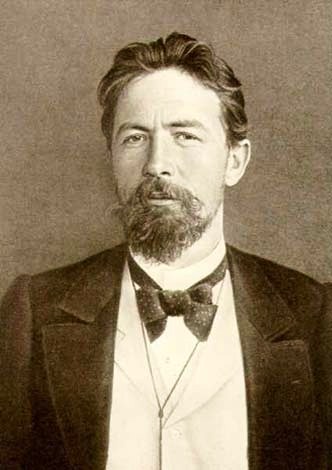
For those who have ever wondered how a master sees the world, here is the answer in its rawest form: Chekhov's private notebook, opened for our eyes alone. These are not polished stories but the seeds from which they grew - fragments of dialogue overheard on trains, sharp sketches of Petersburg society, observations so precise they cut like surgical blades. The 1896 diary entries capture meetings with Tolstoy and the cultural elite, yet what resonates most are the small moments: a peasant's expression, a sentence abandoned mid-thought, an idea for a play that would never be written. Here we encounter Chekhov at his most unguarded - skeptical of his own celebrity, bitingly witty about literary pretensions, tender toward human frailty. This is the machinery of genius revealed: messy, contradictory, gloriously incomplete. For anyone who has loved "The Seagull" or "Three Sisters," these pages offer something rarer than answers - they offer the questions that haunted a writer still searching, still uncertain, still magnificent.
Editions
X-Ray
“If you are afraid of loneliness, don't marry.””
— Anton Pavlovich Chekhov
“You won't become a saint through other people's sins.””
— Anton Pavlovich Chekhov
“X. and Z., very well educated and of radical views, married. In the evening they talked together pleasantly, then quarreled, then came to blows. In the morning both are ashamed and surprised, they think it must have been the result of some exceptional state of their nerves. Next night again a quarrel and blows. And so every night until at last they realize that they are not at all educated, but savage, just like the majority of people.””
— Anton Pavlovich Chekhov
“I hope that in the next world I shall be able to look back upon this life and say: Those were beautiful dreams.””
— Anton Pavlovich Chekhov
“Compartir -arruinarse-: hay que vivirlo juntos.””
— Anton Pavlovich Chekhov
“Ella no tenía suficiente piel en su cara: para abrir los ojos debía cerrar la boca y viceversa.””
— Anton Pavlovich Chekhov
“El hombre del estuche. Él, metido en sus botas de goma. Su paraguas dentro del estuche. Su reloj adentro de una caja. Su cuchillo dentro de la vaina. Tendido en su ataúd parecía sonreír: había alcanzado su ideal.””
— Anton Pavlovich Chekhov
“X vino a casa de su amigo Z a pasar la noche. Z es vegetariano. Cenan. Z explica por qué no come carne. X comprende todo pero se asombra. 'Pero, si lo que dices fuera verdad, ¿para qué servirían los cerdos?' X comprende que los animales puedan estar en libertad, pero no comprende que los cerdos sean libres. No duerme por la noche, sufre y se pregunta: 'Si todo eso es verdad, ¿para qué existirían los cerdos?””
— Anton Pavlovich Chekhov
Link to this book
Add a free, dofollow link to Lex on your blog, forum, syllabus, or reading list.

<a href="https://lex-books.com/book/note-book-of-anton-chekhov-0b6ae904-c191-42f3-94f3-e614bdbc4176"><img src="https://lex-books.com/badges/read-on-lex.svg" alt="Read Note-Book of Anton Chekhov by Anton Pavlovich Chekhov free on Lex" width="160" height="40"></a>[](https://lex-books.com/book/note-book-of-anton-chekhov-0b6ae904-c191-42f3-94f3-e614bdbc4176)[url=https://lex-books.com/book/note-book-of-anton-chekhov-0b6ae904-c191-42f3-94f3-e614bdbc4176][img]https://lex-books.com/badges/read-on-lex.svg[/img][/url]Read Note-Book of Anton Chekhov by Anton Pavlovich Chekhov free on Lex: https://lex-books.com/book/note-book-of-anton-chekhov-0b6ae904-c191-42f3-94f3-e614bdbc4176Cite this book
Reading this edition for a paper or guide? Copy a citation.
Chekhov, Anton Pavlovich. Note-Book of Anton Chekhov. Lex, lex-books.com/book/note-book-of-anton-chekhov-0b6ae904-c191-42f3-94f3-e614bdbc4176.Chekhov, A. P. (1921). Note-Book of Anton Chekhov. Lex. https://lex-books.com/book/note-book-of-anton-chekhov-0b6ae904-c191-42f3-94f3-e614bdbc4176Chekhov, Anton Pavlovich. Note-Book of Anton Chekhov. Lex. https://lex-books.com/book/note-book-of-anton-chekhov-0b6ae904-c191-42f3-94f3-e614bdbc4176.