Nos Frères Farouches: Ragotte, Les Philippe
1908
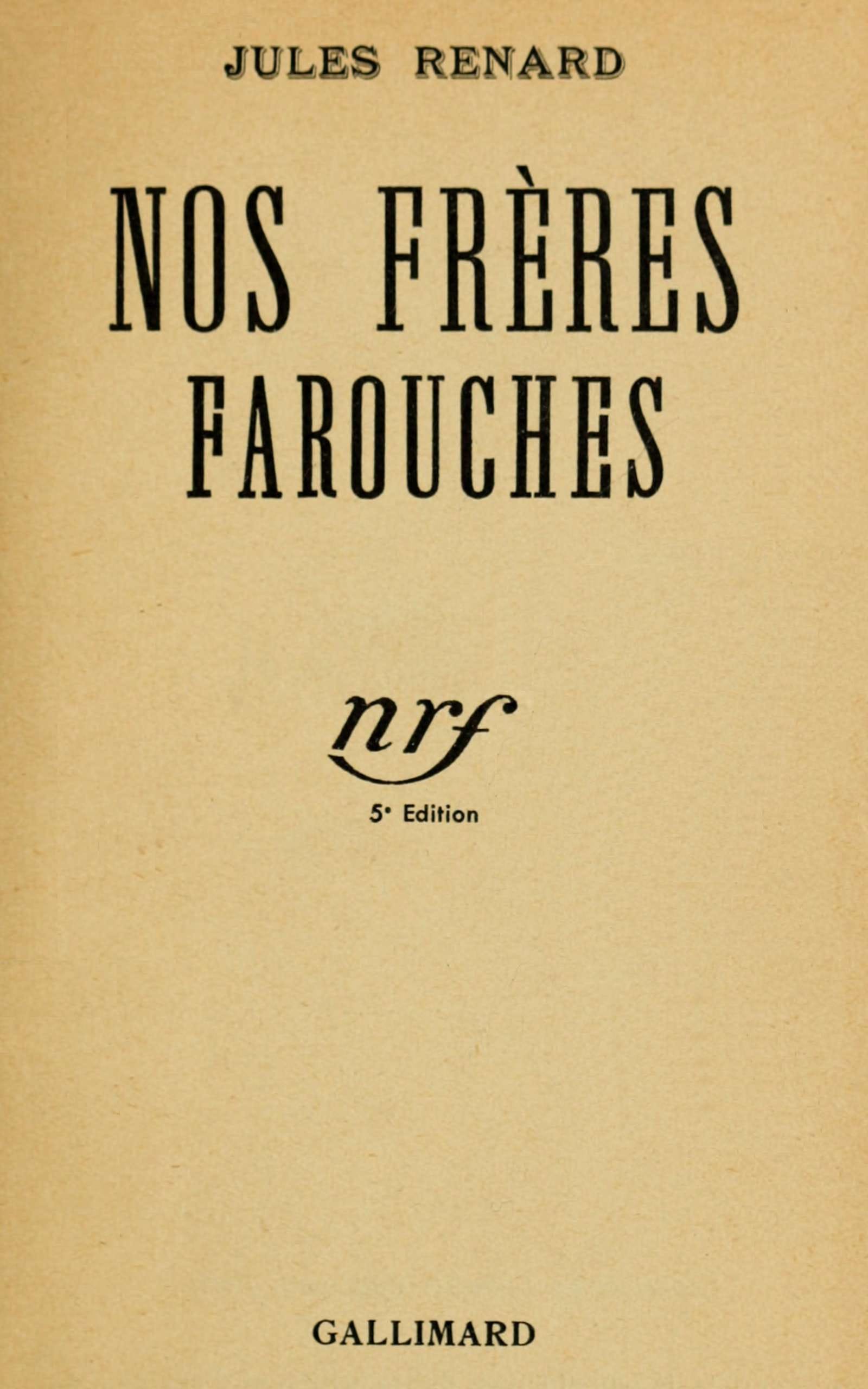
Jules Renard turned his unflinching gaze on the rural poor and gave us something extraordinary: a portrait of a peasant woman whose inner life is as vast and complex as any aristocrat's. Ragotte has attended school for only a few years, enough to learn reading and writing, but not enough to soften the hard edges of her world. Now married to Philippe, she moves through her days of domestic labor, motherhood, and quiet longing with a consciousness that Renard renders in deceptively simple prose. The novel follows her not through dramatic events but through the accumulating weight of small moments, the texture of labor, the complicated tenderness of family life. Renard's naturalist precision finds poetry in manure piles and kitchen chores, in the particular way light falls on a barn at dusk. This is a book that refuses to condescend to its protagonist, instead offering her the dignity of full interiority. It endures because it asks a question literature rarely posed in 1908: what does a life consist of, when that life is not exceptional? Everything, it turns out.
Editions
X-Ray
“It’s a famous bull, and when they see him on the road, the passersby marvel at his size. They admire him from a distance: with the bow of his horns, he could toss any man high in the air, like an arrow”
— Jules Renard
“I don't know if God exists, but it would certainly be better for his reputation if he didn't””
— Jules Renard
Link to this book
Add a free, dofollow link to Lex on your blog, forum, syllabus, or reading list.

<a href="https://lex-books.com/book/nos-fr-res-farouches-ragotte-les-philippe-08214fed-58db-46b4-a9e8-e928ea06e438"><img src="https://lex-books.com/badges/read-on-lex.svg" alt="Read Nos Frères Farouches: Ragotte, Les Philippe by Jules Renard free on Lex" width="160" height="40"></a>[](https://lex-books.com/book/nos-fr-res-farouches-ragotte-les-philippe-08214fed-58db-46b4-a9e8-e928ea06e438)[url=https://lex-books.com/book/nos-fr-res-farouches-ragotte-les-philippe-08214fed-58db-46b4-a9e8-e928ea06e438][img]https://lex-books.com/badges/read-on-lex.svg[/img][/url]Read Nos Frères Farouches: Ragotte, Les Philippe by Jules Renard free on Lex: https://lex-books.com/book/nos-fr-res-farouches-ragotte-les-philippe-08214fed-58db-46b4-a9e8-e928ea06e438Cite this book
Reading this edition for a paper or guide? Copy a citation.
Renard, Jules. Nos Frères Farouches: Ragotte, Les Philippe. Lex, lex-books.com/book/nos-fr-res-farouches-ragotte-les-philippe-08214fed-58db-46b4-a9e8-e928ea06e438.Renard, J. (1908). Nos Frères Farouches: Ragotte, Les Philippe. Lex. https://lex-books.com/book/nos-fr-res-farouches-ragotte-les-philippe-08214fed-58db-46b4-a9e8-e928ea06e438Renard, Jules. Nos Frères Farouches: Ragotte, Les Philippe. Lex. https://lex-books.com/book/nos-fr-res-farouches-ragotte-les-philippe-08214fed-58db-46b4-a9e8-e928ea06e438.