Needlework Economies: A Book of Mending and Making with Oddments and Scraps
1916
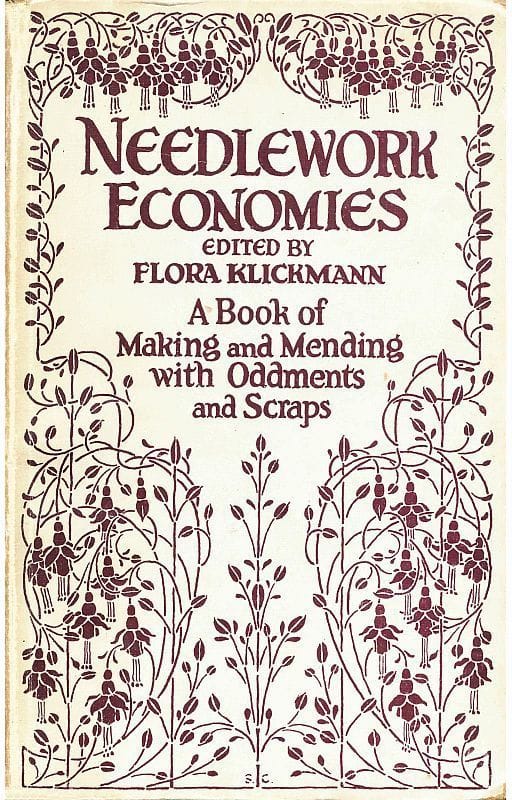
In 1916, as the First World War grinds on and fabric grows scarce, a quiet revolution stitches itself into everyday life. This book captures that moment when necessity became mother of invention, when women transformed worn-out garments into warm quilts, broken pottery into decorative buttons, and wartime hardship into an excuse for creativity. It's a time capsule of ingenuity, yes, but also something deeper: a meditation on resourcefulness as resistance. The practical instructions span from the essential to the ingenious. Learn to darn, to cut down a father's coat into a son's jacket, to piece together a warm quilt from fabric scraps no larger than your palm. But this isn't merely about survival. The author insists that make-do need not mean make-ugly: decorative stitches brighten plain garments, filet crochet trims nursery curtains, and knitted socks can be patterned rather than plain. Some suggestions border on the eccentric, fancy buttons made from garden pottery smashed with a hammer and sealed with wax, but that spirit of invention is precisely the point. A century before sustainability became a buzzword, this book lived it. For makers, thrifers, and anyone who believes creativity blooms best under constraint.
Editions
Link to this book
Add a free, dofollow link to Lex on your blog, forum, syllabus, or reading list.

<a href="https://lex-books.com/book/needlework-economies-a-book-of-mending-and-making-with-oddments-and-scraps-13def632-ca0c-49ab-af6d-3e91c1511919"><img src="https://lex-books.com/badges/read-on-lex.svg" alt="Read Needlework Economies: A Book of Mending and Making with Oddments and Scraps by Unknown free on Lex" width="160" height="40"></a>[](https://lex-books.com/book/needlework-economies-a-book-of-mending-and-making-with-oddments-and-scraps-13def632-ca0c-49ab-af6d-3e91c1511919)[url=https://lex-books.com/book/needlework-economies-a-book-of-mending-and-making-with-oddments-and-scraps-13def632-ca0c-49ab-af6d-3e91c1511919][img]https://lex-books.com/badges/read-on-lex.svg[/img][/url]Read Needlework Economies: A Book of Mending and Making with Oddments and Scraps by Unknown free on Lex: https://lex-books.com/book/needlework-economies-a-book-of-mending-and-making-with-oddments-and-scraps-13def632-ca0c-49ab-af6d-3e91c1511919Cite this book
Reading this edition for a paper or guide? Copy a citation.
Unknown. Needlework Economies: A Book of Mending and Making with Oddments and Scraps. Lex, lex-books.com/book/needlework-economies-a-book-of-mending-and-making-with-oddments-and-scraps-13def632-ca0c-49ab-af6d-3e91c1511919.Unknown (1916). Needlework Economies: A Book of Mending and Making with Oddments and Scraps. Lex. https://lex-books.com/book/needlework-economies-a-book-of-mending-and-making-with-oddments-and-scraps-13def632-ca0c-49ab-af6d-3e91c1511919Unknown. Needlework Economies: A Book of Mending and Making with Oddments and Scraps. Lex. https://lex-books.com/book/needlework-economies-a-book-of-mending-and-making-with-oddments-and-scraps-13def632-ca0c-49ab-af6d-3e91c1511919.