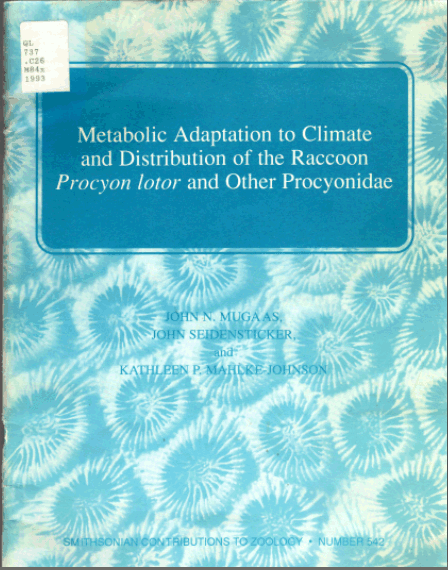
Metabolic Adaptation to Climate and Distribution of the Raccoon Procyon Lotor and Other Procyonidae
Metabolic Adaptation to Climate and Distribution of the Raccoon Procyon Lotor and Other Procyonidae
This specialized zoological study investigates how the common raccoon evolved to thrive across an extraordinary range of climates while its Procyonidae relatives remained ecologically restricted. The author examines the physiological mechanisms behind this adaptability, testing the hypothesis that Procyon lotor possesses distinct metabolic characteristics enabling its remarkable environmental flexibility. Through comparative analysis with other raccoon family members, the research traces the evolutionary history of this adaptable carnivore and the climatic pressures that shaped its physiology. The raccoon represents one of North America's most successful wild mammals, yet the biological foundations of its success have remained poorly understood. By examining metabolic parameters across temperature gradients and habitat types, this work illuminates how a single species can colonize environments from tropical rainforests to temperate forests to arid scrubland. A technical but significant contribution to understanding mammalian adaptation and evolutionary success.
Editions

Link to this book
Add a free, dofollow link to Lex on your blog, forum, syllabus, or reading list.

<a href="https://lex-books.com/book/metabolic-adaptation-to-climate-and-distribution-of-the-raccoon-procyon-lotor-an-37bff139-314d-4059-9cbe-7f1305821468"><img src="https://lex-books.com/badges/read-on-lex.svg" alt="Read Metabolic Adaptation to Climate and Distribution of the Raccoon Procyon Lotor and Other Procyonidae by John N. Mugaas free on Lex" width="160" height="40"></a>[](https://lex-books.com/book/metabolic-adaptation-to-climate-and-distribution-of-the-raccoon-procyon-lotor-an-37bff139-314d-4059-9cbe-7f1305821468)[url=https://lex-books.com/book/metabolic-adaptation-to-climate-and-distribution-of-the-raccoon-procyon-lotor-an-37bff139-314d-4059-9cbe-7f1305821468][img]https://lex-books.com/badges/read-on-lex.svg[/img][/url]Read Metabolic Adaptation to Climate and Distribution of the Raccoon Procyon Lotor and Other Procyonidae by John N. Mugaas free on Lex: https://lex-books.com/book/metabolic-adaptation-to-climate-and-distribution-of-the-raccoon-procyon-lotor-an-37bff139-314d-4059-9cbe-7f1305821468Cite this book
Reading this edition for a paper or guide? Copy a citation.
Mugaas, John N.. Metabolic Adaptation to Climate and Distribution of the Raccoon Procyon Lotor and Other Procyonidae. Lex, lex-books.com/book/metabolic-adaptation-to-climate-and-distribution-of-the-raccoon-procyon-lotor-an-37bff139-314d-4059-9cbe-7f1305821468.Mugaas, J. N. (n.d.). Metabolic Adaptation to Climate and Distribution of the Raccoon Procyon Lotor and Other Procyonidae. Lex. https://lex-books.com/book/metabolic-adaptation-to-climate-and-distribution-of-the-raccoon-procyon-lotor-an-37bff139-314d-4059-9cbe-7f1305821468Mugaas, John N.. Metabolic Adaptation to Climate and Distribution of the Raccoon Procyon Lotor and Other Procyonidae. Lex. https://lex-books.com/book/metabolic-adaptation-to-climate-and-distribution-of-the-raccoon-procyon-lotor-an-37bff139-314d-4059-9cbe-7f1305821468.