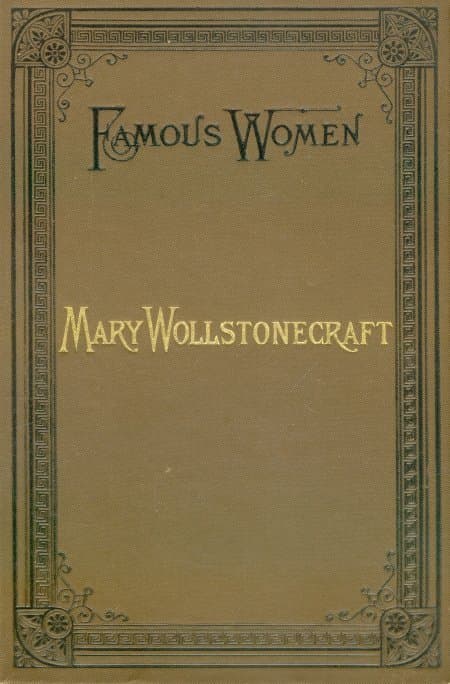
Mary Wollstonecraft Godwin
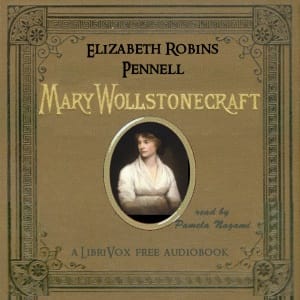
In an age when women possessed no legal existence, no right to education, and no voice in the politics that shaped their world, Mary Wollstonecraft dared to write herself into history. This vivid biography by Elizabeth Robins Pennell traces the extraordinary arc of a life that refused every constraint placed upon it: the daughter of a violent, dissipated father and a mother worn submissive by duty, Wollstonecraft educated herself through sheer will, abandoned the respectable prison of governessing, and traveled alone to London to become a writer and translator. In 1790 she erupted into public debate with her defense of the French Revolution, replying to Edmund Burke's conservative backlash. Then, with "A Vindication of the Rights of Woman" in 1792, she performed an act of intellectual daring that still resonates: she insisted women were rational beings entitled to the same education and freedoms as men. Her personal life, marked by heartbreak, a suicide attempt, and her scandalous marriage to philosopher William Godwin, provided her enemies with ammunition to smear her legacy for generations. She died at thirty-eight giving birth to the daughter who would write Frankenstein. This is the story of a woman who, in demanding rights for her sex, became the most controversial figure of her era and an icon for every generation that followed.
Editions

Link to this book
Add a free, dofollow link to Lex on your blog, forum, syllabus, or reading list.

<a href="https://lex-books.com/book/mary-wollstonecraft-godwin-5bee60c9-e23d-4a6f-9034-bd7978f41e81"><img src="https://lex-books.com/badges/read-on-lex.svg" alt="Read Mary Wollstonecraft Godwin by Elizabeth Robins Pennell free on Lex" width="160" height="40"></a>[](https://lex-books.com/book/mary-wollstonecraft-godwin-5bee60c9-e23d-4a6f-9034-bd7978f41e81)[url=https://lex-books.com/book/mary-wollstonecraft-godwin-5bee60c9-e23d-4a6f-9034-bd7978f41e81][img]https://lex-books.com/badges/read-on-lex.svg[/img][/url]Read Mary Wollstonecraft Godwin by Elizabeth Robins Pennell free on Lex: https://lex-books.com/book/mary-wollstonecraft-godwin-5bee60c9-e23d-4a6f-9034-bd7978f41e81Cite this book
Reading this edition for a paper or guide? Copy a citation.
Pennell, Elizabeth Robins. Mary Wollstonecraft Godwin. Lex, lex-books.com/book/mary-wollstonecraft-godwin-5bee60c9-e23d-4a6f-9034-bd7978f41e81.Pennell, E. R. (n.d.). Mary Wollstonecraft Godwin. Lex. https://lex-books.com/book/mary-wollstonecraft-godwin-5bee60c9-e23d-4a6f-9034-bd7978f41e81Pennell, Elizabeth Robins. Mary Wollstonecraft Godwin. Lex. https://lex-books.com/book/mary-wollstonecraft-godwin-5bee60c9-e23d-4a6f-9034-bd7978f41e81.