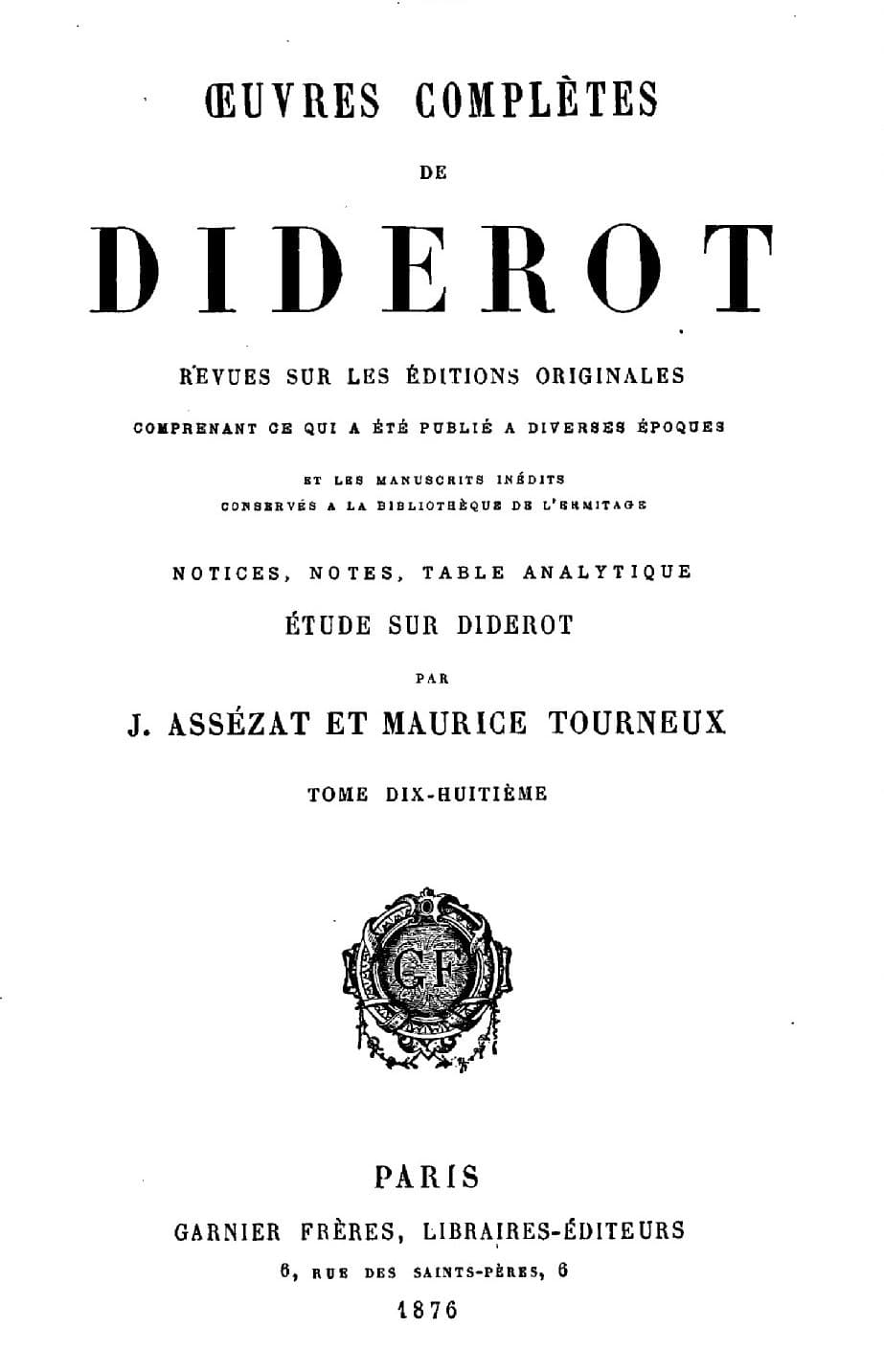
Lettre à un magistrat sur le commerce de la librairie... et Lettre sur les aveugles...

Two letters that reveal Diderot at his most provocative and precise. The first, written to a magistrate in 1763, is a fierce defense of the book trade and publishers' rights a bracing, practical argument about piracy, copyright, and the economics of ideas. The second, from 1749, is the more radical work: a philosophical meditation on how the blind perceive the world, which caused Diderot to be imprisoned in the Bastille. By imagining consciousness without sight, he dismantles the assumption that vision is the foundation of knowledge. These are not mere historical documents. They are case studies in how one of the Enlightenment's fiercest minds thinks: from the concrete (who owns a book?) to the profound (how do we know what we know?). For readers who want to understand the philosophical roots of modern debates about intellectual property and sensory perception, there is no better entry point.
Editions

Link to this book
Add a free, dofollow link to Lex on your blog, forum, syllabus, or reading list.

<a href="https://lex-books.com/book/lettre-un-magistrat-sur-le-commerce-de-la-librairie-et-lettre-sur-les-aveugles-24864b4e-b1d0-4465-9239-a8982396d375"><img src="https://lex-books.com/badges/read-on-lex.svg" alt="Read Lettre à un magistrat sur le commerce de la librairie... et Lettre sur les aveugles... by Denis Diderot free on Lex" width="160" height="40"></a>[](https://lex-books.com/book/lettre-un-magistrat-sur-le-commerce-de-la-librairie-et-lettre-sur-les-aveugles-24864b4e-b1d0-4465-9239-a8982396d375)[url=https://lex-books.com/book/lettre-un-magistrat-sur-le-commerce-de-la-librairie-et-lettre-sur-les-aveugles-24864b4e-b1d0-4465-9239-a8982396d375][img]https://lex-books.com/badges/read-on-lex.svg[/img][/url]Read Lettre à un magistrat sur le commerce de la librairie... et Lettre sur les aveugles... by Denis Diderot free on Lex: https://lex-books.com/book/lettre-un-magistrat-sur-le-commerce-de-la-librairie-et-lettre-sur-les-aveugles-24864b4e-b1d0-4465-9239-a8982396d375Cite this book
Reading this edition for a paper or guide? Copy a citation.
Diderot, Denis. Lettre à un magistrat sur le commerce de la librairie... et Lettre sur les aveugles.... Lex, lex-books.com/book/lettre-un-magistrat-sur-le-commerce-de-la-librairie-et-lettre-sur-les-aveugles-24864b4e-b1d0-4465-9239-a8982396d375.Diderot, D. (n.d.). Lettre à un magistrat sur le commerce de la librairie... et Lettre sur les aveugles.... Lex. https://lex-books.com/book/lettre-un-magistrat-sur-le-commerce-de-la-librairie-et-lettre-sur-les-aveugles-24864b4e-b1d0-4465-9239-a8982396d375Diderot, Denis. Lettre à un magistrat sur le commerce de la librairie... et Lettre sur les aveugles.... Lex. https://lex-books.com/book/lettre-un-magistrat-sur-le-commerce-de-la-librairie-et-lettre-sur-les-aveugles-24864b4e-b1d0-4465-9239-a8982396d375.