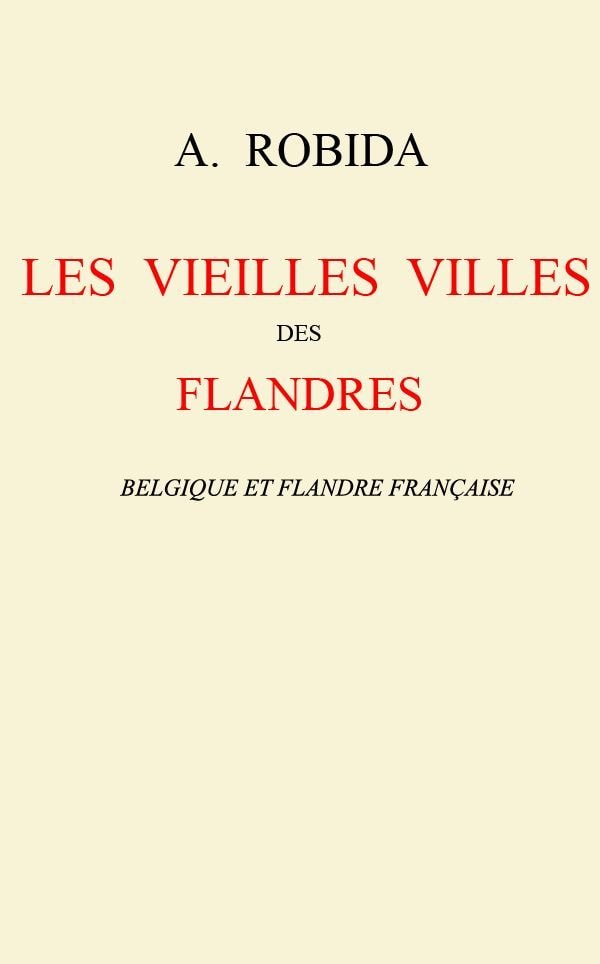
Les Vieilles Villes Des Flandres: Belgique Et Flandre Française

Les Vieilles Villes Des Flandres: Belgique Et Flandre Française
A historical account likely written in the late 19th century. The work explores the rich history and architectural significance of various towns in Flanders, providing insights into their medieval origins, economic importance, and artistic heritage. Robida vividly describes the transformations these cities have undergone over time, highlighting their unique characteristics and the impact of historical events. The opening of the book sets the stage for a journey through historic Flanders, beginning with the cities of Cambrai and Valenciennes. It paints a picture of bustling marketplaces and grand architecture, emphasizing the industrious spirit of their inhabitants throughout the ages. The narrative touches upon notable historical milestones, such as the struggles against feudal powers and the Spanish dominance, while also sparking curiosity into how modern developments contrast with the cities' vibrant pasts. Robida's evocative descriptions invite readers to contemplate the stories embedded within these ancient streets, encouraging a deeper appreciation for the cultural legacy of Flanders.
Editions
X-Ray
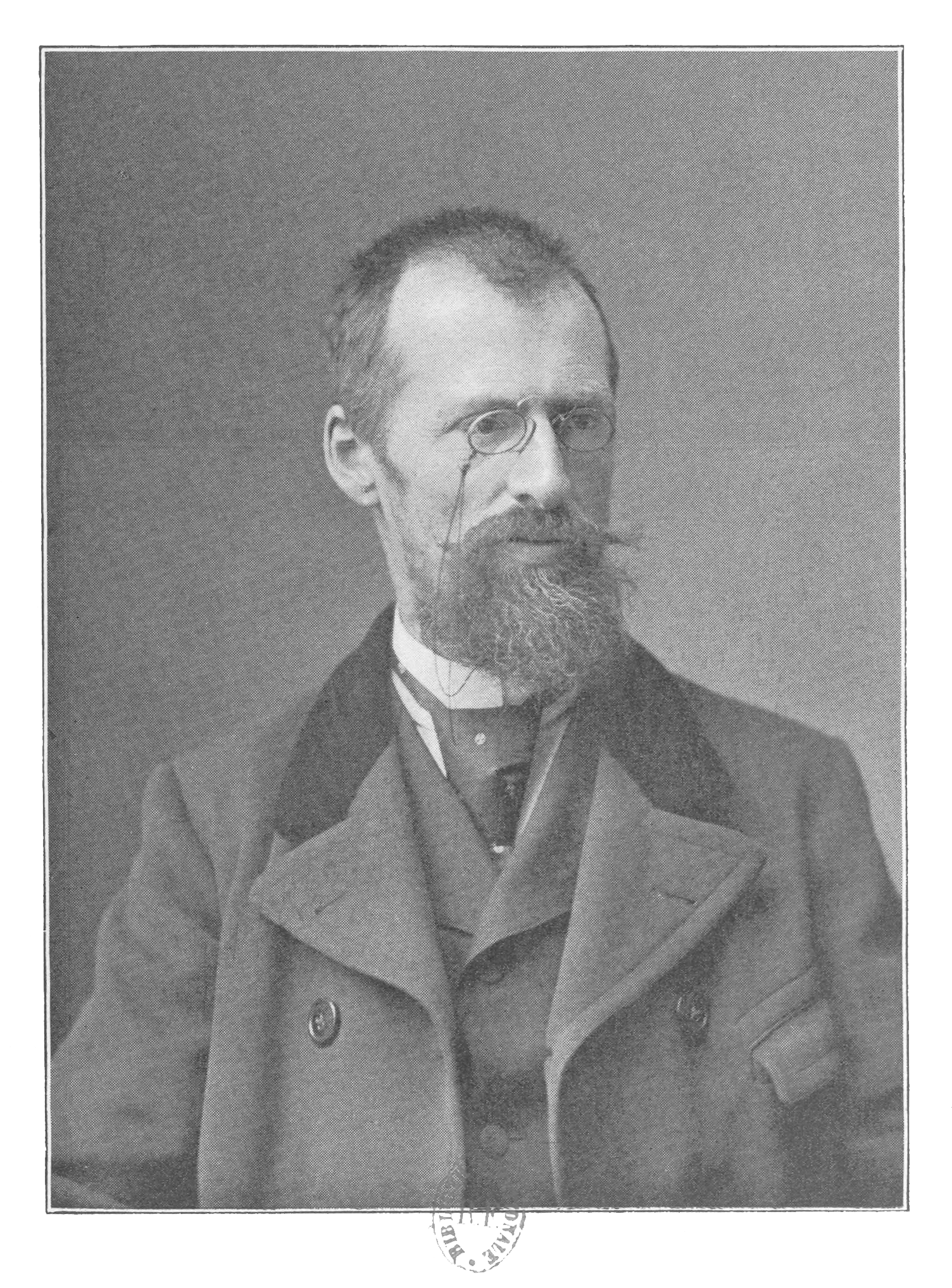
The author and illustrator of this travel guide through the old cities of Flanders. He serves as the narrator and guide, providing historical context and artistic observations throughout the journey.
Duke of Burgundy whose military campaigns and sieges shaped much of Flemish history. His brutal sack of Dinant and siege of Liège are recurring themes in the book.
Holy Roman Emperor born in Ghent who significantly influenced Flemish architecture and politics. Many buildings and monuments are associated with his reign.
Duke of Burgundy who founded the Order of the Golden Fleece in Bruges. Represents the golden age of Burgundian rule in Flanders.
About Les Vieilles Villes Des Flandres: Belgique Et Flandre Française
Chapter Summaries
- 1
- Introduction to the Flemish region through two transitional cities. Robida describes Cambrai's modernized appearance and remaining medieval fragments, then moves to Valenciennes with its industrial character but preserved historical monuments.
- 2
- Exploration of Douai's magnificent Gothic town hall and the legend of the giant Gayant, followed by Lille's transformation into a modern industrial capital while retaining fragments of its medieval past.
- 3
- Journey through three smaller Flemish cities, each representing different aspects of decline and preservation. Furnes maintains its splendid Grand Place, while Nieuport and Dixmude show the melancholy of former greatness.
Key Themes
- Architectural Heritage as Cultural Identity
- Robida demonstrates how Gothic and Renaissance buildings serve as repositories of Flemish identity. The belfries, guild halls, and churches represent not just artistic achievement but the democratic spirit of medieval communes.
- The Cycle of Destruction and Renewal
- Throughout the book, cities repeatedly suffer devastation through war, fire, and plague, yet always rebuild. This resilience reflects the indomitable Flemish character and the continuity of urban civilization.
- Commerce and Culture
- The prosperity of Flemish cities through trade and craftsmanship enabled their artistic flowering. Robida shows how economic success translated into architectural magnificence and cultural patronage.
Characters
- Albert Robida(protagonist)
- The author and illustrator of this travel guide through the old cities of Flanders. He serves as the narrator and guide, providing historical context and artistic observations throughout the journey.
- Charles le Téméraire (Charles the Bold)(major)
- Duke of Burgundy whose military campaigns and sieges shaped much of Flemish history. His brutal sack of Dinant and siege of Liège are recurring themes in the book.
- Charles-Quint (Charles V)(major)
- Holy Roman Emperor born in Ghent who significantly influenced Flemish architecture and politics. Many buildings and monuments are associated with his reign.
- Philippe le Bon(major)
- Duke of Burgundy who founded the Order of the Golden Fleece in Bruges. Represents the golden age of Burgundian rule in Flanders.
- Marie de Bourgogne(major)
- Duchess who died young in Bruges from a hunting accident. Her tomb in Notre-Dame represents the tragic end of Burgundian independence.
- Duc d'Albe(antagonist)
- Spanish general sent by Philip II to suppress the Flemish revolt. His brutal repression and the Council of Troubles brought terror to the region.
Link to this book
Add a free, dofollow link to Lex on your blog, forum, syllabus, or reading list.

<a href="https://lex-books.com/book/les-vieilles-villes-des-flandres-belgique-et-flandre-fran-aise-8f67fac1-22c7-44d5-b69e-625416710775"><img src="https://lex-books.com/badges/read-on-lex.svg" alt="Read Les Vieilles Villes Des Flandres: Belgique Et Flandre Française by Albert Robida free on Lex" width="160" height="40"></a>[](https://lex-books.com/book/les-vieilles-villes-des-flandres-belgique-et-flandre-fran-aise-8f67fac1-22c7-44d5-b69e-625416710775)[url=https://lex-books.com/book/les-vieilles-villes-des-flandres-belgique-et-flandre-fran-aise-8f67fac1-22c7-44d5-b69e-625416710775][img]https://lex-books.com/badges/read-on-lex.svg[/img][/url]Read Les Vieilles Villes Des Flandres: Belgique Et Flandre Française by Albert Robida free on Lex: https://lex-books.com/book/les-vieilles-villes-des-flandres-belgique-et-flandre-fran-aise-8f67fac1-22c7-44d5-b69e-625416710775Cite this book
Reading this edition for a paper or guide? Copy a citation.
Robida, Albert. Les Vieilles Villes Des Flandres: Belgique Et Flandre Française. Lex, lex-books.com/book/les-vieilles-villes-des-flandres-belgique-et-flandre-fran-aise-8f67fac1-22c7-44d5-b69e-625416710775.Robida, A. (n.d.). Les Vieilles Villes Des Flandres: Belgique Et Flandre Française. Lex. https://lex-books.com/book/les-vieilles-villes-des-flandres-belgique-et-flandre-fran-aise-8f67fac1-22c7-44d5-b69e-625416710775Robida, Albert. Les Vieilles Villes Des Flandres: Belgique Et Flandre Française. Lex. https://lex-books.com/book/les-vieilles-villes-des-flandres-belgique-et-flandre-fran-aise-8f67fac1-22c7-44d5-b69e-625416710775.