Le Démon De L'absurde
1894
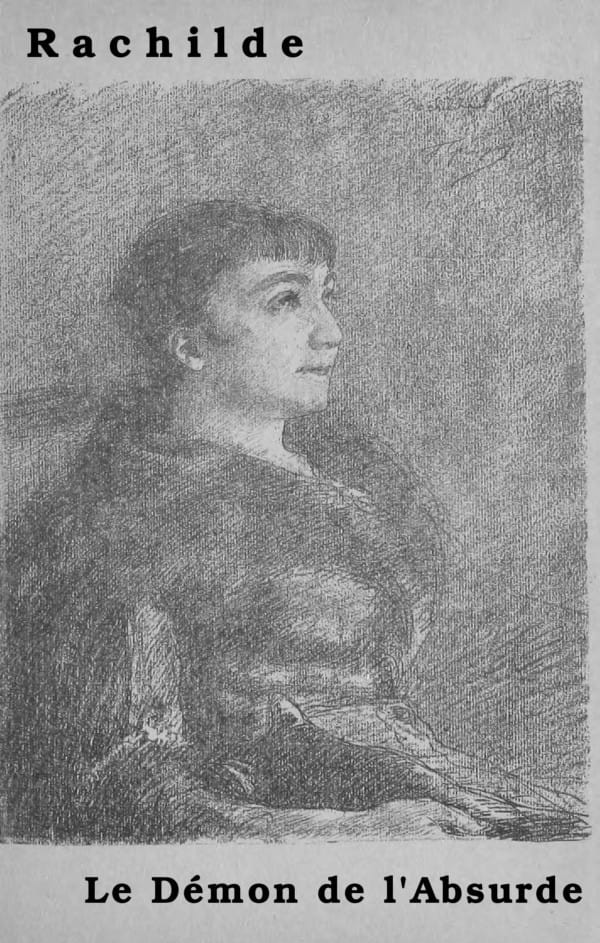
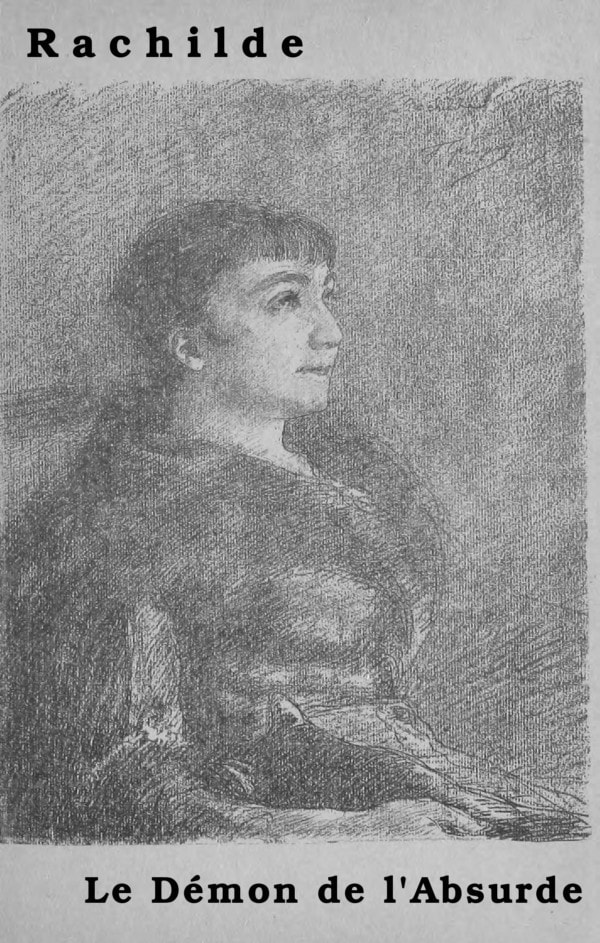
Published in 1894, Le Démon de l'Absurde arrives at the twilight of the Symbolist era, where Rachilde interrogates the silence between meaning and meaninglessness. Part philosophical meditation, part fevered poetic vision, the book unfolds through a preface by Marcel Schwob that sets the stakes: existence is insignificant, and a "demon" of the absurd watches over it all. What follows is Rachilde at her most raw, meditations on death, transformation, and the uncanny that blur the line between autobiography and hallucination. The long poem "Les Fumées" threads through the work like smoke rising from an industrial landscape, rendering nature and industry in dialectical tension. This is not a novel in any conventional sense; it's a descent into the chambers of a mind confronting the void. Rachilde, who scandalized Paris with "Monsieur Venus" a decade earlier, here abandons narrative entirely for something more destabilizing: a sustained encounter with existential dread that predates existentialism proper. For readers willing to surrender to its fragmentary logic, the book offers something rare, the sensation of thinking alongside a brilliant, tormented consciousness about what it means to be alive when the universe refuses to explain itself.
Editions

Link to this book
Add a free, dofollow link to Lex on your blog, forum, syllabus, or reading list.

<a href="https://lex-books.com/book/le-d-mon-de-l-absurde-2052bc21-1be4-4b79-9aca-38339603fd3f"><img src="https://lex-books.com/badges/read-on-lex.svg" alt="Read Le Démon De L'absurde by Rachilde free on Lex" width="160" height="40"></a>[](https://lex-books.com/book/le-d-mon-de-l-absurde-2052bc21-1be4-4b79-9aca-38339603fd3f)[url=https://lex-books.com/book/le-d-mon-de-l-absurde-2052bc21-1be4-4b79-9aca-38339603fd3f][img]https://lex-books.com/badges/read-on-lex.svg[/img][/url]Read Le Démon De L'absurde by Rachilde free on Lex: https://lex-books.com/book/le-d-mon-de-l-absurde-2052bc21-1be4-4b79-9aca-38339603fd3fCite this book
Reading this edition for a paper or guide? Copy a citation.
Rachilde. Le Démon De L'absurde. Lex, lex-books.com/book/le-d-mon-de-l-absurde-2052bc21-1be4-4b79-9aca-38339603fd3f.Rachilde (1894). Le Démon De L'absurde. Lex. https://lex-books.com/book/le-d-mon-de-l-absurde-2052bc21-1be4-4b79-9aca-38339603fd3fRachilde. Le Démon De L'absurde. Lex. https://lex-books.com/book/le-d-mon-de-l-absurde-2052bc21-1be4-4b79-9aca-38339603fd3f.