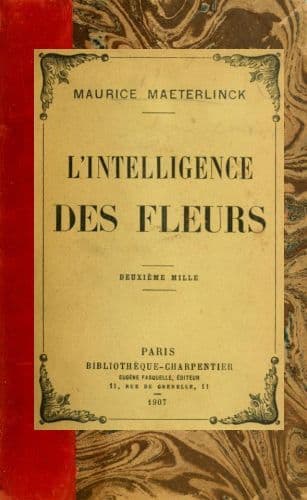
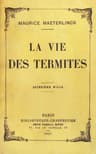
La Vie Des Termites
1926
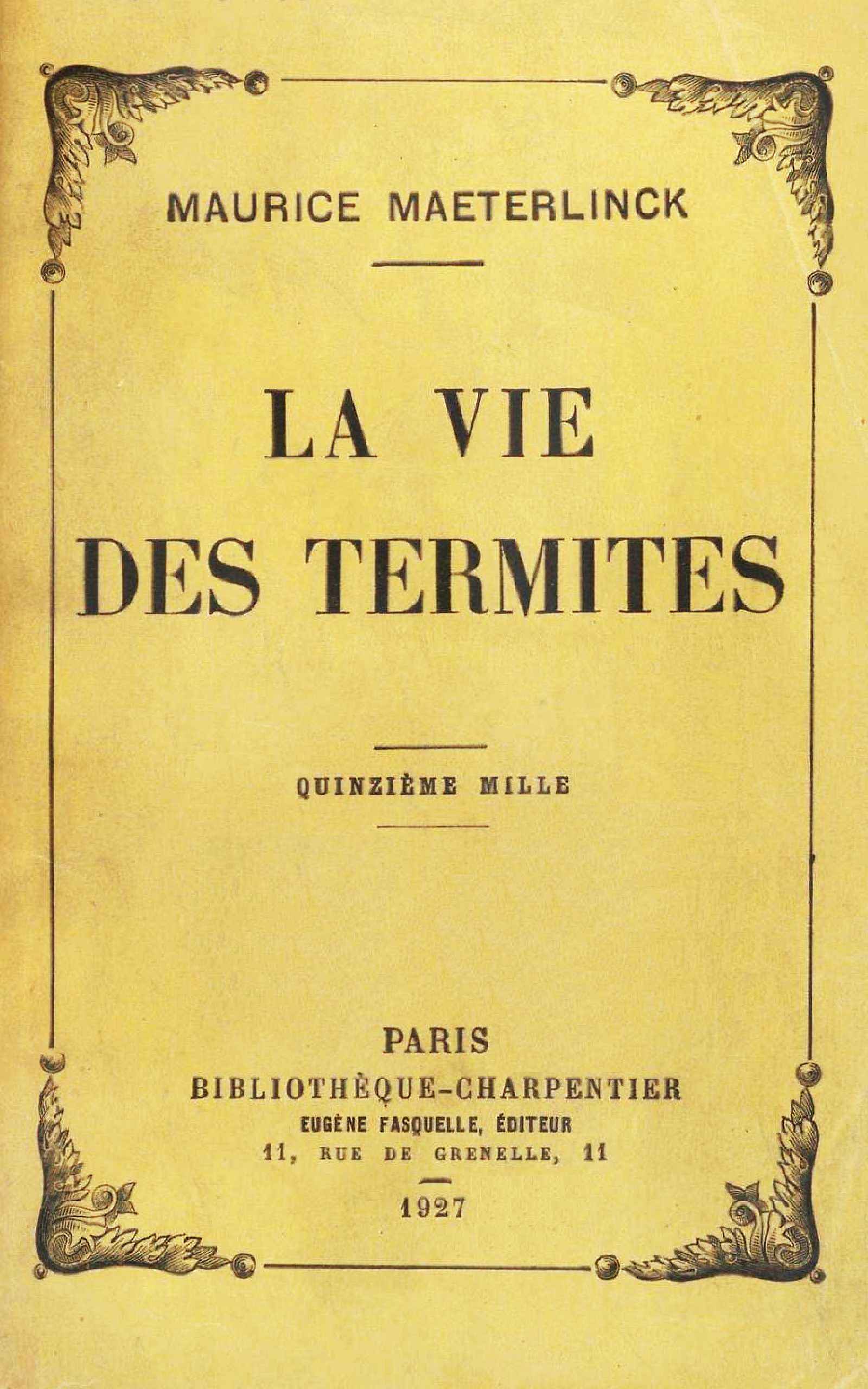
Nobel laureate Maurice Maeterlinck turns his luminous attention to the humbler creatures of the earth in this 1926 study of termite civilization. Written with the poetic precision that defined his dramatic work, Maeterlinck observes these "little gods of the earth" with something approaching reverence, mapping their astonishing societies: the建筑师们 (architects) who build cathedral-like mounds, the soldiers guarding eternal thresholds, and the royal pair imprisoned in their crystalline chamber, tended for decades by devoted workers. He distinguishes his careful methodology from the embellished tales of earlier travelers, yet retains a philosopher's wonder at what he witnesses. The book moves from practical matters of nutrition and construction to deeper meditations on what Maeterlinck calls "the morality of the termitary" and the strange boundary between instinct and intelligence. Part natural history, part metaphysical inquiry, this is a work that sees in insect societies a mirror for human ambition, hierarchy, and the eternal question of what constitutes consciousness and purpose.
Editions
X-Ray
“Las más bellas morales humanas están todas fundadas sobre la idea de que es preciso luchar y sufrir para purificarse, elevarse y perfeccionarse; pero ninguna trata de explicar por qué es necesario empezar de nuevo sin cesar. ¿Dónde va, pues, en qué abismos infinitos se pierde, desde eternidades sin límites, lo que se ha elevado en nosotros y no ha dejado vestigios? ¿Por qué si el Anima Mundi es soberanamente sabia ha querido estas luchas y estos sufrimientos que jamás han llegado y que, por consecuencia, jamás llegarán al fin? ¿Por qué no haber puesto, al primer esfuerzo, todas las cosas al punto de perfección a que nosotros creemos que tienden? ¿Por qué es preciso merecer su dicha? Pero ¿qué méritos pueden tener los que luchan o sufren mejor que sus hermanos, puesto que la fuerza o la virtud que les anima no la tienen más que porque un poder exterior la ha puesto en ellos más propiciamente que en otros?””
— Maurice Maeterlinck
Link to this book
Add a free, dofollow link to Lex on your blog, forum, syllabus, or reading list.

<a href="https://lex-books.com/book/la-vie-des-termites-1aee0bec-a646-402e-8df1-e0f06e3a7852"><img src="https://lex-books.com/badges/read-on-lex.svg" alt="Read La Vie Des Termites by Maurice Maeterlinck free on Lex" width="160" height="40"></a>[](https://lex-books.com/book/la-vie-des-termites-1aee0bec-a646-402e-8df1-e0f06e3a7852)[url=https://lex-books.com/book/la-vie-des-termites-1aee0bec-a646-402e-8df1-e0f06e3a7852][img]https://lex-books.com/badges/read-on-lex.svg[/img][/url]Read La Vie Des Termites by Maurice Maeterlinck free on Lex: https://lex-books.com/book/la-vie-des-termites-1aee0bec-a646-402e-8df1-e0f06e3a7852Cite this book
Reading this edition for a paper or guide? Copy a citation.
Maeterlinck, Maurice. La Vie Des Termites. Lex, lex-books.com/book/la-vie-des-termites-1aee0bec-a646-402e-8df1-e0f06e3a7852.Maeterlinck, M. (1926). La Vie Des Termites. Lex. https://lex-books.com/book/la-vie-des-termites-1aee0bec-a646-402e-8df1-e0f06e3a7852Maeterlinck, Maurice. La Vie Des Termites. Lex. https://lex-books.com/book/la-vie-des-termites-1aee0bec-a646-402e-8df1-e0f06e3a7852.