Java, Facts and Fancies
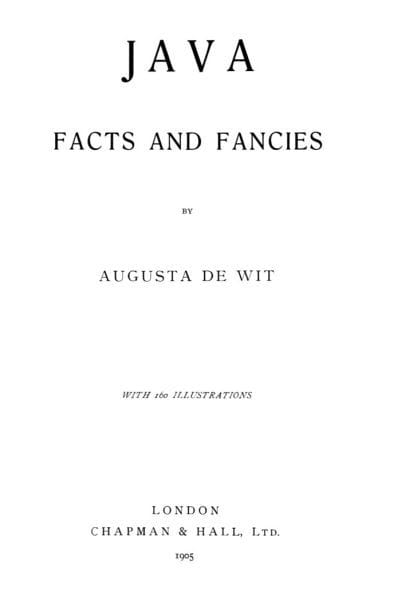
When Augusta de Wit arrived in Java in the 1910s, she discovered that the island of her dreams bore little resemblance to the fanciful place she had imagined. The "airy fancies, legends and dreams" had collided with a busy manufacturing country, prosperous and prosaic, in the midst of a dramatic transformation. What she found instead was a society at a crossroads: the Dutch colonial regime had just embarked on its "Ethical Policy," simultaneously attempting to repay a "debt of honour" to an impoverished peasantry while facilitating the engines of modern capitalism. Through 160 vivid illustrations and discerning prose, de Wit documents both the dying world of Javanese aristocracy and the struggling reality of the peasantry, creating an illuminating record of a civilization in transition. She captures Batavia's bustling waters thick with native boats, the soft rains of the tropical season, and the complex blend of customs that define this vibrant land. For readers seeking a window into early 20th-century colonial Indonesia, this work offers neither polemic nor romance, but something rarer: a clear-eyed witness to history in the making.
Editions
Link to this book
Add a free, dofollow link to Lex on your blog, forum, syllabus, or reading list.

<a href="https://lex-books.com/book/java-facts-and-fancies-0f684043-55ab-449c-b60a-a7616fe44d7e"><img src="https://lex-books.com/badges/read-on-lex.svg" alt="Read Java, Facts and Fancies by Augusta de Wit free on Lex" width="160" height="40"></a>[](https://lex-books.com/book/java-facts-and-fancies-0f684043-55ab-449c-b60a-a7616fe44d7e)[url=https://lex-books.com/book/java-facts-and-fancies-0f684043-55ab-449c-b60a-a7616fe44d7e][img]https://lex-books.com/badges/read-on-lex.svg[/img][/url]Read Java, Facts and Fancies by Augusta de Wit free on Lex: https://lex-books.com/book/java-facts-and-fancies-0f684043-55ab-449c-b60a-a7616fe44d7eCite this book
Reading this edition for a paper or guide? Copy a citation.
Wit, Augusta de. Java, Facts and Fancies. Lex, lex-books.com/book/java-facts-and-fancies-0f684043-55ab-449c-b60a-a7616fe44d7e.Wit, A. D. (n.d.). Java, Facts and Fancies. Lex. https://lex-books.com/book/java-facts-and-fancies-0f684043-55ab-449c-b60a-a7616fe44d7eWit, Augusta de. Java, Facts and Fancies. Lex. https://lex-books.com/book/java-facts-and-fancies-0f684043-55ab-449c-b60a-a7616fe44d7e.