Inquiries into Human Faculty and Its Development
1883
Inquiries into Human Faculty and Its Development
1883
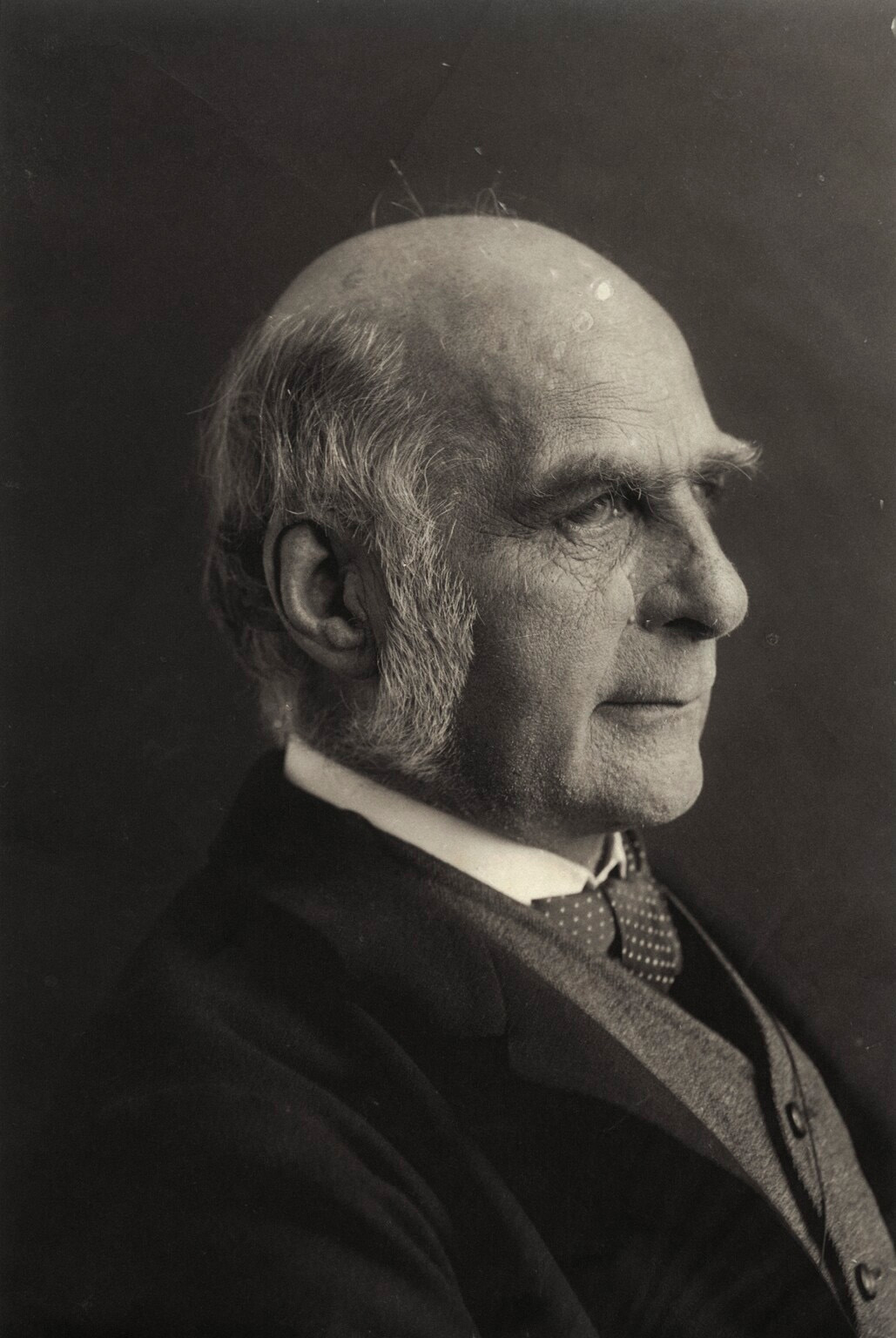
Francis Galton's 1883 work stands as a landmark in the birth of modern psychology and statistical science. A cousin of Charles Darwin, Galton was obsessed with applying Darwinian principles to human ability: could excellence be measured, predicted, and reproduced? The result is a fiercely ambitious attempt to quantify human variation through empirical observation and early statistical methods. Galton examines judges, poets, wrestlers, and scientists, tracing patterns of eminence through family trees to argue that exceptional ability is largely inherited. He coins the term "eugenics" here (though his ideas had circulated for years), proposing that humanity might consciously improve itself through selective breeding. The book also introduced the concept of "nature versus nurture" to popular discourse. Yet Galton's conclusions, while groundbreaking in methodology, would become among the most dangerous ideas in modern history, eventually twisted to justify genocide. Today the work serves as a primary document for understanding both the origins of behavioral genetics and the ethical boundaries that separate scientific inquiry from ideological abuse.
Editions
X-Ray
“I have no patience with the hypothesis occasionally expressed, and often implied, especially in tales written to teach children to be good, that babies are born pretty much alike, and that the sole agencies in creating differences between boy and boy, and man and man, are steady application and moral effort. It is in the most unqualified manner that I object to pretensions of natural equality. The experiences of the nursery, the school, the University, and of professional careers, are a chain of proofs to the contrary. I acknowledge freely the great power of education and social influences in developing the active powers of the mind, just as I acknowledge the effect of use in developing the muscles of a blacksmith's arm, and no further. Let the blacksmith labour as he will, he will find there are certain feats beyond his power that are well within the strength of a man of herculean make, even although the latter may have led a sedentary life.””
— Francis Galton
“People lay too much stress on apparent specialities, thinking overrashly that, because a man is devoted to some particular pursuit, he could not possibly have succeeded in anything else. They might just as well say that, because a youth had fallen desperately in love with a brunette, he could not possibly have fallen in love with a blonde. He may or may not have more natural liking for the former type of beauty than the latter, but it is as probable as not that the affair was mainly or wholly due to a general amorousness of disposition. It is just the same with special pursuits. A gifted man is often capricious and fickle before he selects his occupation, but when it has been chosen, he devotes himself to it with a truly passionate ardour. After a man of genius has selected his hobby, and so adapted himself to it as to seem unfitted for any other occupation in life, and to be possessed of but one special aptitude, I often notice, with admiration, how well he bears himself when circumstances suddenly thrust him into a strange position. He will display an insight into new conditions, and a power of dealing with them, with which even his most intimate friends were unprepared to accredit him.””
— Francis Galton
Link to this book
Add a free, dofollow link to Lex on your blog, forum, syllabus, or reading list.

<a href="https://lex-books.com/book/inquiries-into-human-faculty-and-its-development-9907c7df-aba6-43bb-8f98-468d0594fbca"><img src="https://lex-books.com/badges/read-on-lex.svg" alt="Read Inquiries into Human Faculty and Its Development by Francis Galton free on Lex" width="160" height="40"></a>[](https://lex-books.com/book/inquiries-into-human-faculty-and-its-development-9907c7df-aba6-43bb-8f98-468d0594fbca)[url=https://lex-books.com/book/inquiries-into-human-faculty-and-its-development-9907c7df-aba6-43bb-8f98-468d0594fbca][img]https://lex-books.com/badges/read-on-lex.svg[/img][/url]Read Inquiries into Human Faculty and Its Development by Francis Galton free on Lex: https://lex-books.com/book/inquiries-into-human-faculty-and-its-development-9907c7df-aba6-43bb-8f98-468d0594fbcaCite this book
Reading this edition for a paper or guide? Copy a citation.
Galton, Francis. Inquiries into Human Faculty and Its Development. Lex, lex-books.com/book/inquiries-into-human-faculty-and-its-development-9907c7df-aba6-43bb-8f98-468d0594fbca.Galton, F. (1883). Inquiries into Human Faculty and Its Development. Lex. https://lex-books.com/book/inquiries-into-human-faculty-and-its-development-9907c7df-aba6-43bb-8f98-468d0594fbcaGalton, Francis. Inquiries into Human Faculty and Its Development. Lex. https://lex-books.com/book/inquiries-into-human-faculty-and-its-development-9907c7df-aba6-43bb-8f98-468d0594fbca.