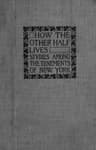
How the Other Half Lives

Step into the squalid, overcrowded tenements of late 19th-century New York City with Jacob Riis's groundbreaking exposé, "How the Other Half Lives." This visceral account, born from Riis's pioneering use of flash photography, statistics, and deeply personal anecdotes, pulls back the curtain on the lives of the city's working poor. Riis meticulously details the various ethnic enclaves and their daily struggles, weaving a narrative that is part journalistic documentary, part impassioned moral critique. He spares no one, condemning the avarice of landlords, the proliferation of saloons, and the systemic forces that kept a vast segment of the population trapped in abject poverty, while also highlighting burgeoning reform efforts. More than a mere historical document, "How the Other Half Lives" is a landmark work of photojournalism and social advocacy that irrevocably altered public perception. Its original publication, first as an article in Scribner's Magazine and then as an expanded book featuring Riis's revolutionary photographs, shocked the complacent middle and upper classes. This powerful indictment ignited widespread outrage, particularly within Christian organizations, and served as a crucial catalyst for significant urban reforms. Riis's unflinching lens and urgent prose remain a testament to the power of journalism to effect profound social change, making it essential reading for understanding the roots of urban poverty and the birth of modern social reform.
Editions

Link to this book
Add a free, dofollow link to Lex on your blog, forum, syllabus, or reading list.

<a href="https://lex-books.com/book/how-the-other-half-lives-be34fe22-0410-4a1c-b58c-4547c1996c01"><img src="https://lex-books.com/badges/read-on-lex.svg" alt="Read How the Other Half Lives by Jacob Riis free on Lex" width="160" height="40"></a>[](https://lex-books.com/book/how-the-other-half-lives-be34fe22-0410-4a1c-b58c-4547c1996c01)[url=https://lex-books.com/book/how-the-other-half-lives-be34fe22-0410-4a1c-b58c-4547c1996c01][img]https://lex-books.com/badges/read-on-lex.svg[/img][/url]Read How the Other Half Lives by Jacob Riis free on Lex: https://lex-books.com/book/how-the-other-half-lives-be34fe22-0410-4a1c-b58c-4547c1996c01Cite this book
Reading this edition for a paper or guide? Copy a citation.
Riis, Jacob. How the Other Half Lives. Lex, lex-books.com/book/how-the-other-half-lives-be34fe22-0410-4a1c-b58c-4547c1996c01.Riis, J. (n.d.). How the Other Half Lives. Lex. https://lex-books.com/book/how-the-other-half-lives-be34fe22-0410-4a1c-b58c-4547c1996c01Riis, Jacob. How the Other Half Lives. Lex. https://lex-books.com/book/how-the-other-half-lives-be34fe22-0410-4a1c-b58c-4547c1996c01.