History of the United States
1921
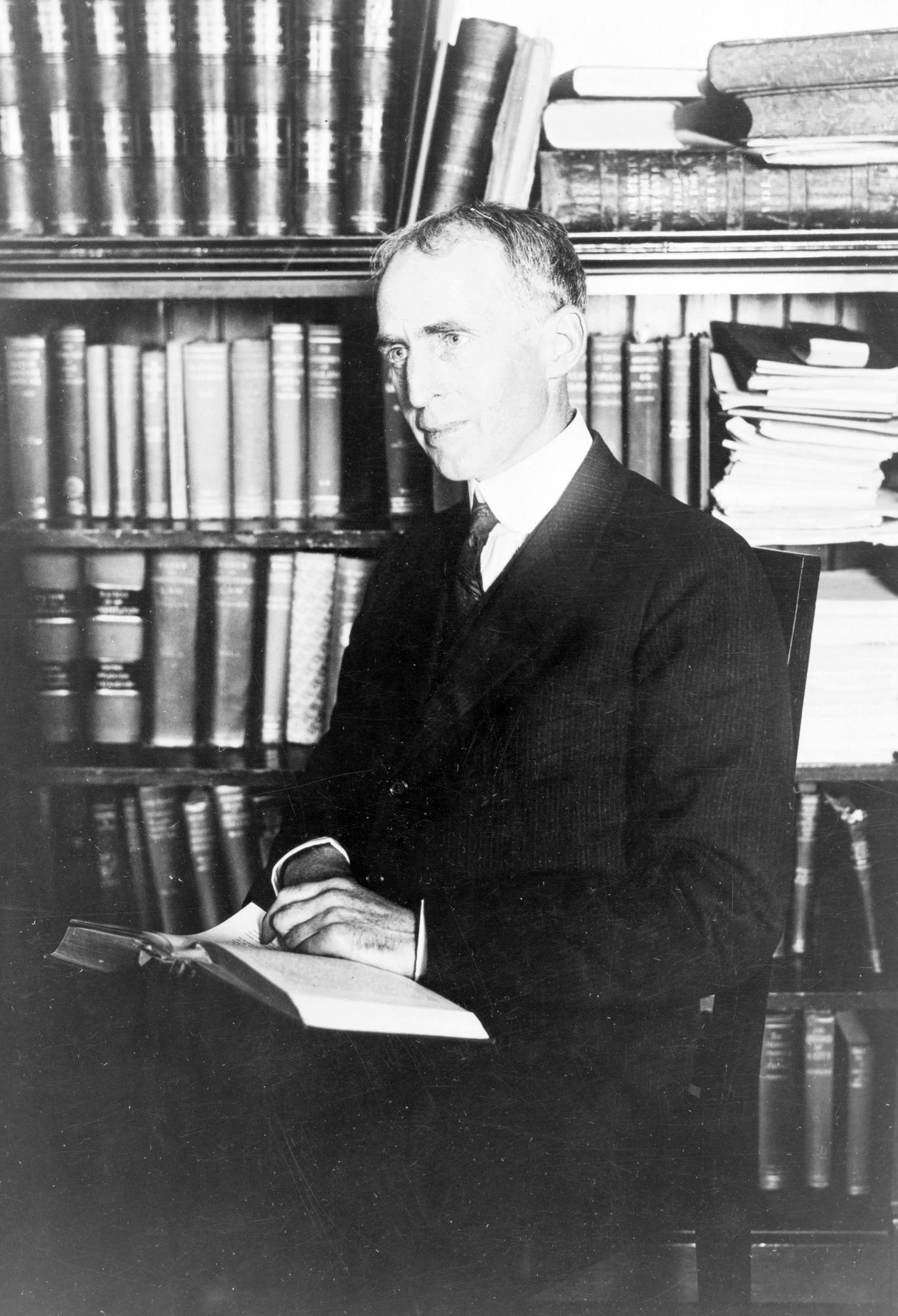
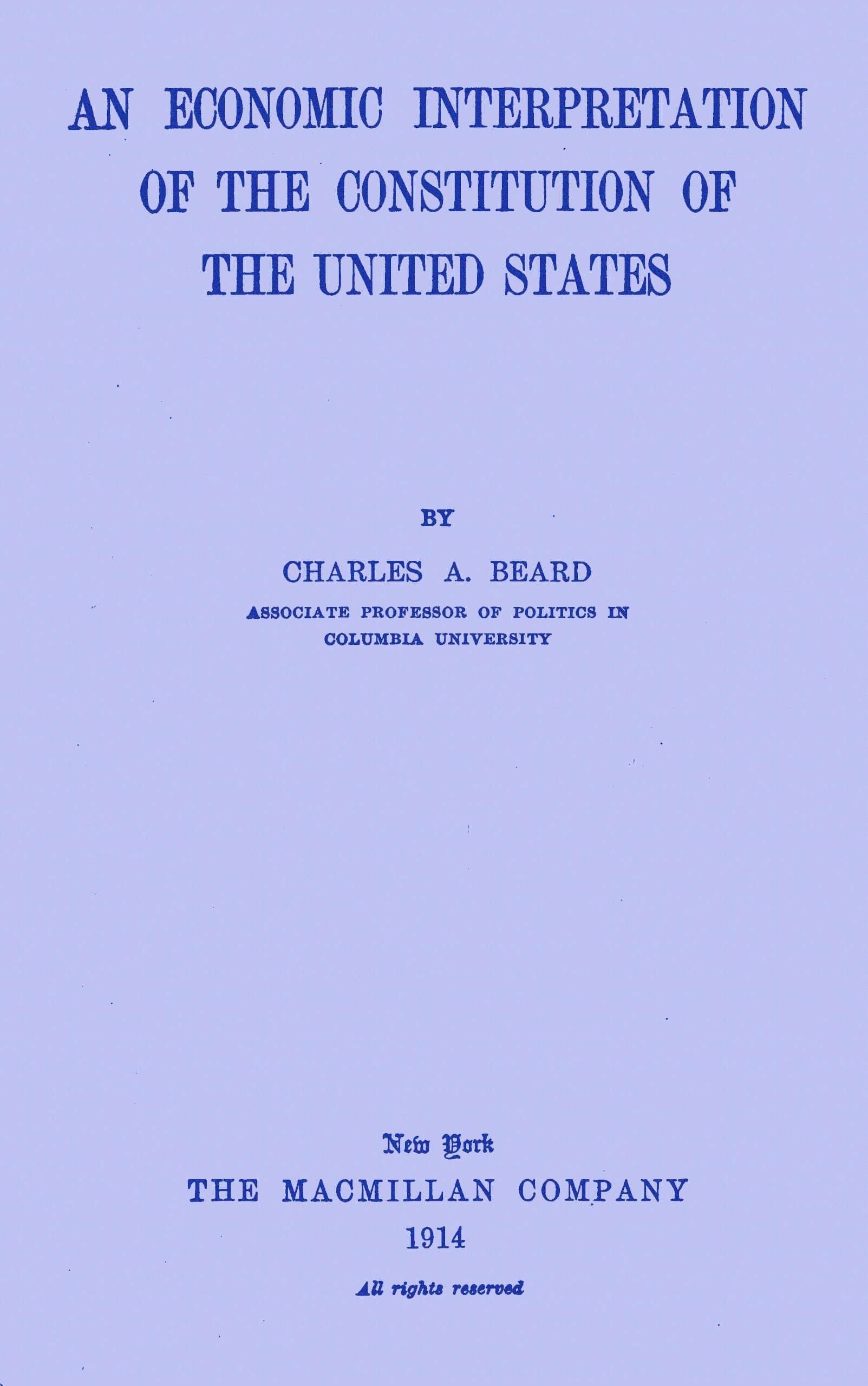
Charles A. Beard's 1921 history was revolutionary in its time: a deliberate departure from the patriotic pageantry and battle narratives that dominated American history classrooms. Beard, whose economic interpretation of the Constitution scandalized academic circles, brings that same materialist rigor to this sweeping survey, arguing that history is driven not by great men and military glory but by the clash of economic interests, the evolution of political institutions, and the slow, unfinished project of democratic citizenship. The book de-emphasizes exploration and warfare to focus on the conditions that shaped colonial settlement, the tension between colonial autonomy and imperial control, and the institutional architecture of the Republic. Written in an era when history textbooks still addressed students as future citizens of a young empire, it carries a tone of earnest purpose now largely vanished from the genre. This is not neutral scholarship; Beard makes no secret that he believes history should illuminate the responsibilities of American citizenship. For readers interested in how educated Americans understood their nation's past a century ago, or in the intellectual foundations of Progressive Era historiography, this remains a fascinating artifact.
Editions
X-Ray
“Religion and Higher Learning.”
— Charles A. Beard
“What does the delegate propose? To place the vicious vagrant, the wandering Arabs, the Tartar hordes of our large cities on the level with the virtuous and good man?" In””
— Charles A. Beard
“The "rail splitter" from Illinois united the nationalism of Hamilton with the democracy of Jefferson, and his appeal was clothed in the simple language of the people, not””
— Charles A. Beard
“In both colonies the communistic experiments were failures. Angry at the lazy men in Jamestown who idled their time away and yet expected regular meals, Captain John Smith issued a manifesto: "Everyone that gathereth not every day as much as I do, the next day shall be set beyond the river and forever banished from the fort and live there or starve." Even this terrible threat did not bring a change in production. Not until each man was given a plot of his own to till, not until each gathered the fruits of his own labor, did the colony prosper. In””
— Charles A. Beard
“Baron Steuben, well schooled in the iron régime of Frederick the Great, came over from Prussia, joined Washington at Valley Forge, and day after day drilled and manœuvered the men, laughing and cursing as he turned raw countrymen into regular soldiers. From France came young Lafayette and the stern De Kalb, from Poland came Pulaski and Kosciusko;”
— Charles A. Beard
“He condemned monarchy itself as a system which had laid the world "in blood and ashes.””
— Charles A. Beard
“In a little while it was taken up in the streets and along the countryside. All through the North and in some of the Southern colonies, there sprang up, as if by magic, committees and societies pledged to resist the Stamp Act to the bitter end. These popular societies were known as Sons of Liberty and Daughters of Liberty: the former including artisans, mechanics, and laborers; and the latter, patriotic women. Both groups were alike in that they had as yet taken little part in public affairs. Many artisans, as well as all the women, were excluded from the right to vote for colonial assemblymen.””
— Charles A. Beard
“The negro population grew by leaps and bounds, until on the eve of the Revolution it amounted to more than half a million. In five states”
— Charles A. Beard
“French-Canadian, the Alaskan, the Latin-American, the German, the Italian, the Anglo-American, and the American Indian, squaw and warrior. In the place of honor in the center of the group, standing between the oxen on the tongue of the prairie schooner, is a figure, beautiful and almost girlish, but strong, dignified, and womanly, the Mother of To-morrow. Above the group rides the Spirit of Enterprise, flanked right and left by the Hopes of the Future in the person of two boys. The group as a whole is beautifully symbolic of the westward march of American civilization.””
— Charles A. Beard
Link to this book
Add a free, dofollow link to Lex on your blog, forum, syllabus, or reading list.

<a href="https://lex-books.com/book/history-of-the-united-states-f228cf81-99cb-420f-8305-324e15520df3"><img src="https://lex-books.com/badges/read-on-lex.svg" alt="Read History of the United States by Charles A. Beard free on Lex" width="160" height="40"></a>[](https://lex-books.com/book/history-of-the-united-states-f228cf81-99cb-420f-8305-324e15520df3)[url=https://lex-books.com/book/history-of-the-united-states-f228cf81-99cb-420f-8305-324e15520df3][img]https://lex-books.com/badges/read-on-lex.svg[/img][/url]Read History of the United States by Charles A. Beard free on Lex: https://lex-books.com/book/history-of-the-united-states-f228cf81-99cb-420f-8305-324e15520df3Cite this book
Reading this edition for a paper or guide? Copy a citation.
Beard, Charles A.. History of the United States. Lex, lex-books.com/book/history-of-the-united-states-f228cf81-99cb-420f-8305-324e15520df3.Beard, C. A. (1921). History of the United States. Lex. https://lex-books.com/book/history-of-the-united-states-f228cf81-99cb-420f-8305-324e15520df3Beard, Charles A.. History of the United States. Lex. https://lex-books.com/book/history-of-the-united-states-f228cf81-99cb-420f-8305-324e15520df3.