History of Egypt, Chaldæa, Syria, Babylonia, and Assyria, Volume 1 (of 12)
1903
History of Egypt, Chaldæa, Syria, Babylonia, and Assyria, Volume 1 (of 12)
1903
Translated by McClure M. L.
A historical account likely written in the late 19th century. This comprehensive work delves into the ancient civilizations of Egypt and the surrounding regions, exploring their histories, cultures, and relationships. It serves as a thorough examination of these ancient societies, providing insights into their formation, governance, and significant events. The opening of this volume sets the stage by highlighting the geographical significance of the Nile River in Egypt's formation, influencing the livelihoods and agricultural practices of its inhabitants. It discusses the Delta's gradual formation through alluvial deposits and offers a detailed description of the landscapes and ecosystems along the Nile. The text also begins to introduce Egypt's earliest inhabitants and their initial political organization, laying the groundwork for deeper explorations of the ancient civilizations that thrived along the Nile and beyond.
Editions
X-Ray
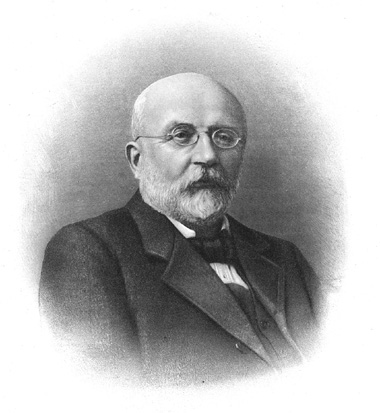
The primary author of this comprehensive history of ancient Egypt and surrounding civilizations. A distinguished Egyptologist and professor who served as director of the Bulaq Museum.
Professor of Assyriology at Oxford who edited Maspero's work. He provides extensive commentary on Assyriological matters and recent archaeological discoveries.
Member of the Egypt Exploration Fund who translated this work from French to English. Acknowledges assistance from Miss Bradbury in the translation process.
The sun god and first divine king of Egypt in Egyptian mythology. Depicted as having various forms including a disk, hawk, and human figure, ruling over the primordial world.
About History of Egypt, Chaldæa, Syria, Babylonia, and Assyria, Volume 1 (of 12)
Chapter Summaries
- Preface
- A. H. Sayce introduces Maspero as a leading authority on Egyptian science and discusses recent archaeological discoveries. M. L. McClure explains the translation process and acknowledges collaborators.
- 1
- Describes the geographical formation of Egypt through Nile deposits, the river's annual flood cycle, and its central role in Egyptian civilization. Explores the flora, fauna, and human adaptation to this unique environment.
- 2
- Examines the complex Egyptian pantheon, from local deities to cosmic gods, explaining the formation of triads and the theological systems of Heliopolis and Hermopolis. Details the nature of divine beings and their relationship to human worship.
Key Themes
- Divine Kingship and Legitimacy
- The work explores how Egyptian pharaohs derived their authority from the gods, tracing the transition from divine rulers like Râ and Osiris to human kings like Menés. This divine mandate legitimized earthly power through cosmic precedent.
- Death and Resurrection
- Central to Egyptian religion is the cycle of death and rebirth, exemplified by Osiris's murder and resurrection. This theme underlies Egyptian funerary practices and beliefs about the afterlife.
- Order versus Chaos
- The perpetual conflict between Ma'at (order, truth, justice) and Isfet (chaos, lies, injustice) permeates Egyptian mythology, with gods like Osiris representing order and Set embodying destructive chaos.
Characters
- G. Maspero(protagonist)
- The primary author of this comprehensive history of ancient Egypt and surrounding civilizations. A distinguished Egyptologist and professor who served as director of the Bulaq Museum.
- A. H. Sayce(major)
- Professor of Assyriology at Oxford who edited Maspero's work. He provides extensive commentary on Assyriological matters and recent archaeological discoveries.
- M. L. McClure(major)
- Member of the Egypt Exploration Fund who translated this work from French to English. Acknowledges assistance from Miss Bradbury in the translation process.
- Râ (Ra)(major)
- The sun god and first divine king of Egypt in Egyptian mythology. Depicted as having various forms including a disk, hawk, and human figure, ruling over the primordial world.
- Isis(major)
- Powerful goddess associated with magic and motherhood. Wife of Osiris and mother of Horus, she plays crucial roles in Egyptian creation myths and the Osirian cycle.
- Osiris(major)
- God of the dead and ruler of the underworld. Originally a Nile god who became the archetypal good king, murdered by his brother Set and resurrected through Isis's magic.
Link to this book
Add a free, dofollow link to Lex on your blog, forum, syllabus, or reading list.

<a href="https://lex-books.com/book/history-of-egypt-chald-a-syria-babylonia-and-assyria-volume-1-of-12-b5b4aa94-8ded-4752-afc8-341560753c23"><img src="https://lex-books.com/badges/read-on-lex.svg" alt="Read History of Egypt, Chaldæa, Syria, Babylonia, and Assyria, Volume 1 (of 12) by G. Maspero free on Lex" width="160" height="40"></a>[](https://lex-books.com/book/history-of-egypt-chald-a-syria-babylonia-and-assyria-volume-1-of-12-b5b4aa94-8ded-4752-afc8-341560753c23)[url=https://lex-books.com/book/history-of-egypt-chald-a-syria-babylonia-and-assyria-volume-1-of-12-b5b4aa94-8ded-4752-afc8-341560753c23][img]https://lex-books.com/badges/read-on-lex.svg[/img][/url]Read History of Egypt, Chaldæa, Syria, Babylonia, and Assyria, Volume 1 (of 12) by G. Maspero free on Lex: https://lex-books.com/book/history-of-egypt-chald-a-syria-babylonia-and-assyria-volume-1-of-12-b5b4aa94-8ded-4752-afc8-341560753c23Cite this book
Reading this edition for a paper or guide? Copy a citation.
Maspero, G.. History of Egypt, Chaldæa, Syria, Babylonia, and Assyria, Volume 1 (of 12). Lex, lex-books.com/book/history-of-egypt-chald-a-syria-babylonia-and-assyria-volume-1-of-12-b5b4aa94-8ded-4752-afc8-341560753c23.Maspero, G. (1903). History of Egypt, Chaldæa, Syria, Babylonia, and Assyria, Volume 1 (of 12). Lex. https://lex-books.com/book/history-of-egypt-chald-a-syria-babylonia-and-assyria-volume-1-of-12-b5b4aa94-8ded-4752-afc8-341560753c23Maspero, G.. History of Egypt, Chaldæa, Syria, Babylonia, and Assyria, Volume 1 (of 12). Lex. https://lex-books.com/book/history-of-egypt-chald-a-syria-babylonia-and-assyria-volume-1-of-12-b5b4aa94-8ded-4752-afc8-341560753c23.