Histoire De France 814-1189 (volume 2/19)
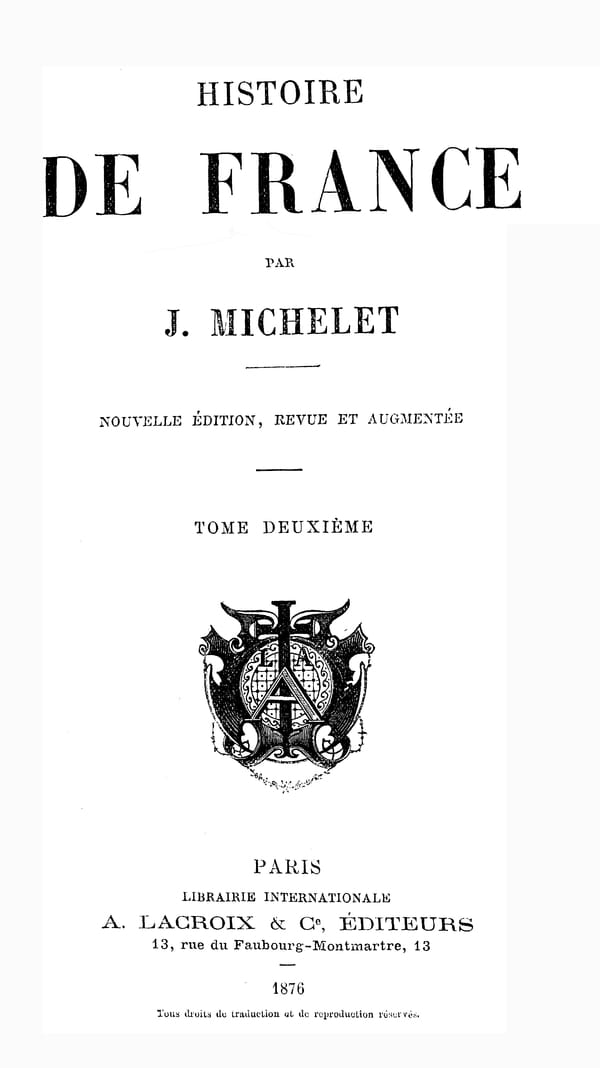
Histoire De France 814-1189 (volume 2/19)
A historical account written in the late 19th century. This volume focuses on the Carolingian Empire and details the political and social upheavals that took place during the reign of Louis the Debonair and the subsequent fragmentation of the empire. The work likely examines the complexities of power dynamics, familial strife, and the evolution of governance during a tumultuous period in French history. The opening of the text delves into the dissolution of the Carolingian Empire under Louis the Debonair. It highlights the king's attempts to reconcile competing factions within his realm while grappling with the challenges of reforming the church and supporting social justice. As alliances wane and conflicts arise among his sons and nobles, the narrative paints a picture of a ruler torn between his ideals and the harsh realities of maintaining unity amid fragmentation and betrayal. The themes of personal virtue, societal duty, and the weight of legacy permeate the early pages, setting the stage for the broader historical narrative.
Editions

X-Ray
Emperor and son of Charlemagne, portrayed as a pious but weak ruler whose reign marked the dissolution of the Carolingian Empire. His excessive virtue and religious devotion led to political weakness and family conflicts.
The great Carolingian emperor whose empire began to fragment after his death. Represented as the pinnacle of medieval imperial power whose successors could not maintain his achievements.
Second wife of Louis le Débonnaire, daughter of Count Welf. Her influence over the emperor and her son Charles le Chauve created political instability and family conflicts.
Eldest son of Louis le Débonnaire who led rebellions against his father and sought to maintain imperial unity. Ambitious but ultimately unsuccessful in preserving Carolingian power.
About Histoire De France 814-1189 (volume 2/19)
Chapter Summaries
- III
- Describes how Louis le Débonnaire's excessive piety and weakness led to the fragmentation of Charlemagne's empire through family conflicts and rebellions. The chapter details the emperor's struggles with his sons and the ultimate division of the empire.
- IV (Book III)
- An extensive geographical and cultural survey of France's regions, examining how geography shaped the character of different provinces and their peoples. Michelet describes the diversity within French unity.
- IV (Book IV, Chapter I)
- Covers the transition from Carolingian to Capetian rule, focusing on Robert le Pieux and Pope Gerbert (Sylvester II). Describes the fears surrounding the year 1000 and the establishment of feudal France.
Key Themes
- The Decline of Imperial Unity
- Michelet explores how Charlemagne's artificial unity collapsed under the weight of diverse peoples and cultures forced together, leading to the natural emergence of separate nations.
- Geography as Destiny
- The extensive geographical survey demonstrates how physical features, climate, and terrain shaped the character and destiny of different French regions and peoples.
- The Role of Christianity
- Christianity serves both as a unifying force and a source of conflict, with the Church playing a crucial political role in the transition from Carolingian to Capetian rule.
Characters
- Louis le Débonnaire (Louis le Pieux)(protagonist)
- Emperor and son of Charlemagne, portrayed as a pious but weak ruler whose reign marked the dissolution of the Carolingian Empire. His excessive virtue and religious devotion led to political weakness and family conflicts.
- Charlemagne(major)
- The great Carolingian emperor whose empire began to fragment after his death. Represented as the pinnacle of medieval imperial power whose successors could not maintain his achievements.
- Judith(major)
- Second wife of Louis le Débonnaire, daughter of Count Welf. Her influence over the emperor and her son Charles le Chauve created political instability and family conflicts.
- Lothaire(major)
- Eldest son of Louis le Débonnaire who led rebellions against his father and sought to maintain imperial unity. Ambitious but ultimately unsuccessful in preserving Carolingian power.
- Charles le Chauve(major)
- Son of Louis le Débonnaire and Judith, became King of France. Supported by the Church and represented the beginning of French royal power distinct from the Empire.
- Louis le Germanique(major)
- Son of Louis le Débonnaire who became King of Germany. Allied with Charles le Chauve against Lothaire and helped establish the division of the Carolingian Empire.
Link to this book
Add a free, dofollow link to Lex on your blog, forum, syllabus, or reading list.

<a href="https://lex-books.com/book/histoire-de-france-814-1189-volume-2-19-39fe324e-116d-4d19-b65f-9e705763fcd5"><img src="https://lex-books.com/badges/read-on-lex.svg" alt="Read Histoire De France 814-1189 (volume 2/19) by Jules Michelet free on Lex" width="160" height="40"></a>[](https://lex-books.com/book/histoire-de-france-814-1189-volume-2-19-39fe324e-116d-4d19-b65f-9e705763fcd5)[url=https://lex-books.com/book/histoire-de-france-814-1189-volume-2-19-39fe324e-116d-4d19-b65f-9e705763fcd5][img]https://lex-books.com/badges/read-on-lex.svg[/img][/url]Read Histoire De France 814-1189 (volume 2/19) by Jules Michelet free on Lex: https://lex-books.com/book/histoire-de-france-814-1189-volume-2-19-39fe324e-116d-4d19-b65f-9e705763fcd5Cite this book
Reading this edition for a paper or guide? Copy a citation.
Michelet, Jules. Histoire De France 814-1189 (volume 2/19). Lex, lex-books.com/book/histoire-de-france-814-1189-volume-2-19-39fe324e-116d-4d19-b65f-9e705763fcd5.Michelet, J. (n.d.). Histoire De France 814-1189 (volume 2/19). Lex. https://lex-books.com/book/histoire-de-france-814-1189-volume-2-19-39fe324e-116d-4d19-b65f-9e705763fcd5Michelet, Jules. Histoire De France 814-1189 (volume 2/19). Lex. https://lex-books.com/book/histoire-de-france-814-1189-volume-2-19-39fe324e-116d-4d19-b65f-9e705763fcd5.