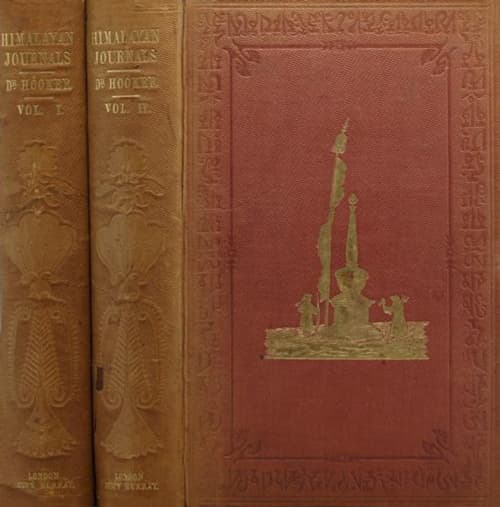
Himalayan Journals — Volume 2: Or, Notes of a Naturalist in Bengal, the Sikkim and Nepal Himalayas, the Khasia Mountains, Etc.
1854
Himalayan Journals — Volume 2: Or, Notes of a Naturalist in Bengal, the Sikkim and Nepal Himalayas, the Khasia Mountains, Etc.
1854
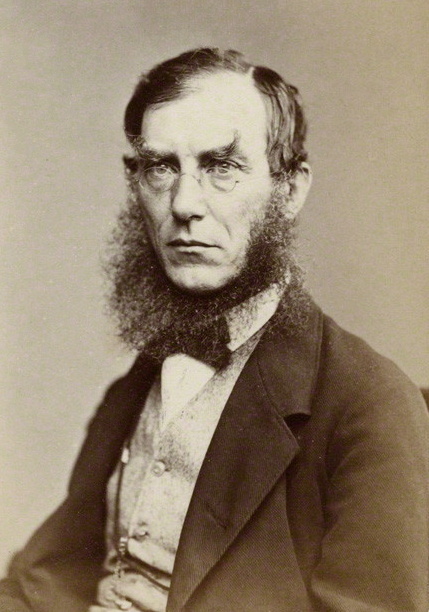
Joseph Dalton Hooker was one of the great Victorian naturalists, Darwin's confidant, future director of Kew Gardens, and his journals read like detective stories for the botanically inclined. Volume 2 follows his second expedition into Sikkim and the Nepal Himalayas, where political obstacles nearly derail the journey before it begins. The Dewan actively obstructs his progress, forcing Hooker to navigate not just treacherous mountain terrain but complex local power struggles. What emerges is extraordinary: meticulous documentation of Himalayan flora that will reshape botanical science, vivid encounters with the Lepcha people, and observations of a landscape so staggeringly beautiful it seems almost illegal to describe. Hooker records local legends with the same precision he applies to cataloging new species, and his accounts of crossing ice-choked passes in near-zero conditions have the tension of adventure fiction. This is Victorian scientific exploration at its finest, a portal into an era when men in pith helmets were mapping the biological secrets of uncharted mountains, and when every valley might hold a plant no European had ever seen.
Editions
X-Ray
“In the woods I heard and saw the wild peacock for the first time. Its voice is not to be distinguished from that of the tame bird in England, a curious instance of the perpetuation of character under widely different circumstances, for the crow of the wild jungle-fowl does not rival that of the farm-yard cock.””
— Joseph Dalton Hooker
“Our coolies with provisions not having come up, and it being two o'clock in the afternoon, I having had no breakfast, and being ignorant of the exclusively Jain population of the village, sent my servant to the bazaar, for some fowls and eggs; but he was mobbed for asking for these articles, and parched rice, beaten flat, with some coarse sugar, was all I could obtain; together with sweetmeats so odiously flavoured with various herbs, and sullied with such impurities, that we quickly made them over to the elephants.””
— Joseph Dalton Hooker
“The temples, though small, are well built, and carefully kept. No persuasion could induce the Brahmins to allow us to proceed beyond the vestibule without taking off our shoes, to which we were not inclined to consent.””
— Joseph Dalton Hooker
Link to this book
Add a free, dofollow link to Lex on your blog, forum, syllabus, or reading list.

<a href="https://lex-books.com/book/himalayan-journals-volume-2-or-notes-of-a-naturalist-in-bengal-the-sikkim-and-ne-a05ae7f0-0569-41fa-9b10-a8aa7d2e7fc0"><img src="https://lex-books.com/badges/read-on-lex.svg" alt="Read Himalayan Journals — Volume 2: Or, Notes of a Naturalist in Bengal, the Sikkim and Nepal Himalayas, the Khasia Mountains, Etc. by Joseph Dalton Hooker free on Lex" width="160" height="40"></a>[](https://lex-books.com/book/himalayan-journals-volume-2-or-notes-of-a-naturalist-in-bengal-the-sikkim-and-ne-a05ae7f0-0569-41fa-9b10-a8aa7d2e7fc0)[url=https://lex-books.com/book/himalayan-journals-volume-2-or-notes-of-a-naturalist-in-bengal-the-sikkim-and-ne-a05ae7f0-0569-41fa-9b10-a8aa7d2e7fc0][img]https://lex-books.com/badges/read-on-lex.svg[/img][/url]Read Himalayan Journals — Volume 2: Or, Notes of a Naturalist in Bengal, the Sikkim and Nepal Himalayas, the Khasia Mountains, Etc. by Joseph Dalton Hooker free on Lex: https://lex-books.com/book/himalayan-journals-volume-2-or-notes-of-a-naturalist-in-bengal-the-sikkim-and-ne-a05ae7f0-0569-41fa-9b10-a8aa7d2e7fc0Cite this book
Reading this edition for a paper or guide? Copy a citation.
Hooker, Joseph Dalton. Himalayan Journals — Volume 2: Or, Notes of a Naturalist in Bengal, the Sikkim and Nepal Himalayas, the Khasia Mountains, Etc.. Lex, lex-books.com/book/himalayan-journals-volume-2-or-notes-of-a-naturalist-in-bengal-the-sikkim-and-ne-a05ae7f0-0569-41fa-9b10-a8aa7d2e7fc0.Hooker, J. D. (1854). Himalayan Journals — Volume 2: Or, Notes of a Naturalist in Bengal, the Sikkim and Nepal Himalayas, the Khasia Mountains, Etc.. Lex. https://lex-books.com/book/himalayan-journals-volume-2-or-notes-of-a-naturalist-in-bengal-the-sikkim-and-ne-a05ae7f0-0569-41fa-9b10-a8aa7d2e7fc0Hooker, Joseph Dalton. Himalayan Journals — Volume 2: Or, Notes of a Naturalist in Bengal, the Sikkim and Nepal Himalayas, the Khasia Mountains, Etc.. Lex. https://lex-books.com/book/himalayan-journals-volume-2-or-notes-of-a-naturalist-in-bengal-the-sikkim-and-ne-a05ae7f0-0569-41fa-9b10-a8aa7d2e7fc0.