Getting Married
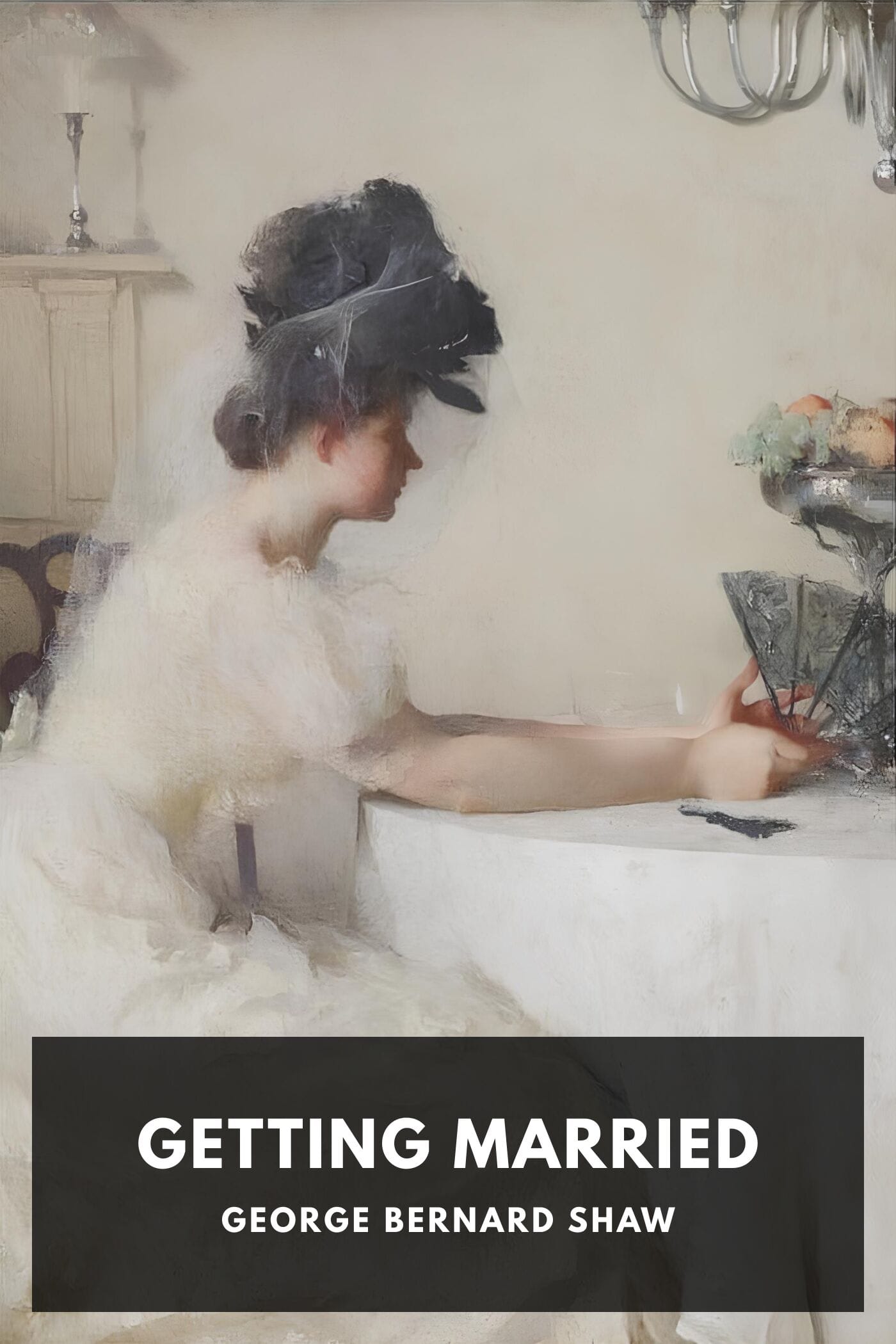
On the very morning they are to be wed, Edith Bridgenorth and Cecil Sykes find themselves not exchanging vows, but devouring pamphlets on the perils of matrimony. This delightful domestic chaos unfolds in the Bishop of Chelsea's kitchen, where Edith's father, an authority on the history of marriage, presides over a gathering of family and friends all grappling with the institution's myriad imperfections. From Boxer's tenth, desperate proposal to Lesbia, to Reginald and Leo's elaborate scheme to fake an affair for a divorce, and Alderman Collins, the caterer who's seen all the Bridgenorth sisters through their weddings, Shaw orchestrates a brilliant ensemble piece. Each character embodies a different facet of marital dilemma, making the play a lively, often farcical, debate on the future of coupling. More than a mere comedy of manners, *Getting Married* is Shaw at his most incisive and provocative, using the family drama as a vehicle for a penetrating critique of marriage laws and societal expectations. His extensive preface, a characteristically Shavian bonus, lays bare his radical proposals for reform, making this play not just a snapshot of early 20th-century anxieties, but a surprisingly contemporary examination of commitment, freedom, and the ever-evolving social contract of partnership. It's a witty, intelligent, and enduringly relevant exploration of why we marry, and how we might do it better.
Editions

Link to this book
Add a free, dofollow link to Lex on your blog, forum, syllabus, or reading list.

<a href="https://lex-books.com/book/getting-married-fe79720c-46e0-483f-acff-205706e84802"><img src="https://lex-books.com/badges/read-on-lex.svg" alt="Read Getting Married by George Bernard Shaw free on Lex" width="160" height="40"></a>[](https://lex-books.com/book/getting-married-fe79720c-46e0-483f-acff-205706e84802)[url=https://lex-books.com/book/getting-married-fe79720c-46e0-483f-acff-205706e84802][img]https://lex-books.com/badges/read-on-lex.svg[/img][/url]Read Getting Married by George Bernard Shaw free on Lex: https://lex-books.com/book/getting-married-fe79720c-46e0-483f-acff-205706e84802Cite this book
Reading this edition for a paper or guide? Copy a citation.
Shaw, George Bernard. Getting Married. Lex, lex-books.com/book/getting-married-fe79720c-46e0-483f-acff-205706e84802.Shaw, G. B. (n.d.). Getting Married. Lex. https://lex-books.com/book/getting-married-fe79720c-46e0-483f-acff-205706e84802Shaw, George Bernard. Getting Married. Lex. https://lex-books.com/book/getting-married-fe79720c-46e0-483f-acff-205706e84802.