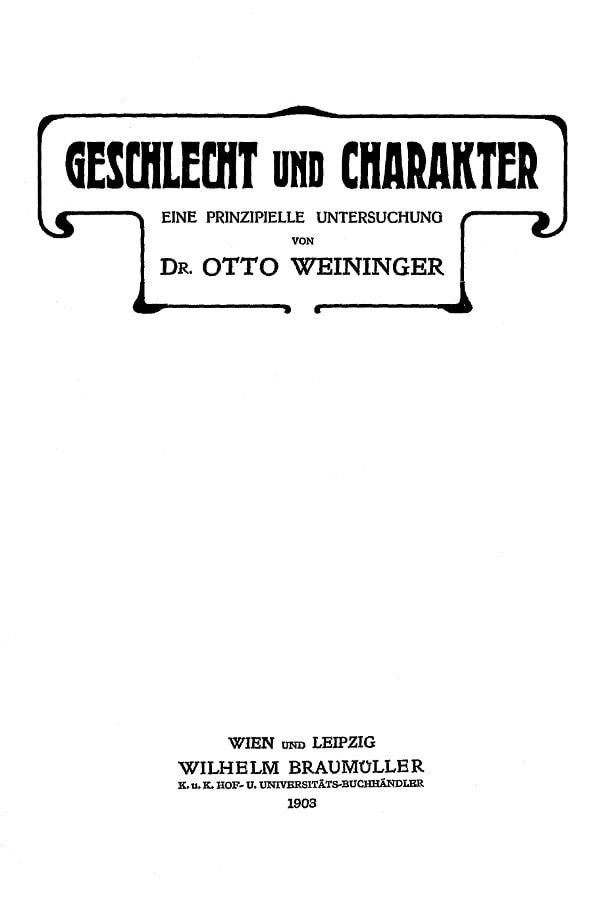
Geschlecht Und Charakter: Eine Prinzipielle Untersuchung
1903
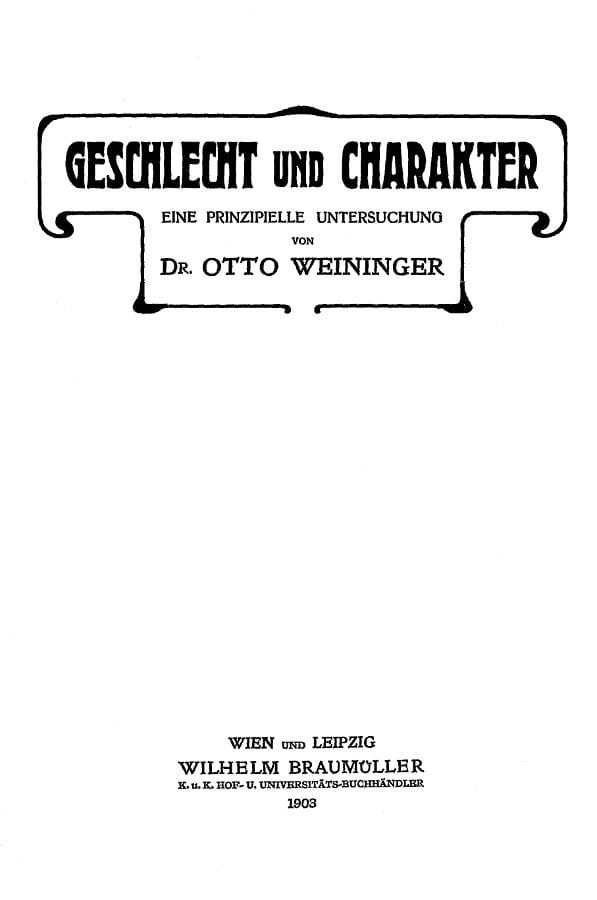
Geschlecht Und Charakter: Eine Prinzipielle Untersuchung
1903
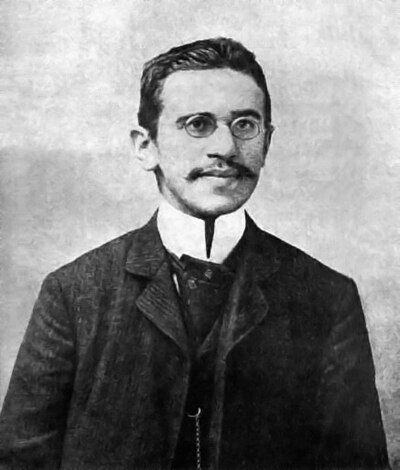
One of the most notorious works of early twentieth-century European thought, Otto Weininger's 1903 treatise began as a philosophical investigation into the nature of gender and ended as a cultural lightning rod. Weininger, writing at twenty-three in Vienna just weeks before his suicide, proposed that all individuals possess both masculine and feminine elements in varying degrees, arguing that sexual differentiation emerges gradually from a bisexual foundation. This premise might have yielded genuine insight, but Weininger deployed it to argue that women possess no true intellectual or moral capacity while simultaneously producing some of the most virulently antisemitic passages in pre-Nazi literature. The book ignited furious debate across Europe and has since become essential reading for anyone seeking to understand the intellectual genealogy of fascism, the crisis of masculinity in modernist culture, and the dark undercurrents of early gender theory. Scholars return to it not for its philosophy but as a document of what happens when intellectual rigor serves毒性 ideology. It remains disturbing, unreadable as anything but a historical artifact, and impossible to ignore for students of European cultural history.
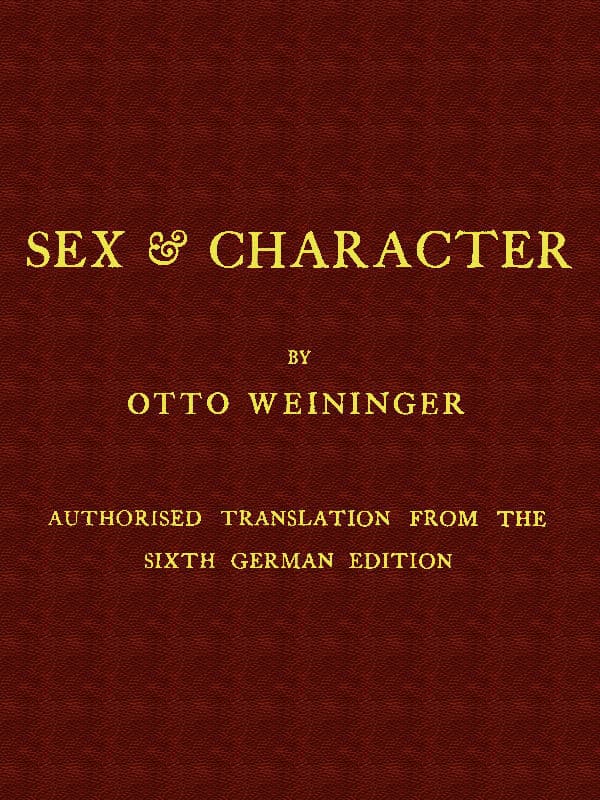
Editions
X-Ray
“Napoleon, the greatest of the conquerors, is a sufficient proof that great men of action are criminals, and therefore, not geniuses. One can understand him by thinking of the tremendous intensity with which he tried to escape from himself. There is this element in all the conquerors, great or small. Just because he had great gifts, greater than those of any emperor before him, he had greater difficulty in stifling the disapproving voice within him. The motive of his ambition was the craving to stifle his better self.””
— Otto Weininger
“No men who really think deeply about women retain a high opinion of them””
— Otto Weininger
“Universality is the distinguishing mark of genius. There is no such thing as a special genius, a genius for mathematics, or for music, or even for chess, but only a universal genius. The genius is a man who knows everything without having learned it.””
— Otto Weininger
“Man is alone in the world, in tremendous eternal isolation. He has no object outside himself; lives for nothing else; he is far removed from being the slave of his wishes, of his abilities, of his necessities; he stands far above social ethics; he is alone. Thus he becomes one and all.””
— Otto Weininger
“Talent is hereditary; it may be the common possession of a whole family (eg, the Bach family); genius is not transmitted; it is never diffused, but is strictly individual.””
— Otto Weininger
“Great men have always preferred women of the prostitute type.””
— Otto Weininger
“A man's real nature is never altered by education.””
— Otto Weininger
“The great genius does not let his work be determined by the concrete finite conditions that surround him, whilst it is from these that the work of the statesman takes its direction and its termination. … It is the genius in reality and not the other who is the creator of history, for it is only the genius who is outside and unconditioned by history.””
— Otto Weininger
“Woman, in short, has an unconscious life, man a conscious life, and the genius the most conscious life.””
— Otto Weininger
Link to this book
Add a free, dofollow link to Lex on your blog, forum, syllabus, or reading list.

<a href="https://lex-books.com/book/geschlecht-und-charakter-eine-prinzipielle-untersuchung-857af7de-bd41-42ae-b2a0-ca87905ca3c0"><img src="https://lex-books.com/badges/read-on-lex.svg" alt="Read Geschlecht Und Charakter: Eine Prinzipielle Untersuchung by Otto Weininger free on Lex" width="160" height="40"></a>[](https://lex-books.com/book/geschlecht-und-charakter-eine-prinzipielle-untersuchung-857af7de-bd41-42ae-b2a0-ca87905ca3c0)[url=https://lex-books.com/book/geschlecht-und-charakter-eine-prinzipielle-untersuchung-857af7de-bd41-42ae-b2a0-ca87905ca3c0][img]https://lex-books.com/badges/read-on-lex.svg[/img][/url]Read Geschlecht Und Charakter: Eine Prinzipielle Untersuchung by Otto Weininger free on Lex: https://lex-books.com/book/geschlecht-und-charakter-eine-prinzipielle-untersuchung-857af7de-bd41-42ae-b2a0-ca87905ca3c0Cite this book
Reading this edition for a paper or guide? Copy a citation.
Weininger, Otto. Geschlecht Und Charakter: Eine Prinzipielle Untersuchung. Lex, lex-books.com/book/geschlecht-und-charakter-eine-prinzipielle-untersuchung-857af7de-bd41-42ae-b2a0-ca87905ca3c0.Weininger, O. (1903). Geschlecht Und Charakter: Eine Prinzipielle Untersuchung. Lex. https://lex-books.com/book/geschlecht-und-charakter-eine-prinzipielle-untersuchung-857af7de-bd41-42ae-b2a0-ca87905ca3c0Weininger, Otto. Geschlecht Und Charakter: Eine Prinzipielle Untersuchung. Lex. https://lex-books.com/book/geschlecht-und-charakter-eine-prinzipielle-untersuchung-857af7de-bd41-42ae-b2a0-ca87905ca3c0.