Genghis Khan, Makers of History Series
Genghis Khan, Makers of History Series
Written in the late 19th century, 'Genghis Khan' by Jacob Abbott provides a comprehensive historical account of the life and achievements of Genghis Khan, one of history's most significant conquerors. The book explores the cultural and societal structures of the Mongol Empire, emphasizing the dynamics of early nomadic civilizations and the four modes of subsistence that shaped them. Abbott details Genghis Khan's rise from humble beginnings to a powerful chieftain, highlighting themes of power, leadership, and the impact of warfare on the Mongol Empire's development.
Editions
X-Ray
“Principles of the Mohammedan faith. 1. In believing in one God, the creator of all things, and the supreme ruler and governor of the universe. 2. In giving one fortieth part of their yearly income or gains to the poor. 3. In praying to God five times every day. 4. In setting apart one month in each year for fasting. 5. In making a pilgrimage to the temple in Mecca, there to worship God. Genghis Khan's opinion. Genghis Khan told them that he believed himself in the first of these articles, and he approved of the three succeeding ones. It was very well, he said, to give one fortieth of one's income to the poor, and to pray to God five times a day, and to set apart a month in the year for a fast. But as to the last article, he could not but dissent from it entirely, for the whole world was God's house, and it was ridiculous, he said, to imagine that one place could really be any more fitting than another as a place for worshiping him.””
— Jacob Abbott
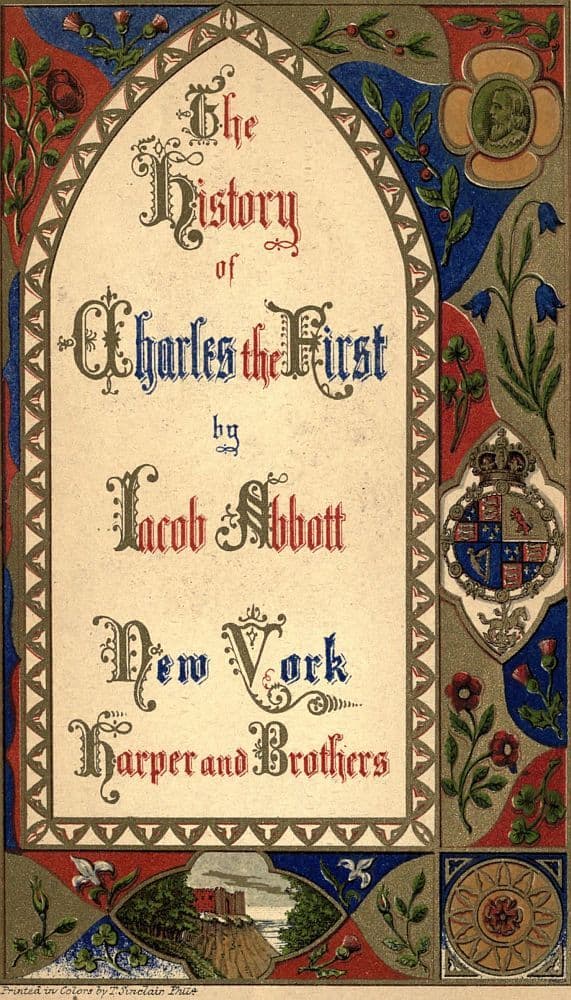
“Genghis Khan BY JACOB ABBOTT WITH ENGRAVINGS””
— Jacob Abbott
“T he name of the father of Genghis Khan is a word which can not be pronounced exactly in English. It sounded something like this, Yezonkai Behadr, with the accent on the last syllable, Behadr, and the a sounded like a in hark. This is as near as we can come to it; but the name, as it was really pronounced by the Mongul people, can not be written in English letters nor spoken with English sounds. Orthography of Mongul names.””
— Jacob Abbott
“The fate of the grand empire which Genghis Khan established was the same with that of all others that have arisen in the world, from time to time, by the extension of the power of great military commanders over widely-separated and heterogeneous nations. The sons and successors to whom the vast possessions descended soon quarreled among themselves, and the immense fabric fell to pieces in less time than it had taken to construct it.””
— Jacob Abbott
“The term Tartars has been employed generically to denote almost the whole race. The Monguls are a portion of this people, who are said to derive their name from Mongol Khan, one of their earliest and most powerful chieftains.””
— Jacob Abbott
“In accordance with this difference in the productions of the different regions of the earth, there seems to be a difference in the constitutions of the races of men formed to inhabit them. The tribes that inhabit Greenland and Kamtschatka can not preserve their accustomed health and vigor on any other than animal food. If put upon a diet of vegetables they soon begin to pine away. The reverse is true of the vegetable-eaters of the tropics.””
— Jacob Abbott
“and vegetables seems””
— Jacob Abbott
“Yezonkai's train at this time, there was a certain old astrologer named Sugujin. He was a relative of Yezonkai, and also his principal minister of state. This man, by his skill in astrology, which he applied to the peculiar circumstances of the child, foretold for him at once a wonderful career. He would grow up, the astrologer said, to be a great warrior. He would conquer all””
— Jacob Abbott
“khans, and settling disputes of various kinds””
— Jacob Abbott
About Genghis Khan, Makers of History Series
Chapter Summaries
- 1
- Abbott introduces the four methods by which human communities obtain subsistence, focusing on the pastoral lifestyle of Central Asian tribes. He describes how geography influences diet and social organization, establishing the context for understanding Mongul society.
- 2
- The chapter describes Mongul family life, their occupations with flocks and herds, their movable houses, and their tribal organization. Abbott also recounts the fantastic tale of Salam's journey to find Gog and Magog.
- 3
- The birth and early life of Temujin (later Genghis Khan) are described, including his father's victory over the Tartar khan Temujin, the prophecies of the astrologer Sugujin, and his early education under Karasher.
Key Themes
- Rise to Power
- The narrative chronicles Temujin's transformation from a thirteen-year-old prince into Genghis Khan, demonstrating how personal ambition, military genius, and political acumen can create world-changing leaders.
- Loyalty and Betrayal
- The story repeatedly explores the fragile nature of alliances, from Vang Khan's protection turning to enmity, to the sultan's violation of treaties, showing how personal and political betrayals shape history.
- Pastoral vs. Civilized Life
- Abbott contrasts the nomadic, tent-dwelling lifestyle of the Monguls with the settled, agricultural civilizations they conquered, examining different forms of social organization and their strengths.
Characters
- Genghis Khan (Temujin)(protagonist)
- Born as Temujin in 1163, he rose from a young Mongul prince to become the greatest conqueror in history. He unified the Mongul and Tartar tribes and built a vast empire stretching across Asia.
- Vang Khan (Togrul)(major)
- A powerful khan who initially protected Temujin but later became his enemy due to jealousy and manipulation by others. He was killed by the Naymans while fleeing.
- Yemuka(antagonist)
- A chieftain who became Temujin's implacable enemy after losing Princess Wisulujine to him. He consistently plotted against Temujin and was eventually captured and beheaded.
- Sultan Mohammed(major)
- The powerful Mohammedan ruler of Karazm who initially made peace with Genghis Khan but later betrayed the treaty by massacring Mongul merchants and ambassadors.
- Jalaloddin(major)
- Sultan Mohammed's eldest son who continued fighting against Genghis Khan after his father's death. Known for his bravery, especially his dramatic escape across the Indus River.
- Khatun(major)
- The queen-mother, a powerful and learned woman who was both wise and cruel. She favored Kothboddin over Jalaloddin and was eventually captured and humiliated by Genghis Khan.
Link to this book
Add a free, dofollow link to Lex on your blog, forum, syllabus, or reading list.

<a href="https://lex-books.com/book/genghis-khan-makers-of-history-series-cfabb984-3316-4e93-a10a-9714fa7be6f5"><img src="https://lex-books.com/badges/read-on-lex.svg" alt="Read Genghis Khan, Makers of History Series by Jacob Abbott free on Lex" width="160" height="40"></a>[](https://lex-books.com/book/genghis-khan-makers-of-history-series-cfabb984-3316-4e93-a10a-9714fa7be6f5)[url=https://lex-books.com/book/genghis-khan-makers-of-history-series-cfabb984-3316-4e93-a10a-9714fa7be6f5][img]https://lex-books.com/badges/read-on-lex.svg[/img][/url]Read Genghis Khan, Makers of History Series by Jacob Abbott free on Lex: https://lex-books.com/book/genghis-khan-makers-of-history-series-cfabb984-3316-4e93-a10a-9714fa7be6f5Cite this book
Reading this edition for a paper or guide? Copy a citation.
Abbott, Jacob. Genghis Khan, Makers of History Series. Lex, lex-books.com/book/genghis-khan-makers-of-history-series-cfabb984-3316-4e93-a10a-9714fa7be6f5.Abbott, J. (n.d.). Genghis Khan, Makers of History Series. Lex. https://lex-books.com/book/genghis-khan-makers-of-history-series-cfabb984-3316-4e93-a10a-9714fa7be6f5Abbott, Jacob. Genghis Khan, Makers of History Series. Lex. https://lex-books.com/book/genghis-khan-makers-of-history-series-cfabb984-3316-4e93-a10a-9714fa7be6f5.

![Rollo's Philosophy [Fire]](/_next/image?url=https%3A%2F%2Fd3b2n8gj62qnwr.cloudfront.net%2FCOVERS%2Fgutenberg_covers75k%2Febook-62726.png&w=3840&q=75)