Gösta Berling
1891
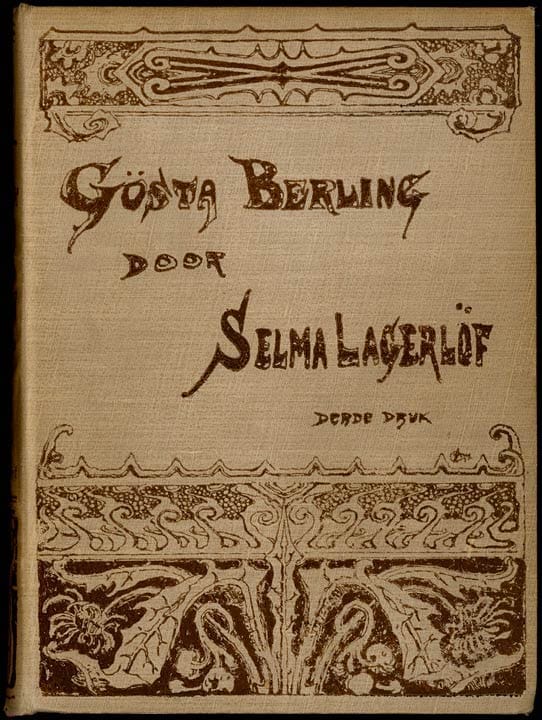
Selma Lagerlöf's 1891 novel introduced the world to one of literature's most captivating antiheroes: Gösta Berling, a charismatic Swedish pastor whose passion for drink and women has cost him his vocation. Exiled from the church, he wanders into the company of twelve eccentric cavalry officers who have also fallen from grace, and finds unlikely sanctuary at Ekeby, the estate of the province's wealthiest and most formidable woman. What follows is a sweeping tale of outcasts binding together, of love affairs both comic and tragic, and of a dark, almost Faustian bargain that pulses at the novel's heart. Lagerlöf blends Swedish folklore with social realism in a narrative that feels both mythic and grounded, where a disgraced priest might negotiate with the Devil himself while navigating poverty, passion, and the ruins of his reputation. This is the book that won Lagerlöf the Nobel Prize, making her the first woman ever to receive the honor. It remains a stunning portrait of transgression, community, and the endless human struggle to be forgiven.
Editions
X-Ray
“Have you ever seen a child sitting on its mother’s knee listening to fairy stories? As long as the child is told of cruel giants and of the terrible suffering of beautiful princesses, it holds its head up and its eyes open; but if the mother begins to speak of happiness and sunshine, the little one closes its eyes and falls asleep with its head against her breast. . . . I am a child like that, too. Others may like stories of flowers and sunshine; but I choose the dark nights and sad destinies.””
— Unknown
“Fjärilar skola veta att dö medan solen skiner.””
— Unknown
“... I see the green earth covered with the works of man or with the ruins of men’s work. The pyramids weigh down the earth, the tower of Babel has pierced the sky, the lovely temples and the gray castles have fallen into ruins. But of all those things which hands have built, what hasn’t fallen nor ever will fall? Dear friends, throw away the trowel and mortarboard! Throw your masons’ aprons over your heads and lie down to build dreams! What are temples of stone and clay to the soul? Learn to build eternal mansions of dreams and visions!””
— Unknown
“Hon hade lärt sig älska kärleken med all dess plåga, dess tårar, dess längtan .- Bättre sorgsen med den än glad utan den, sade hon.””
— Unknown
“We are the poem's ancient band of twelve that proceeds through the ages. There were twelve of us, when we ruled the world on the cloud-covered top of Olympus, and twelve when we lived as birds in Ygdrasil's green crown. Wherever poetry went forth, there we followed. Did we not sit, twelve men strong, at King Arthur's round table, and did twelve paladins not go in Charles the Twelfth's great army? On of us has been Thor, another Jupiter, as any man should be able to see in us yet today. The divine splendor can be sensed under the rags, the lion's mane under the donkey hide. Time has treated us badly, but when we are there, the smithy becomes Mount Olympus and the cavalier's wing a Valhalla.””
— Unknown
“Old butterflies should have the sense to die while the summer sun is shining,””
— Unknown
“Må andra lyssna till tal om blommor och solsken, men för mig väljer jag de mörka nätterna, fulla av syner och äventyr, för mig de hårda ödena, för mig förvildade hjärtans sorguppfyllda lidelser.””
— Unknown
“Hon kunde aldrig hänge sig helt åt något. Om hon älskade, ja, vad hon än gjorde, stod liksom ena hälften av hennes jag och såg på med ett kallt hånlöje.””
— Unknown
“She does not see that he is old. She only sees his eyes, his eyes.””
— Unknown
Link to this book
Add a free, dofollow link to Lex on your blog, forum, syllabus, or reading list.

<a href="https://lex-books.com/book/g-sta-berling-4c5cb47c-cbf6-4dcb-abf6-ff281c5b4d9f"><img src="https://lex-books.com/badges/read-on-lex.svg" alt="Read Gösta Berling by Unknown free on Lex" width="160" height="40"></a>[](https://lex-books.com/book/g-sta-berling-4c5cb47c-cbf6-4dcb-abf6-ff281c5b4d9f)[url=https://lex-books.com/book/g-sta-berling-4c5cb47c-cbf6-4dcb-abf6-ff281c5b4d9f][img]https://lex-books.com/badges/read-on-lex.svg[/img][/url]Read Gösta Berling by Unknown free on Lex: https://lex-books.com/book/g-sta-berling-4c5cb47c-cbf6-4dcb-abf6-ff281c5b4d9fCite this book
Reading this edition for a paper or guide? Copy a citation.
Unknown. Gösta Berling. Lex, lex-books.com/book/g-sta-berling-4c5cb47c-cbf6-4dcb-abf6-ff281c5b4d9f.Unknown (1891). Gösta Berling. Lex. https://lex-books.com/book/g-sta-berling-4c5cb47c-cbf6-4dcb-abf6-ff281c5b4d9fUnknown. Gösta Berling. Lex. https://lex-books.com/book/g-sta-berling-4c5cb47c-cbf6-4dcb-abf6-ff281c5b4d9f.