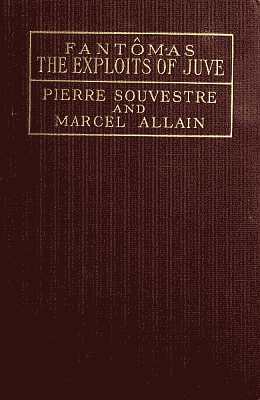
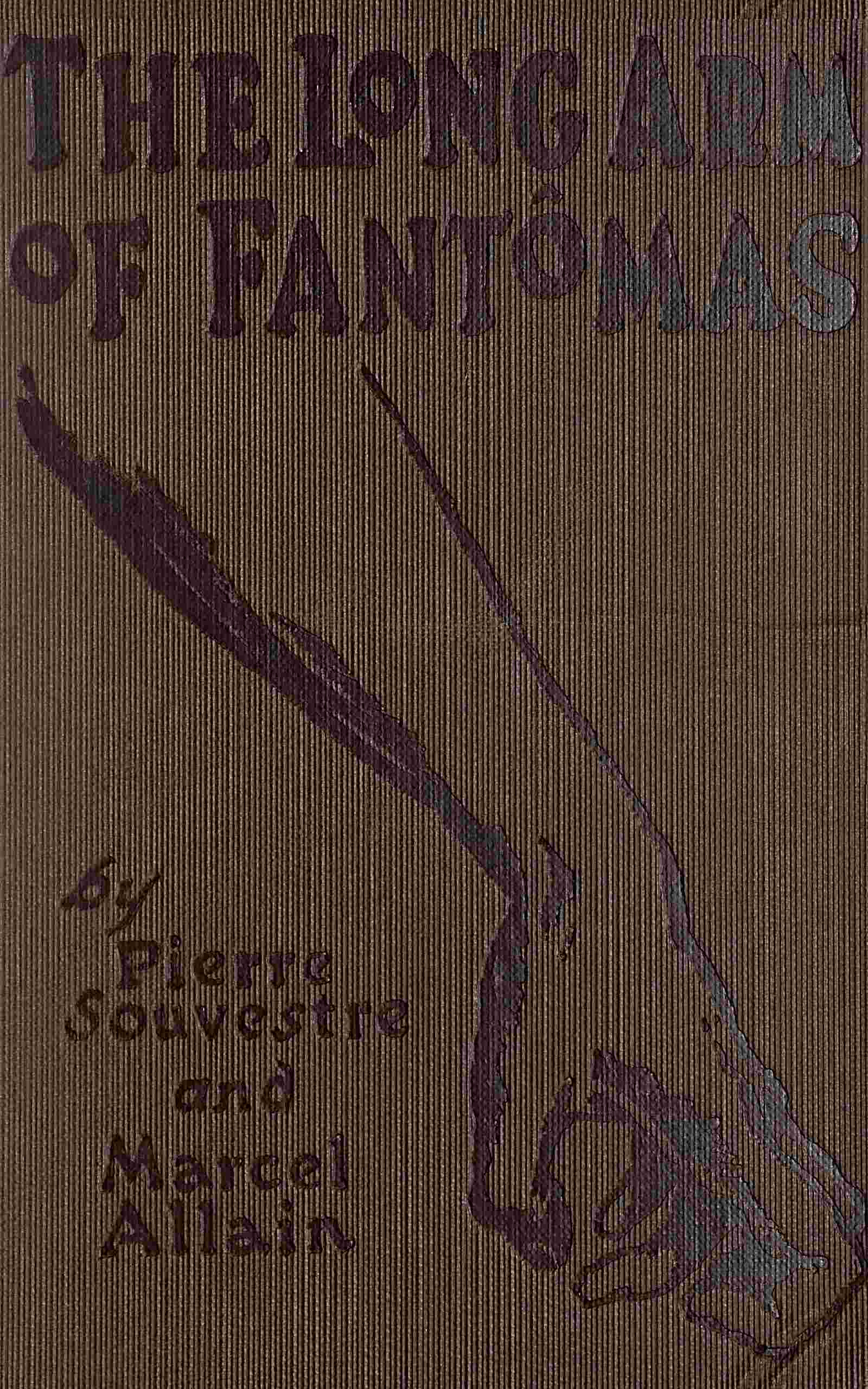
Fantômas
Paris, 1915. A woman is hacked to death in her château. A prince is robbed of his jewels. A lord is found stuffed inside a trunk. All signs point to one name: Fantômas. This is the novel that launched a thirty-two volume phenomenon, the book that kept French readers gasping for breath and turning pages through the night. Fantômas is not a criminal. He is a shadow. A master of disguise who appears and disappears without trace, who seems to be everywhere and nowhere, who commits atrocities with the calm precision of a surgeon and the anonymity of a ghost. Inspector Juve, obsessed and brilliant, pursues him through speeding trains and dark alleys and the glittering salons of the Parisian elite, certain that this specter of chaos is real, that behind the rumors and myths there is a man. But the question that haunts every character in this book is the same question that haunted early twentieth-century France: what happens when crime becomes invisible, when evil wears a thousand faces? Souvestre wrote with the propulsive energy of serialized fiction at its peak, each chapter delivering shock after shock, each episode melting into the next with nauseating momentum. The New York Times called it an 'intoxicant.' They weren't wrong.
Editions

X-Ray
“What can I be thinking of? Just imagine my not having presented myself to you even yet! But as a matter of fact I do not want to tell you my name out loud; it is a romantic one, utterly inappropriate to the typically modern environment in which we now stand. Ah, if we were only on the steep side of some mountain with the moon like a great lamp above us, or by the shore of some wild ocean, there would be some glamour in proclaiming my identity in the silence of the night, or in the midst of lightning and thunder as a hurricane swept the seas! But here in a third-floor suite of the Royal Palace Hotel, surrounded by telephones and electric lights, and standing by a window overlooking the Champs Elysees-> it would be positively anachronistic!" He took a card out of his pocket and drew near the little writing desk. "Allow me, Princess, to slip my card into this drawer, left open on purpose, it would seem," and while the princess uttered a little cry she could not repress, he did just that. "And now, Princess," he went on, compelling her to retreat before him as he moved to the door of the anteroom opening on to the corridor, "you are too well bred, I am sure, not to wish to conduct your visitor to the door of your suite." His tone altered abruptly, and in a deep imperious voice that made the princess quake he ordered her: "And now, not a word, not a cry, not a movement until I am outside, or I will kill you!””
— Pierre Souvestre
“As she slowly came to, the princess, fascinated, gazed at the card, and this time her haggard eyes grew wide with astonishment. For upon the card, which until now had appeared immaculately white, letters were gradually becoming visible, and the princess read: "Fan-tô-mas!””
— Pierre Souvestre
“Man's duty is to persuade and forgive, not to judge and punish. Kindness breeds kindness, and it is pity that wins amendment.””
— Pierre Souvestre
Link to this book
Add a free, dofollow link to Lex on your blog, forum, syllabus, or reading list.

<a href="https://lex-books.com/book/fant-mas-09463a87-2052-4593-9ab0-88081d932b01"><img src="https://lex-books.com/badges/read-on-lex.svg" alt="Read Fantômas by Pierre Souvestre free on Lex" width="160" height="40"></a>[](https://lex-books.com/book/fant-mas-09463a87-2052-4593-9ab0-88081d932b01)[url=https://lex-books.com/book/fant-mas-09463a87-2052-4593-9ab0-88081d932b01][img]https://lex-books.com/badges/read-on-lex.svg[/img][/url]Read Fantômas by Pierre Souvestre free on Lex: https://lex-books.com/book/fant-mas-09463a87-2052-4593-9ab0-88081d932b01Cite this book
Reading this edition for a paper or guide? Copy a citation.
Souvestre, Pierre. Fantômas. Lex, lex-books.com/book/fant-mas-09463a87-2052-4593-9ab0-88081d932b01.Souvestre, P. (n.d.). Fantômas. Lex. https://lex-books.com/book/fant-mas-09463a87-2052-4593-9ab0-88081d932b01Souvestre, Pierre. Fantômas. Lex. https://lex-books.com/book/fant-mas-09463a87-2052-4593-9ab0-88081d932b01.