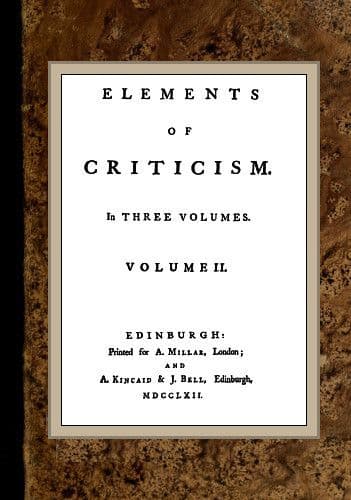
Elements of Criticism, Volume I.
1762
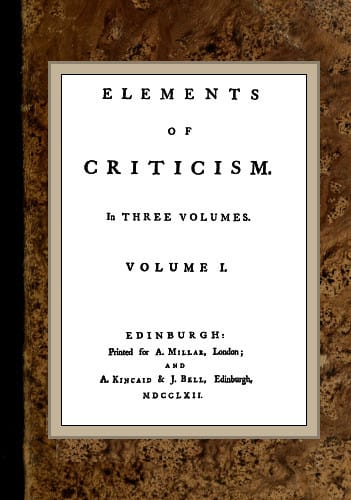
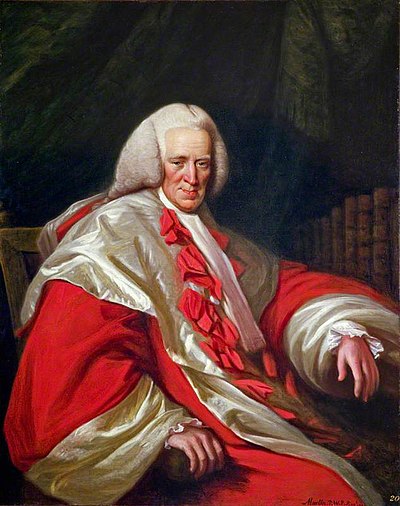
Before Kant revolutionized aesthetics, a Scottish lord wrote the book that would change how we think about beauty and taste forever. Henry Home, Lord Kames' Elements of Criticism (1762) was the first systematic English-language treatise on the principles governing art, judgment, and aesthetic pleasure, and it quietly shaped virtually every major aesthetic theory that followed. Kames argued that taste is not arbitrary or merely subjective but follows discernible laws rooted in human nature itself. He explored how the senses interact with emotion, how we form associations between ideas and objects, and why certain configurations in music, painting, poetry, and drama move us while others fall flat. Rather than simply cataloging what people find beautiful, Kames asked why we find it beautiful, building a philosophical framework that bridges empirical psychology and artistic practice. Volume I establishes his central claims: that the fine arts cultivate virtue and social order, that aesthetic judgment can be educated and refined, and that criticism itself is a discipline worthy of systematic study. This is where modern art criticism begins.
Editions
Link to this book
Add a free, dofollow link to Lex on your blog, forum, syllabus, or reading list.

<a href="https://lex-books.com/book/elements-of-criticism-volume-i-210466cb-0e96-4cc1-af36-8d19ff8f9048"><img src="https://lex-books.com/badges/read-on-lex.svg" alt="Read Elements of Criticism, Volume I. by Henry Home, Lord Kames free on Lex" width="160" height="40"></a>[](https://lex-books.com/book/elements-of-criticism-volume-i-210466cb-0e96-4cc1-af36-8d19ff8f9048)[url=https://lex-books.com/book/elements-of-criticism-volume-i-210466cb-0e96-4cc1-af36-8d19ff8f9048][img]https://lex-books.com/badges/read-on-lex.svg[/img][/url]Read Elements of Criticism, Volume I. by Henry Home, Lord Kames free on Lex: https://lex-books.com/book/elements-of-criticism-volume-i-210466cb-0e96-4cc1-af36-8d19ff8f9048Cite this book
Reading this edition for a paper or guide? Copy a citation.
Henry Home, Lord Kames. Elements of Criticism, Volume I.. Lex, lex-books.com/book/elements-of-criticism-volume-i-210466cb-0e96-4cc1-af36-8d19ff8f9048.Henry Home, L. K. (1762). Elements of Criticism, Volume I.. Lex. https://lex-books.com/book/elements-of-criticism-volume-i-210466cb-0e96-4cc1-af36-8d19ff8f9048Henry Home, Lord Kames. Elements of Criticism, Volume I.. Lex. https://lex-books.com/book/elements-of-criticism-volume-i-210466cb-0e96-4cc1-af36-8d19ff8f9048.