Drawings and Pharmacy in Al-Zahrawi's 10th-Century Surgical Treatise
Drawings and Pharmacy in Al-Zahrawi's 10th-Century Surgical Treatise
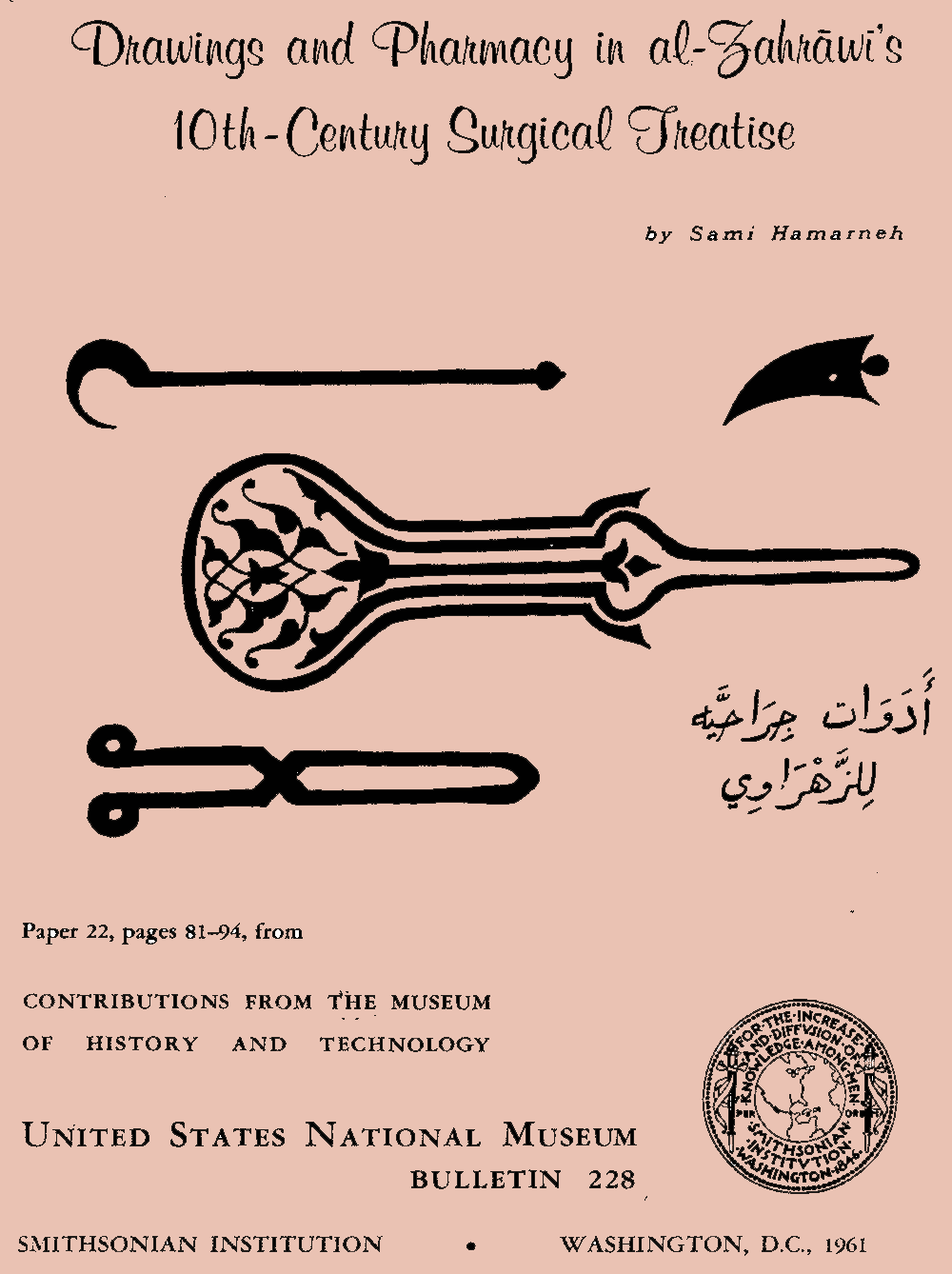
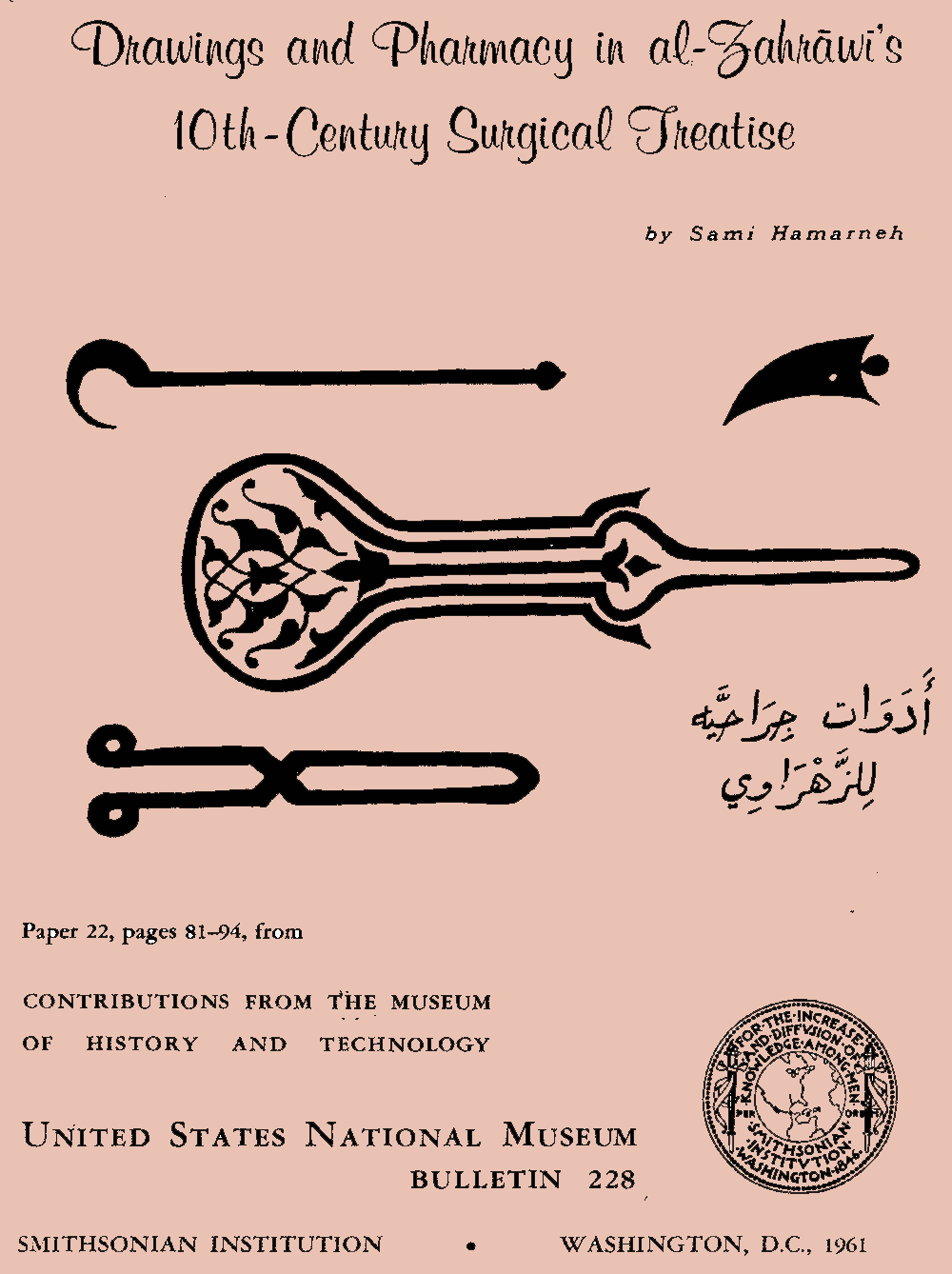
Long before anesthesia or antibiotics, a surgeon in 10th-century Córdoba was systematizing the entire art of cutting. Abū al-Qāsim al-Zahrāwī, known in Latin as Albucasis, produced al-Tasrīf, a surgical treatise so comprehensive that it remained the definitive text in Europe for five centuries. This Smithsonian publication examines the remarkable illustrations that made it possible: detailed drawings of surgical instruments, cautery devices, and pharmacological preparations designed to train apprentices across the Islamic world and, eventually, in medieval Latin Europe. Sami Khalaf Hamarneh traces how these original Arabic illustrations were translated, adapted, and sometimes transformed as they passed through Latin and vernacular versions, revealing the visual vocabulary that built modern surgery. The drawings were not mere decoration, they were teaching tools that captured specific techniques, instrument configurations, and preparation methods in an era when surgery was still intimately bound to craft and apprenticeship. For anyone curious about where surgery truly began, this book opens a window onto the operating theaters of a thousand years ago.
Editions
X-Ray
10th-century Andalusian physician and surgeon who authored the encyclopedic medical work al-Taṣrīf. Known as the father of modern surgery, he created detailed surgical illustrations and innovative medical instruments.
Modern medical historian and associate curator of medical sciences at the Smithsonian Institution. Author of this scholarly analysis examining al-Zahrāwī's surgical treatise and pharmaceutical contributions.
12th-century translator who rendered al-Zahrāwī's surgical treatise into Latin, facilitating its spread throughout medieval Europe. His translation was crucial for the work's Western influence.
Renowned 10th-century Persian physician and greatest clinician in Arabic medicine. Mentioned as comparison to al-Zahrāwī's influence.
About Drawings and Pharmacy in Al-Zahrawi's 10th-Century Surgical Treatise
Chapter Summaries
- Introduction
- Establishes al-Zahrāwī's importance in medieval medicine and explains the purpose of examining his surgical treatise. Introduces the author's methodology and acknowledges manuscript sources.
- 1
- Discusses al-Zahrāwī's background and the transmission of his work to Western Europe through Gerard of Cremona's Latin translation. Explains why his surgical treatise gained more recognition in the West than in the Islamic world.
- 2
- Analyzes the organization of al-Zahrāwī's surgical treatise into three main sections. Describes his approach to cautery, surgical instruments, and the instructional nature of his illustrations.
Key Themes
- Medical Innovation and Progress
- Al-Zahrāwī's pioneering surgical techniques and instrument designs represent significant advancement in medieval medicine. His work demonstrates how innovation builds upon existing knowledge while introducing original contributions.
- Knowledge Transmission Across Cultures
- The translation and dissemination of al-Zahrāwī's work from Arabic to Latin illustrates how medical knowledge transcended cultural boundaries. The text shows both the benefits and distortions that occur during cultural transmission.
- The Integration of Theory and Practice
- Al-Zahrāwī's approach combined theoretical medical knowledge with practical surgical experience. His emphasis on anatomical understanding and hands-on training reflects the importance of bridging academic and clinical medicine.
Characters
- Abū al-Qāsim al-Zahrāwī (Abulcasis)(protagonist)
- 10th-century Andalusian physician and surgeon who authored the encyclopedic medical work al-Taṣrīf. Known as the father of modern surgery, he created detailed surgical illustrations and innovative medical instruments.
- Sami Khalaf Hamarneh(protagonist)
- Modern medical historian and associate curator of medical sciences at the Smithsonian Institution. Author of this scholarly analysis examining al-Zahrāwī's surgical treatise and pharmaceutical contributions.
- Gerard of Cremona(major)
- 12th-century translator who rendered al-Zahrāwī's surgical treatise into Latin, facilitating its spread throughout medieval Europe. His translation was crucial for the work's Western influence.
- al-Rāzī (Rhazes)(minor)
- Renowned 10th-century Persian physician and greatest clinician in Arabic medicine. Mentioned as comparison to al-Zahrāwī's influence.
- Ibn Sīnā (Avicenna)(minor)
- Famous Persian physician and author of al-Qānūn fī al-Ṭibb, used as comparison to highlight al-Zahrāwī's unique surgical contributions.
Link to this book
Add a free, dofollow link to Lex on your blog, forum, syllabus, or reading list.

<a href="https://lex-books.com/book/drawings-and-pharmacy-in-al-zahrawi-s-10th-century-surgical-treatise-479be8c1-6e08-4ed5-96af-185d4efff25f"><img src="https://lex-books.com/badges/read-on-lex.svg" alt="Read Drawings and Pharmacy in Al-Zahrawi's 10th-Century Surgical Treatise by Sami Khalaf Hamarneh free on Lex" width="160" height="40"></a>[](https://lex-books.com/book/drawings-and-pharmacy-in-al-zahrawi-s-10th-century-surgical-treatise-479be8c1-6e08-4ed5-96af-185d4efff25f)[url=https://lex-books.com/book/drawings-and-pharmacy-in-al-zahrawi-s-10th-century-surgical-treatise-479be8c1-6e08-4ed5-96af-185d4efff25f][img]https://lex-books.com/badges/read-on-lex.svg[/img][/url]Read Drawings and Pharmacy in Al-Zahrawi's 10th-Century Surgical Treatise by Sami Khalaf Hamarneh free on Lex: https://lex-books.com/book/drawings-and-pharmacy-in-al-zahrawi-s-10th-century-surgical-treatise-479be8c1-6e08-4ed5-96af-185d4efff25fCite this book
Reading this edition for a paper or guide? Copy a citation.
Hamarneh, Sami Khalaf. Drawings and Pharmacy in Al-Zahrawi's 10th-Century Surgical Treatise. Lex, lex-books.com/book/drawings-and-pharmacy-in-al-zahrawi-s-10th-century-surgical-treatise-479be8c1-6e08-4ed5-96af-185d4efff25f.Hamarneh, S. K. (n.d.). Drawings and Pharmacy in Al-Zahrawi's 10th-Century Surgical Treatise. Lex. https://lex-books.com/book/drawings-and-pharmacy-in-al-zahrawi-s-10th-century-surgical-treatise-479be8c1-6e08-4ed5-96af-185d4efff25fHamarneh, Sami Khalaf. Drawings and Pharmacy in Al-Zahrawi's 10th-Century Surgical Treatise. Lex. https://lex-books.com/book/drawings-and-pharmacy-in-al-zahrawi-s-10th-century-surgical-treatise-479be8c1-6e08-4ed5-96af-185d4efff25f.