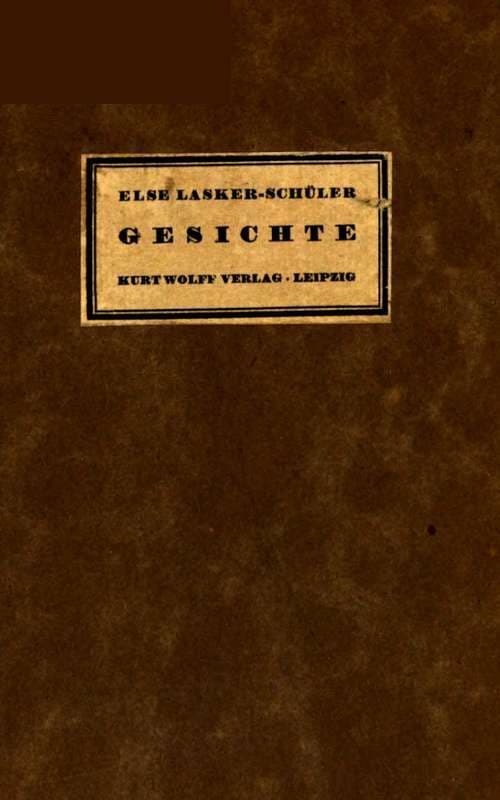
Die Wupper: Schauspiel in 5 Aufzügen
1909
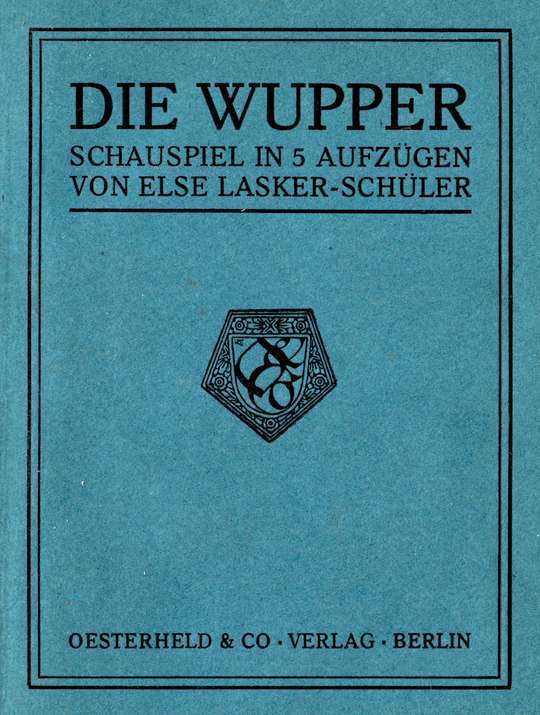
Else Lasker-Schüler's most famous drama is a love letter to her industrial hometown and a unsentimental portrait of class in transition. The play unfolds along the Wupper River, where dyers and factory workers scrape by in the shadow of a declining textile dynasty. Carl Pius, a ambitious young man from the working class, dreams of escaping his station to become a clergyman. His relationship with Eduard, the heir of the fading factory family, creates an uneasy bridge between worlds that should never meet. Lasker-Schüler transforms the rough dialect of ordinary working people into something luminous and strange. Her dialogue reads like poetry hiding in plain speech, everyday conversations that somehow contain the weight of entire lives lived in poverty and quiet desperation. The play captures a world being remade by industry, where old hierarchies are crumbling but new ones are taking their place. It is both a historical document of Wuppertal at the dawn of the machine age and a timeless meditation on ambition, class, and what it costs to belong or to escape.
Editions
Link to this book
Add a free, dofollow link to Lex on your blog, forum, syllabus, or reading list.

<a href="https://lex-books.com/book/die-wupper-schauspiel-in-5-aufz-gen-4f979071-19c0-4c34-9686-b02067d7ecc2"><img src="https://lex-books.com/badges/read-on-lex.svg" alt="Read Die Wupper: Schauspiel in 5 Aufzügen by Else Lasker-Schüler free on Lex" width="160" height="40"></a>[](https://lex-books.com/book/die-wupper-schauspiel-in-5-aufz-gen-4f979071-19c0-4c34-9686-b02067d7ecc2)[url=https://lex-books.com/book/die-wupper-schauspiel-in-5-aufz-gen-4f979071-19c0-4c34-9686-b02067d7ecc2][img]https://lex-books.com/badges/read-on-lex.svg[/img][/url]Read Die Wupper: Schauspiel in 5 Aufzügen by Else Lasker-Schüler free on Lex: https://lex-books.com/book/die-wupper-schauspiel-in-5-aufz-gen-4f979071-19c0-4c34-9686-b02067d7ecc2Cite this book
Reading this edition for a paper or guide? Copy a citation.
Lasker-Schüler, Else. Die Wupper: Schauspiel in 5 Aufzügen. Lex, lex-books.com/book/die-wupper-schauspiel-in-5-aufz-gen-4f979071-19c0-4c34-9686-b02067d7ecc2.Lasker-Schüler, E. (1909). Die Wupper: Schauspiel in 5 Aufzügen. Lex. https://lex-books.com/book/die-wupper-schauspiel-in-5-aufz-gen-4f979071-19c0-4c34-9686-b02067d7ecc2Lasker-Schüler, Else. Die Wupper: Schauspiel in 5 Aufzügen. Lex. https://lex-books.com/book/die-wupper-schauspiel-in-5-aufz-gen-4f979071-19c0-4c34-9686-b02067d7ecc2.