Die Räuber: Ein Schauspiel
1781
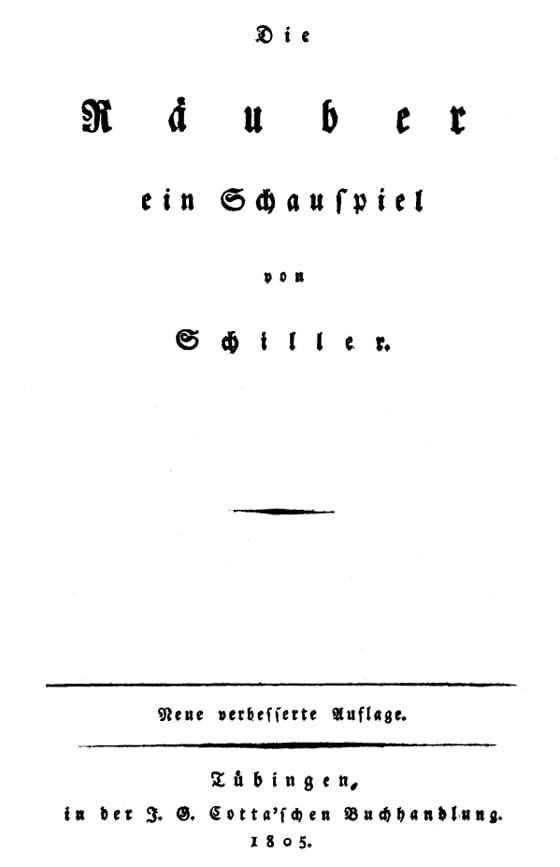
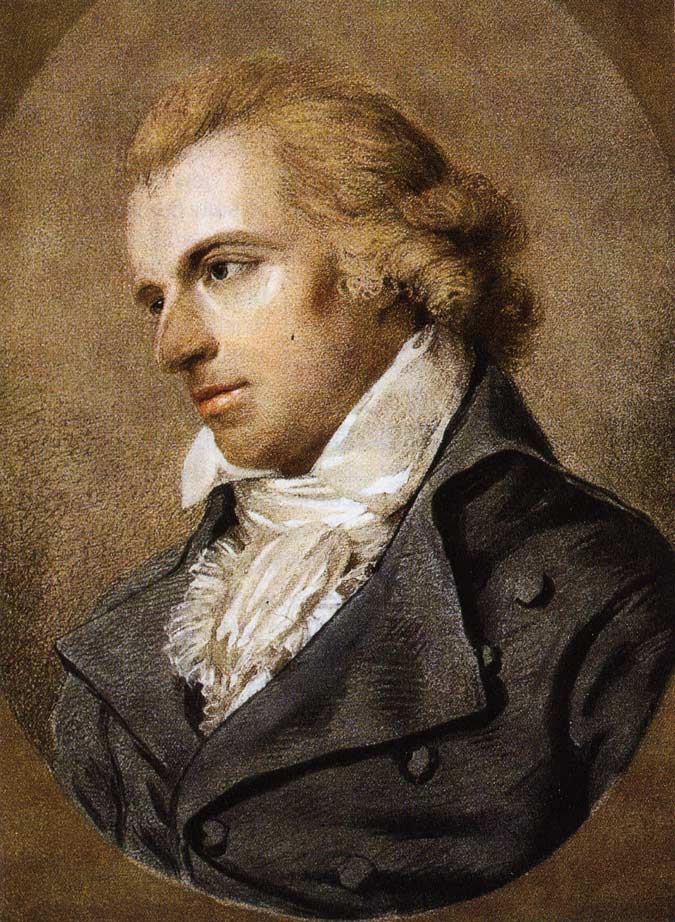
Written when Friedrich Schiller was just twenty-one years old, Die Räuber erupted onto the German stage like a thunderclap. The play scandalized audiences and authorities alike with its raw depiction of two brothers torn apart by jealousy, ambition, and opposing visions of freedom. Karl, the elder son, has abandoned his noble birth to lead a band of outlaws in the Bohemian forest, a righteous rebellion against a corrupt society that denied him justice. His younger brother Franz remains behind, a calculating schemer who manipulates their aging father Maximilian, seize the inheritance, and stolen Karl's beloved Amalia. What begins as a family tragedy becomes a scorching indictment of aristocratic hypocrisy and the thin line between law and justice. Schiller poured his own youthful fury into this work, channeling the Sturm und Drang movement's rejection of rationalism in favor of raw emotion, primal freedom, and violent resistance. The play was banned after its first performance, but its influence rippled across European drama for decades. It remains a visceral portrait of brotherhood destroyed by envy, and the question it asks still cuts: when the law serves the corrupt, what choice remains but to break it?
Editions
X-Ray
“I feel an army in my fist.””
— Friedrich Schiller
“هل أقوم بحشر جسدى داخل حشد محكم وأضغط على إرادتى فى جوهر القانون؟ إن ما كان مقدراً أن يحّلق عالياً كطيران النسر قد انتهى به الأمر إلى الزحف كالقوقع بفعل القانون. إن القانون لم تنشئ إنساناً عظيماً أبداً، بل إن الحرية هى التى تُنشئ العمالقة والأبطال.””
— Friedrich Schiller
“lern' erst die Tiefe des Abgrunds kennen, eh du hineinspringst!””
— Friedrich Schiller
“¡Quita! Abajo con este débil siglo de castrati que no sirve más que para rumiar las hazañas del pasado y para desollar a los héroes de la Antigüedad con ediciones comentadas y echarlos a perder con tragedias. La fuerza de su simiente se ha secado y ahora hay que ayudar a los hombres a multiplicarse con levadura de cerveza.””
— Friedrich Schiller
“To what absurd conclusions must this notion of a sympathy of souls, derived from the propinquity of bodies, inevitably tend? A common source of being is to produce community of sentiment; identity of matter, identity of impulse.””
— Friedrich Schiller
“Extinguióse ya la viva y brillante centella de Prometeo, y le ha sustituido la de los pirotécnicos... fuego artificial, que ni aun encender puede una pipa de tabaco.””
— Friedrich Schiller
Link to this book
Add a free, dofollow link to Lex on your blog, forum, syllabus, or reading list.

<a href="https://lex-books.com/book/die-r-uber-ein-schauspiel-5e1d7ebf-c045-4fc3-849e-e8430a6c575f"><img src="https://lex-books.com/badges/read-on-lex.svg" alt="Read Die Räuber: Ein Schauspiel by Friedrich Schiller free on Lex" width="160" height="40"></a>[](https://lex-books.com/book/die-r-uber-ein-schauspiel-5e1d7ebf-c045-4fc3-849e-e8430a6c575f)[url=https://lex-books.com/book/die-r-uber-ein-schauspiel-5e1d7ebf-c045-4fc3-849e-e8430a6c575f][img]https://lex-books.com/badges/read-on-lex.svg[/img][/url]Read Die Räuber: Ein Schauspiel by Friedrich Schiller free on Lex: https://lex-books.com/book/die-r-uber-ein-schauspiel-5e1d7ebf-c045-4fc3-849e-e8430a6c575fCite this book
Reading this edition for a paper or guide? Copy a citation.
Schiller, Friedrich. Die Räuber: Ein Schauspiel. Lex, lex-books.com/book/die-r-uber-ein-schauspiel-5e1d7ebf-c045-4fc3-849e-e8430a6c575f.Schiller, F. (1781). Die Räuber: Ein Schauspiel. Lex. https://lex-books.com/book/die-r-uber-ein-schauspiel-5e1d7ebf-c045-4fc3-849e-e8430a6c575fSchiller, Friedrich. Die Räuber: Ein Schauspiel. Lex. https://lex-books.com/book/die-r-uber-ein-schauspiel-5e1d7ebf-c045-4fc3-849e-e8430a6c575f.