Die Harzreise
1826
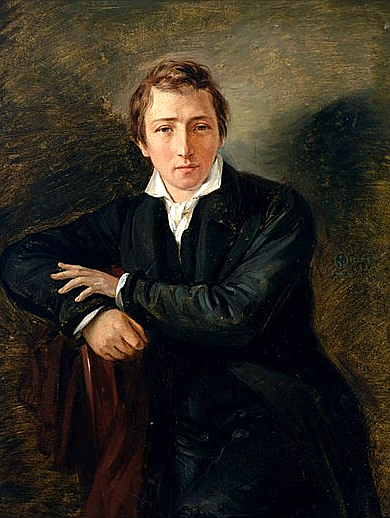
The young Heinrich Heine, suffocating in the lecture halls of Göttingen, did what any restless poet would do: he walked out. In autumn 1824, he abandoned his law studies for a walking journey through the Harz Mountains, and from that escape came one of the most electrifying travel narratives in German literature. Die Harzreise fizzes with the energy of a young man discovering that the world is vast and ridiculous and beautiful, and that he has a voice sharp enough to capture all three. Heine's observations oscillate between lyrical reverie and vicious satire, whether he's describing mountain peaks or dissecting the pompous academics he left behind. The famous Göttingen section alone - his gleeful roast of the university's stuffy professors and bored students - announced a talent that would become impossible to ignore. This is travel writing as liberation: funny, strange, occasionally bitter, and utterly alive.
Editions
X-Ray
“Like a great poet, nature knows how to produce the greatest effects with the utmost economy of means: nothing but sun, trees, flowers, water, and love. Of course, if the latter is absent from the beholder’s heart, the whole landscape will be an unpleasing sight; then the sun is merely so many miles in diameter, and the trees provide good firewood, and the flowers are classified according to the number of their stamens, and the water is wet.””
— Heinrich Heine
“He always maintained that we fear something because we recognize it as fearsome through rational inferences, and that only the reason had any power; the heart had none. While I ate well and drank well, he kept demonstrating to me the advantages of reason... In striving after the positive, the poor man had argued away all life's splendour, all the sunbeams, all the faith and all the flowers, leaving nothing but the cold, positive grave.””
— Heinrich Heine
“The ancient, tremulous woman who was sitting behind the stove opposite the big cupboard may have sat there for a quarter of a century, and her thoughts and feelings are closely interwoven with every corner of the stove and every carving on the cupboard. And the stove and cupboard are alive, for part of a human soul has entered into them.””
— Heinrich Heine
“„Da sind nur eine Sonne, Baume, Blumen, Wasser und Liebe. Freilich, fehlt Letztere im Herzen des Beschauers, mag das Ganze wohl einen schlechten Anblick gewähren, und die Sonne hat dann bloß soundso viel Meilen im Durchmesser, und die Bäume sind gut zum Einheizen, und die Blumen werden nach den Staubfäden klassifiziert, und das Wasser ist nass.””
— Heinrich Heine
“Yes, I know better; God created man so that he might admire the splendour of the world. Every author, be he never so great, wants his work to be praised.””
— Heinrich Heine
“Besides, ghost-stories are even more blood-curdling if you are reading them on a journey, especially at night, in a town, in a house, in a room where you have never been before. How many horrific events may already have taken place on the very spot where you are lying?”
— Heinrich Heine
Link to this book
Add a free, dofollow link to Lex on your blog, forum, syllabus, or reading list.

<a href="https://lex-books.com/book/die-harzreise-4c74a7a7-97ce-4923-af3c-5f6e40f74334"><img src="https://lex-books.com/badges/read-on-lex.svg" alt="Read Die Harzreise by Heinrich Heine free on Lex" width="160" height="40"></a>[](https://lex-books.com/book/die-harzreise-4c74a7a7-97ce-4923-af3c-5f6e40f74334)[url=https://lex-books.com/book/die-harzreise-4c74a7a7-97ce-4923-af3c-5f6e40f74334][img]https://lex-books.com/badges/read-on-lex.svg[/img][/url]Read Die Harzreise by Heinrich Heine free on Lex: https://lex-books.com/book/die-harzreise-4c74a7a7-97ce-4923-af3c-5f6e40f74334Cite this book
Reading this edition for a paper or guide? Copy a citation.
Heine, Heinrich. Die Harzreise. Lex, lex-books.com/book/die-harzreise-4c74a7a7-97ce-4923-af3c-5f6e40f74334.Heine, H. (1826). Die Harzreise. Lex. https://lex-books.com/book/die-harzreise-4c74a7a7-97ce-4923-af3c-5f6e40f74334Heine, Heinrich. Die Harzreise. Lex. https://lex-books.com/book/die-harzreise-4c74a7a7-97ce-4923-af3c-5f6e40f74334.