De Agricultura
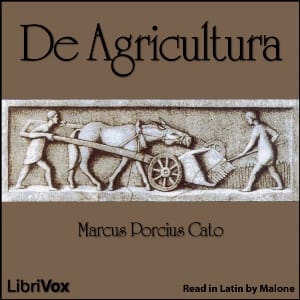
The oldest complete work of Latin prose, De Agricultura is a 2nd-century BC farming manual that functions as something far more ambitious than a simple agricultural guide. Cato the Elder, Roman senator and hardline traditionalist, wrote this treatise as an argument for a particular way of life: the self-sufficient, morally rigorous, unpretentiously Roman. The advice is practical, how to manage slaves, plant crops, preserve olives, select a wife, but it carries a political charge. Cato despised Greek culture and saw foreign influences as corrupting Roman virtue. In these blunt, imperative-heavy instructions for running a farm, he was really prescribing a return to old Roman values. The Latin itself is striking: stripped down, direct, almost militarily terse, with subordinate clauses largely absent. For modern readers, it's a time capsule and a provocation, a glimpse into the Roman mind at a pivotal moment, and a reminder that even a treatise on olives and soil can be a weapon in a cultural war.
X-Ray