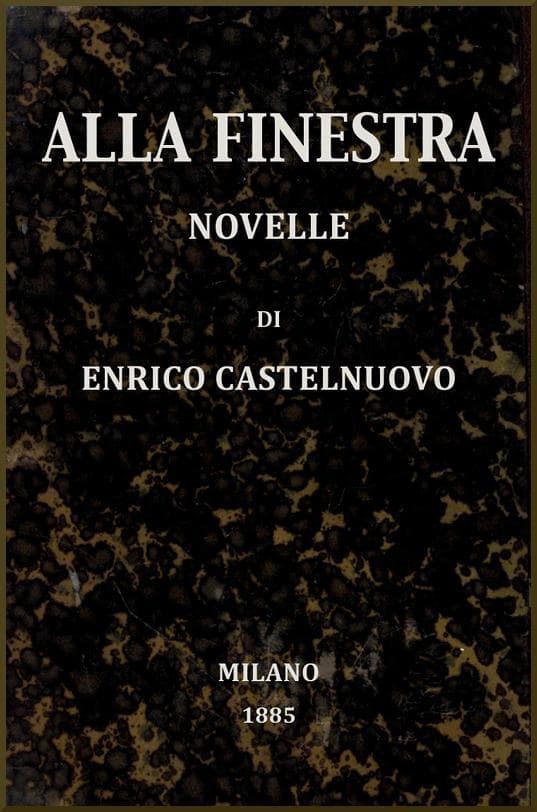
Dal Primo Piano Alla Soffitta
1883
Venice, October 7, 1838. The regatta is about to begin, and Palazzo Bollati thrills with preparation. Young Leonardo, heir to the count, presses against the window in breathless anticipation while his father, Count Zaccaria, surveys the proceedings with aristocratic satisfaction. But above and below this gleaming first floor where the Bollati receive their guests, the household operates on entirely different terms: servants scurry in the kitchens, and in the attic dwell those whose labor makes the family's grandeur possible. Enrico Castelnuovo constructs his novel as avertical journey through the stratified floors of a single palazzo, mapping every rung of the social ladder with the precision of an architect and the warmth of a moralist. The optimstic count and his pessimistic wife Chiaretta, who dreads the incoming tide of visitors, represent not merely individual temperaments but two modes of engaging with a world where reputation must be carefully performed and maintained. This is a novel about what it costs to occupy the top of the ladder, and who gets forgotten on the way up or down. Castelnuovo wrote in an era when Italian unification was still fresh and the old aristocratic order trembled beneath new social pressures. His portrait of the Bollati family captures the anxiety beneath the ceremony, the fragility behind the facade. For readers who relish the intimate domestic dramas of nineteenth-century European literature, who delight in watching societies carefully choreograph their own performances, this novel offers a small masterpiece of observation and psychological subtlety.
Editions
Link to this book
Add a free, dofollow link to Lex on your blog, forum, syllabus, or reading list.

<a href="https://lex-books.com/book/dal-primo-piano-alla-soffitta-4e5a2db4-53e1-4fc6-86a0-3133f8e99f8e"><img src="https://lex-books.com/badges/read-on-lex.svg" alt="Read Dal Primo Piano Alla Soffitta by Enrico Castelnuovo free on Lex" width="160" height="40"></a>[](https://lex-books.com/book/dal-primo-piano-alla-soffitta-4e5a2db4-53e1-4fc6-86a0-3133f8e99f8e)[url=https://lex-books.com/book/dal-primo-piano-alla-soffitta-4e5a2db4-53e1-4fc6-86a0-3133f8e99f8e][img]https://lex-books.com/badges/read-on-lex.svg[/img][/url]Read Dal Primo Piano Alla Soffitta by Enrico Castelnuovo free on Lex: https://lex-books.com/book/dal-primo-piano-alla-soffitta-4e5a2db4-53e1-4fc6-86a0-3133f8e99f8eCite this book
Reading this edition for a paper or guide? Copy a citation.
Castelnuovo, Enrico. Dal Primo Piano Alla Soffitta. Lex, lex-books.com/book/dal-primo-piano-alla-soffitta-4e5a2db4-53e1-4fc6-86a0-3133f8e99f8e.Castelnuovo, E. (1883). Dal Primo Piano Alla Soffitta. Lex. https://lex-books.com/book/dal-primo-piano-alla-soffitta-4e5a2db4-53e1-4fc6-86a0-3133f8e99f8eCastelnuovo, Enrico. Dal Primo Piano Alla Soffitta. Lex. https://lex-books.com/book/dal-primo-piano-alla-soffitta-4e5a2db4-53e1-4fc6-86a0-3133f8e99f8e.