Cur Deus Homo? (Why God Became Man)
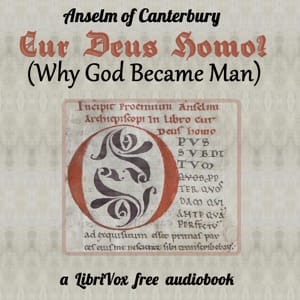
In the winter of his life, amid political exile and profound spiritual anxiety, the philosopher-theologian Anselm of Canterbury undertook what would become the most consequential work of atonement theology ever written. Cur Deus Homo? poses questions that have haunted Christian thought for a millennium: Why did the infinite God need to become a finite man? Could humanity's ancient wound have been healed any other way? Was the Incarnation an act of divine dignity or descent? Working through these mysteries with the rigorous dialectical mind that also gave us the famous ontological argument, Anselm constructs what would become the 'satisfaction theory' of atonement: the radical claim that Christ's death was not merely illustrative but actually necessary to restore the cosmic balance that human sin had shattered. This is not dry scholasticism but urgent, passionate reasoning from a man who could not rest until he understood how God's honor could be reconciled with mercy. Eight centuries before Kierkegaard diagnosed the anxiety of infinite concern, Anselm diagnosed the infinite anxiety of a species that had offended an infinite God. The work remains essential reading for anyone who has ever wondered why salvation required blood.
Editions

Read by
Group Narration
2 readers
InTheDesert, Larry Wilson
Link to this book
Add a free, dofollow link to Lex on your blog, forum, syllabus, or reading list.

<a href="https://lex-books.com/book/cur-deus-homo-why-god-became-man-057b5ff3-cb11-46a3-8086-b466611d6fbe"><img src="https://lex-books.com/badges/read-on-lex.svg" alt="Read Cur Deus Homo? (Why God Became Man) by Anselm of Canterbury free on Lex" width="160" height="40"></a>[](https://lex-books.com/book/cur-deus-homo-why-god-became-man-057b5ff3-cb11-46a3-8086-b466611d6fbe)[url=https://lex-books.com/book/cur-deus-homo-why-god-became-man-057b5ff3-cb11-46a3-8086-b466611d6fbe][img]https://lex-books.com/badges/read-on-lex.svg[/img][/url]Read Cur Deus Homo? (Why God Became Man) by Anselm of Canterbury free on Lex: https://lex-books.com/book/cur-deus-homo-why-god-became-man-057b5ff3-cb11-46a3-8086-b466611d6fbeCite this book
Reading this edition for a paper or guide? Copy a citation.
Canterbury, Anselm of. Cur Deus Homo? (Why God Became Man). Lex, lex-books.com/book/cur-deus-homo-why-god-became-man-057b5ff3-cb11-46a3-8086-b466611d6fbe.Canterbury, A. O. (n.d.). Cur Deus Homo? (Why God Became Man). Lex. https://lex-books.com/book/cur-deus-homo-why-god-became-man-057b5ff3-cb11-46a3-8086-b466611d6fbeCanterbury, Anselm of. Cur Deus Homo? (Why God Became Man). Lex. https://lex-books.com/book/cur-deus-homo-why-god-became-man-057b5ff3-cb11-46a3-8086-b466611d6fbe.