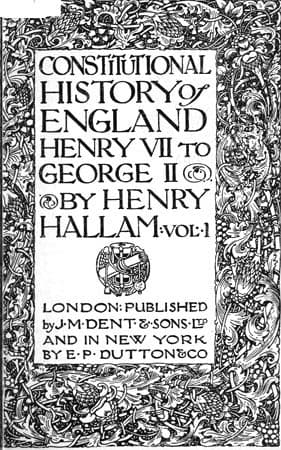
Constitutional History of England, Henry VII to George II. Volume 3 of 3

Constitutional History of England, Henry VII to George II. Volume 3 of 3
Before Westminster, before modern democracy, there was chaos. This volume traces the extraordinary story of how England forged its constitutional foundations through crisis, conflict, and fragile compromise. Hallam guides us through the Stuart era, where Charles II navigated a post-civil war world, where the ancient struggle between Crown and Parliament reached its breaking point, and where the revolutionary settlement of 1688 permanently altered the balance of power. We witness the birth of parliamentary privilege, the emergence of the press as a political force, and the passage of the Habeas Corpus Act, legal protections we now take for granted but which had to be fought for word by word. Hallam's achievement is making these ideological battles feel as urgent as any military campaign, revealing that the foundations of English liberty were not handed down but arguing, legislated, and sometimes bleeding for. For anyone curious about where modern governance actually came from, this is where it begins.
Editions

Link to this book
Add a free, dofollow link to Lex on your blog, forum, syllabus, or reading list.

<a href="https://lex-books.com/book/constitutional-history-of-england-henry-vii-to-george-ii-volume-3-of-3-4413f725-d1f8-4200-95d7-e3e1f3c9be12"><img src="https://lex-books.com/badges/read-on-lex.svg" alt="Read Constitutional History of England, Henry VII to George II. Volume 3 of 3 by Henry Hallam free on Lex" width="160" height="40"></a>[](https://lex-books.com/book/constitutional-history-of-england-henry-vii-to-george-ii-volume-3-of-3-4413f725-d1f8-4200-95d7-e3e1f3c9be12)[url=https://lex-books.com/book/constitutional-history-of-england-henry-vii-to-george-ii-volume-3-of-3-4413f725-d1f8-4200-95d7-e3e1f3c9be12][img]https://lex-books.com/badges/read-on-lex.svg[/img][/url]Read Constitutional History of England, Henry VII to George II. Volume 3 of 3 by Henry Hallam free on Lex: https://lex-books.com/book/constitutional-history-of-england-henry-vii-to-george-ii-volume-3-of-3-4413f725-d1f8-4200-95d7-e3e1f3c9be12Cite this book
Reading this edition for a paper or guide? Copy a citation.
Hallam, Henry. Constitutional History of England, Henry VII to George II. Volume 3 of 3. Lex, lex-books.com/book/constitutional-history-of-england-henry-vii-to-george-ii-volume-3-of-3-4413f725-d1f8-4200-95d7-e3e1f3c9be12.Hallam, H. (n.d.). Constitutional History of England, Henry VII to George II. Volume 3 of 3. Lex. https://lex-books.com/book/constitutional-history-of-england-henry-vii-to-george-ii-volume-3-of-3-4413f725-d1f8-4200-95d7-e3e1f3c9be12Hallam, Henry. Constitutional History of England, Henry VII to George II. Volume 3 of 3. Lex. https://lex-books.com/book/constitutional-history-of-england-henry-vii-to-george-ii-volume-3-of-3-4413f725-d1f8-4200-95d7-e3e1f3c9be12.