Commentary on the Heidelberg Catechism
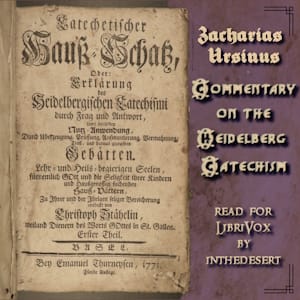
First published in 1563, this systematic exposition accompanies one of the most influential documents of the Protestant Reformation. Written in a lucid question-and-answer format, the Heidelberg Catechism was commissioned by Elector Frederick III of the Palatinate as a pastoral tool to teach the essentials of Christian faith to ordinary believers. Zacharias Ursinus, a founding father of the Reformed tradition alongside Caspar Olevianus, anchors every doctrine in Scripture and weaves together biblical truth with pastoral sensitivity. The catechism addresses the full scope of Christian belief: the human condition under sin, the person and work of Christ, the ministry of the Holy Spirit, the sacraments of baptism and the Lord's Supper, and the shape of Christian obedience. This commentary expands each question into a thorough theological treatment, making it an indispensable resource for understanding how the Reformation understood the relationship between divine grace and human faith. Three centuries later, it remains essential reading for anyone studying church history, Reformed theology, or the intellectual foundations of the Protestant tradition.
Editions

Link to this book
Add a free, dofollow link to Lex on your blog, forum, syllabus, or reading list.

<a href="https://lex-books.com/book/commentary-on-the-heidelberg-catechism-4923faa3-d07a-453e-91ec-5656793c48ee"><img src="https://lex-books.com/badges/read-on-lex.svg" alt="Read Commentary on the Heidelberg Catechism by Zacharias Ursinus free on Lex" width="160" height="40"></a>[](https://lex-books.com/book/commentary-on-the-heidelberg-catechism-4923faa3-d07a-453e-91ec-5656793c48ee)[url=https://lex-books.com/book/commentary-on-the-heidelberg-catechism-4923faa3-d07a-453e-91ec-5656793c48ee][img]https://lex-books.com/badges/read-on-lex.svg[/img][/url]Read Commentary on the Heidelberg Catechism by Zacharias Ursinus free on Lex: https://lex-books.com/book/commentary-on-the-heidelberg-catechism-4923faa3-d07a-453e-91ec-5656793c48eeCite this book
Reading this edition for a paper or guide? Copy a citation.
Ursinus, Zacharias. Commentary on the Heidelberg Catechism. Lex, lex-books.com/book/commentary-on-the-heidelberg-catechism-4923faa3-d07a-453e-91ec-5656793c48ee.Ursinus, Z. (n.d.). Commentary on the Heidelberg Catechism. Lex. https://lex-books.com/book/commentary-on-the-heidelberg-catechism-4923faa3-d07a-453e-91ec-5656793c48eeUrsinus, Zacharias. Commentary on the Heidelberg Catechism. Lex. https://lex-books.com/book/commentary-on-the-heidelberg-catechism-4923faa3-d07a-453e-91ec-5656793c48ee.