Childe Harold's Pilgrimage: Canto III
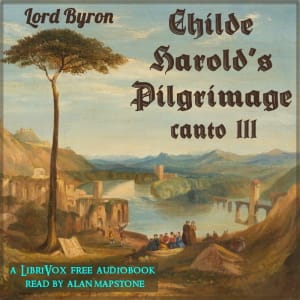
A disillusioned aristocrat wanders through a continent still reeling from two decades of war. In Canto III, Childe Harold crosses the scarred fields of Belgium, follows the Rhine into Germany, and climbs into the Swiss Alps, where the sublime vastness of nature offers temporary refuge from the weight of human history. Byron transforms his own continental journey into something vast: a meditation on exhaustion, memory, and the hunger for meaning after empire has burned itself out. The Waterloo section crackles with grim poetry, rendering the battlefield not as glory but as a wound that will not heal. What elevates the poem beyond personal complaint is its uncanny prescience - Byron captured the melancholy of an entire generation before they knew they felt it. The verses ripple with a cynicism earned through witnessing too much. This is Romantic poetry at its most raw: landscapes that wound, battles that haunt, and a voice that refuses to look away from what civilization does to itself.
Editions


Link to this book
Add a free, dofollow link to Lex on your blog, forum, syllabus, or reading list.

<a href="https://lex-books.com/book/childe-harold-s-pilgrimage-canto-iii-245420d3-3f26-4bbe-b0a9-594dd2707881"><img src="https://lex-books.com/badges/read-on-lex.svg" alt="Read Childe Harold's Pilgrimage: Canto III by George Gordon Byron, Baron Byron free on Lex" width="160" height="40"></a>[](https://lex-books.com/book/childe-harold-s-pilgrimage-canto-iii-245420d3-3f26-4bbe-b0a9-594dd2707881)[url=https://lex-books.com/book/childe-harold-s-pilgrimage-canto-iii-245420d3-3f26-4bbe-b0a9-594dd2707881][img]https://lex-books.com/badges/read-on-lex.svg[/img][/url]Read Childe Harold's Pilgrimage: Canto III by George Gordon Byron, Baron Byron free on Lex: https://lex-books.com/book/childe-harold-s-pilgrimage-canto-iii-245420d3-3f26-4bbe-b0a9-594dd2707881Cite this book
Reading this edition for a paper or guide? Copy a citation.
George Gordon Byron, Baron Byron. Childe Harold's Pilgrimage: Canto III. Lex, lex-books.com/book/childe-harold-s-pilgrimage-canto-iii-245420d3-3f26-4bbe-b0a9-594dd2707881.George Gordon Byron, B. B. (n.d.). Childe Harold's Pilgrimage: Canto III. Lex. https://lex-books.com/book/childe-harold-s-pilgrimage-canto-iii-245420d3-3f26-4bbe-b0a9-594dd2707881George Gordon Byron, Baron Byron. Childe Harold's Pilgrimage: Canto III. Lex. https://lex-books.com/book/childe-harold-s-pilgrimage-canto-iii-245420d3-3f26-4bbe-b0a9-594dd2707881.



![Birds and Nature, Vol. 12 No. 1 [June 1902]illustrated by Color Photography](/_next/image?url=https%3A%2F%2Fd3b2n8gj62qnwr.cloudfront.net%2FCOVERS%2Fgutenberg_covers75k%2Febook-47881.png&w=3840&q=75)