Catechism of the Locomotive
1879
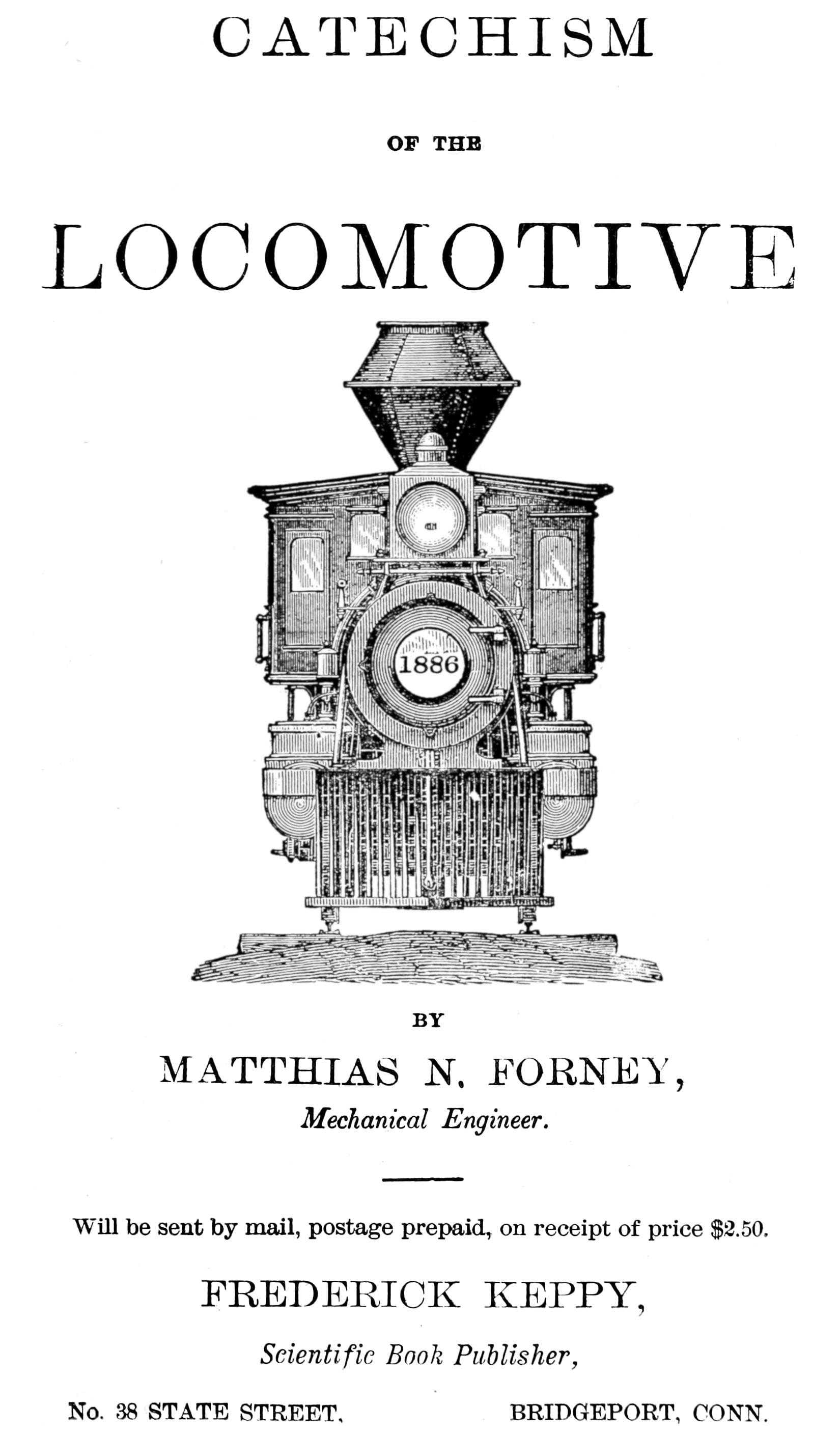
This is no ordinary manual. It is a portal into the muscular, smoking heart of the machine age. Written in 1879 by Matthias N. Forney, himself a pivotal figure in American railroad engineering, the book adopts the catechism format: question and answer, principle and proof, stripped of ornament and built for understanding. It taught generations of railroad men, mechanics, and dreamers how to wring motion from steam, how to read the language of pressure and cutoff, how to make iron breathe. The text begins with the fundamentals of atmospheric pressure and boiling points, moves through the dance of cylinder and slide-valve, and arrives at the elegant mathematics of expansive working. This is where American industrial ambition met German rigor: Forney adapted a German catechism by Kosak into something distinctly American, a handbook for a nation racing toward its own future on iron rails. For railroad enthusiasts, historians of technology, and anyone curious about how our ancestors understood the machines that built the world, this remains essential reading.
Editions
Link to this book
Add a free, dofollow link to Lex on your blog, forum, syllabus, or reading list.

<a href="https://lex-books.com/book/catechism-of-the-locomotive-0fb9f9f6-4f7d-4849-93a2-f5f1b45da6a1"><img src="https://lex-books.com/badges/read-on-lex.svg" alt="Read Catechism of the Locomotive by Matthias N. Forney free on Lex" width="160" height="40"></a>[](https://lex-books.com/book/catechism-of-the-locomotive-0fb9f9f6-4f7d-4849-93a2-f5f1b45da6a1)[url=https://lex-books.com/book/catechism-of-the-locomotive-0fb9f9f6-4f7d-4849-93a2-f5f1b45da6a1][img]https://lex-books.com/badges/read-on-lex.svg[/img][/url]Read Catechism of the Locomotive by Matthias N. Forney free on Lex: https://lex-books.com/book/catechism-of-the-locomotive-0fb9f9f6-4f7d-4849-93a2-f5f1b45da6a1Cite this book
Reading this edition for a paper or guide? Copy a citation.
Forney, Matthias N.. Catechism of the Locomotive. Lex, lex-books.com/book/catechism-of-the-locomotive-0fb9f9f6-4f7d-4849-93a2-f5f1b45da6a1.Forney, M. N. (1879). Catechism of the Locomotive. Lex. https://lex-books.com/book/catechism-of-the-locomotive-0fb9f9f6-4f7d-4849-93a2-f5f1b45da6a1Forney, Matthias N.. Catechism of the Locomotive. Lex. https://lex-books.com/book/catechism-of-the-locomotive-0fb9f9f6-4f7d-4849-93a2-f5f1b45da6a1.