Canadian Scenery, Volume 2 (of 2)
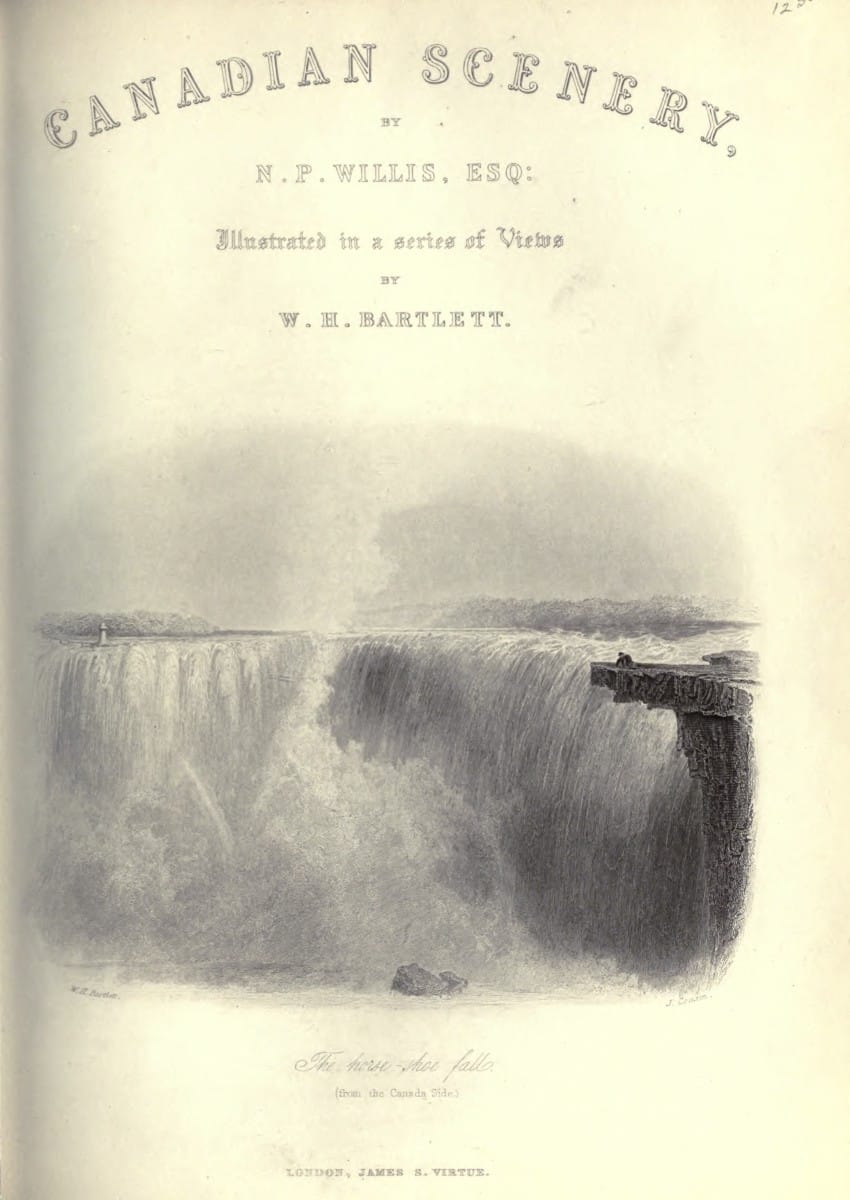
A luminous journey through the wild beauty of 19th-century Canada, rendered in the romantic prose style that made Nathaniel Parker Willis one of the most celebrated travel writers of his era. Willis guides readers along the thundering waters of the St. Lawrence, through the cobblestone streets of Montreal, and into the shadow of Quebec's ancient walls, painting every scene with the vivid particularity of a man who truly saw the world. He catalogs the region's agricultural promise, its bustling commercial arteries, the spires of Catholic cathedrals rising against Canadian skies, and the intellectual institutions shaping young minds. Yet the book is more than mere observation: it wrestles with the question of what Canada means to the world, offering a meditation on the word 'Canada' itself, derived from the Iroquois 'Kanata' meaning a collection of huts, and musing on the almost infinite potential folded into that humble name. For readers who crave the slow, rich pleasure of historical travel writing, who want to see a young continent through Romantic-era eyes, this remains an irresistible time machine.
Editions
Link to this book
Add a free, dofollow link to Lex on your blog, forum, syllabus, or reading list.

<a href="https://lex-books.com/book/canadian-scenery-volume-2-of-2-16b34dba-8ac7-4304-917d-28e9af929271"><img src="https://lex-books.com/badges/read-on-lex.svg" alt="Read Canadian Scenery, Volume 2 (of 2) by Nathaniel Parker Willis free on Lex" width="160" height="40"></a>[](https://lex-books.com/book/canadian-scenery-volume-2-of-2-16b34dba-8ac7-4304-917d-28e9af929271)[url=https://lex-books.com/book/canadian-scenery-volume-2-of-2-16b34dba-8ac7-4304-917d-28e9af929271][img]https://lex-books.com/badges/read-on-lex.svg[/img][/url]Read Canadian Scenery, Volume 2 (of 2) by Nathaniel Parker Willis free on Lex: https://lex-books.com/book/canadian-scenery-volume-2-of-2-16b34dba-8ac7-4304-917d-28e9af929271Cite this book
Reading this edition for a paper or guide? Copy a citation.
Willis, Nathaniel Parker. Canadian Scenery, Volume 2 (of 2). Lex, lex-books.com/book/canadian-scenery-volume-2-of-2-16b34dba-8ac7-4304-917d-28e9af929271.Willis, N. P. (n.d.). Canadian Scenery, Volume 2 (of 2). Lex. https://lex-books.com/book/canadian-scenery-volume-2-of-2-16b34dba-8ac7-4304-917d-28e9af929271Willis, Nathaniel Parker. Canadian Scenery, Volume 2 (of 2). Lex. https://lex-books.com/book/canadian-scenery-volume-2-of-2-16b34dba-8ac7-4304-917d-28e9af929271.