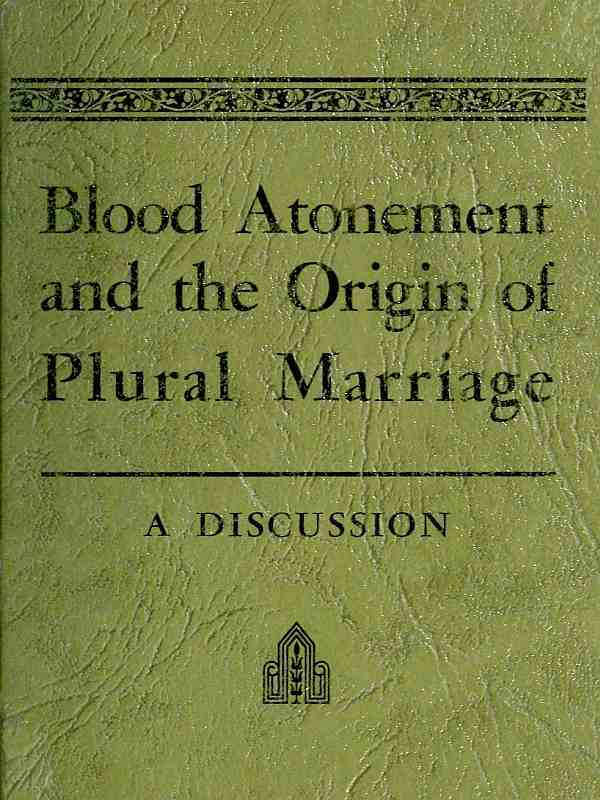
Blood Atonement and the Origin of Plural Marriage: A Discussion
1994
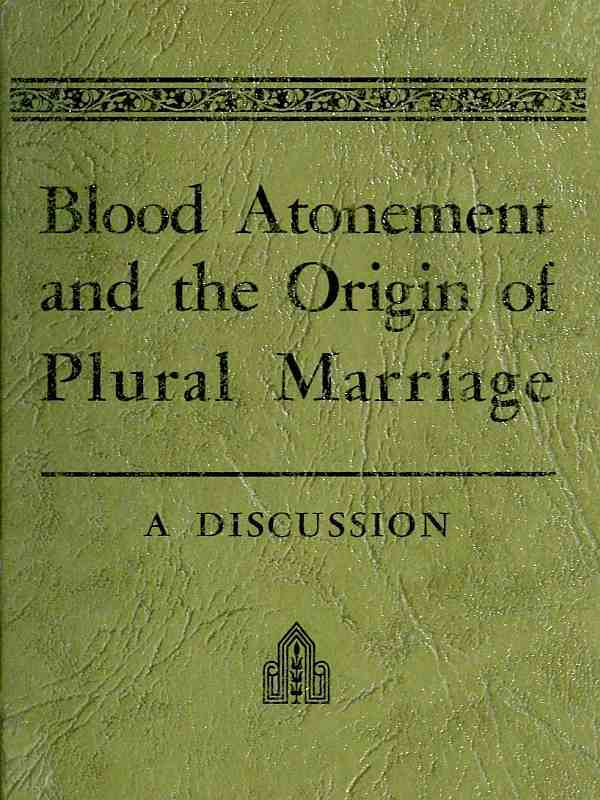
Blood Atonement and the Origin of Plural Marriage: A Discussion
1994
This volume captures a vituperative early 20th-century exchange between two senior figures in the Latter-day Saint tradition: Joseph F. Smith of the Salt Lake-based LDS Church and Richard C. Evans of the Reorganized Church. The spark was public accusation: Evans had criticized mainstream LDS doctrines, particularly the historical practice of plural marriage and the provocative teaching known as blood atonement. Smith's response is rigorous, documentary, and defensive. He summons passages from church leaders, especially Brigham Young, to explain and justify doctrines that had already passed out of official practice but remained theologically potent. The result is not mere polemic but something more valuable: a window into how one of American religion's most controversial movements wrestled internally with its own harder teachings. The debate illuminates factional tensions within Mormonism, the difficulty of managing a painful polygamous past, and the theological gymnastics required to defend or distance oneself from blood atonement, a doctrine that suggested Christ's suffering alone could not atone for certain sins. For readers interested in American religious history, the sociology of sectarian conflict, or the internal debates of a global faith, this is a primary source that speaks loudly across a century.
Editions
Link to this book
Add a free, dofollow link to Lex on your blog, forum, syllabus, or reading list.

<a href="https://lex-books.com/book/blood-atonement-and-the-origin-of-plural-marriage-a-discussion-6beea49b-c8f4-4658-b9f1-d180d1d7b115"><img src="https://lex-books.com/badges/read-on-lex.svg" alt="Read Blood Atonement and the Origin of Plural Marriage: A Discussion by Joseph Fielding Smith free on Lex" width="160" height="40"></a>[](https://lex-books.com/book/blood-atonement-and-the-origin-of-plural-marriage-a-discussion-6beea49b-c8f4-4658-b9f1-d180d1d7b115)[url=https://lex-books.com/book/blood-atonement-and-the-origin-of-plural-marriage-a-discussion-6beea49b-c8f4-4658-b9f1-d180d1d7b115][img]https://lex-books.com/badges/read-on-lex.svg[/img][/url]Read Blood Atonement and the Origin of Plural Marriage: A Discussion by Joseph Fielding Smith free on Lex: https://lex-books.com/book/blood-atonement-and-the-origin-of-plural-marriage-a-discussion-6beea49b-c8f4-4658-b9f1-d180d1d7b115Cite this book
Reading this edition for a paper or guide? Copy a citation.
Smith, Joseph Fielding. Blood Atonement and the Origin of Plural Marriage: A Discussion. Lex, lex-books.com/book/blood-atonement-and-the-origin-of-plural-marriage-a-discussion-6beea49b-c8f4-4658-b9f1-d180d1d7b115.Smith, J. F. (1994). Blood Atonement and the Origin of Plural Marriage: A Discussion. Lex. https://lex-books.com/book/blood-atonement-and-the-origin-of-plural-marriage-a-discussion-6beea49b-c8f4-4658-b9f1-d180d1d7b115Smith, Joseph Fielding. Blood Atonement and the Origin of Plural Marriage: A Discussion. Lex. https://lex-books.com/book/blood-atonement-and-the-origin-of-plural-marriage-a-discussion-6beea49b-c8f4-4658-b9f1-d180d1d7b115.