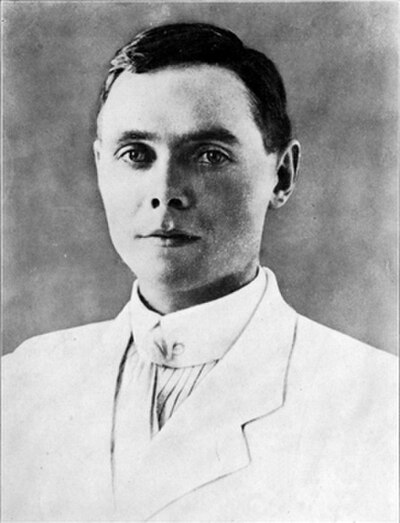
Applied Eugenics
Originally published in 1918, Applied Eugenics presents the scientific and social arguments of the early 20th-century American eugenics movement through the voice of its most prominent popularizer. Paul Popenoe, a California-based social reformer and future founder of the controversial Golden State Mutual Life insurance company, marshals contemporary biology, sociology, and economics to argue that human reproduction should be guided by the state to prevent the decline of 'superior' stocks and the multiplication of the 'unfit.' The book advocates for mandatory sterilization of the 'feebleminded,' criminals, and the dependent poor; restricts immigration from Southern and Eastern Europe; and promotes positive eugenics incentives for educated, 'healthy' families to reproduce more. Popenoe's arguments were enormously influential, shaping California sterilization laws that would serve as a model for Nazi Germany and providing intellectual fuel for immigration restriction laws passed in the 1920s. Today the work stands as a disturbing artifact: a meticulously argued case for human hierarchy that reveals how pseudoscience, class prejudice, and racial anxiety combined to produce policies that forcibly sterilized over 60,000 Americans. Essential reading for anyone seeking to understand the intellectual origins of twentieth-century atrocity.
Editions
Link to this book
Add a free, dofollow link to Lex on your blog, forum, syllabus, or reading list.

<a href="https://lex-books.com/book/applied-eugenics-9e695300-cca4-4d88-9a2d-85cc157f4af2"><img src="https://lex-books.com/badges/read-on-lex.svg" alt="Read Applied Eugenics by Paul Popenoe free on Lex" width="160" height="40"></a>[](https://lex-books.com/book/applied-eugenics-9e695300-cca4-4d88-9a2d-85cc157f4af2)[url=https://lex-books.com/book/applied-eugenics-9e695300-cca4-4d88-9a2d-85cc157f4af2][img]https://lex-books.com/badges/read-on-lex.svg[/img][/url]Read Applied Eugenics by Paul Popenoe free on Lex: https://lex-books.com/book/applied-eugenics-9e695300-cca4-4d88-9a2d-85cc157f4af2Cite this book
Reading this edition for a paper or guide? Copy a citation.
Popenoe, Paul. Applied Eugenics. Lex, lex-books.com/book/applied-eugenics-9e695300-cca4-4d88-9a2d-85cc157f4af2.Popenoe, P. (n.d.). Applied Eugenics. Lex. https://lex-books.com/book/applied-eugenics-9e695300-cca4-4d88-9a2d-85cc157f4af2Popenoe, Paul. Applied Eugenics. Lex. https://lex-books.com/book/applied-eugenics-9e695300-cca4-4d88-9a2d-85cc157f4af2.