An Introduction to the Industrial and Social History of England
An Introduction to the Industrial and Social History of England
A sweeping intellectual journey through two thousand years of English civilization, this early 20th-century masterpiece traces how a small island on the edge of Europe transformed from a Roman outpost into the workshop of the world. Cheyney reveals how England's geography was never neutral: its fertile valleys, accessible coastlines, and hidden coal seams literally shaped the nation that would come to dominate the globe. From the Roman legions who first imposed order on tribal Britain through the Anglo-Saxon settlements and Viking incursions that forged English identity, to the revolutionary steam and iron that birthed the modern industrial age, Cheyney weaves economic structures with human lives. What emerges is a profound argument: that the Industrial Revolution was no sudden rupture but the culmination of geographic and social forces centuries in the making. Originally designed for students, this book remains essential reading for anyone who wants to understand the deep historical roots of modern capitalism, class, and power.
Editions
X-Ray
“such as a villain marrying without leave, failure to perform boon-works or bad performance of work, failure to place the tenant's sheep in the lord's fold, cutting of wood or brush, making unlawful paths across the fields, the meadows, or the common, encroachment in ploughing upon other men's land or upon the common, or failure to send grain to the lord's mill for grinding. Sometimes the offence was of a more general nature, such as breach of assize, breach of contract, slander, assault, or injury to property.””
— Edward Potts Cheyney
“Before the close of the thirteenth century the records of the manor courts, or at least of the more important of them, began to be kept with very great regularity and fulness, and it is to the mass of these manor court rolls which still remain that we owe most of our detailed knowledge of the condition of the body of the people in the later Middle Ages.””
— Edward Potts Cheyney
“He was bound to the soil. He could not leave the manor to seek for better conditions of life elsewhere. If he ran away, his lord could obtain an order from a court and have him brought back. When permission was obtained to remain away from the manor as an inhabitant of another vill or of a town, it was only upon payment of a periodical sum, frequently known as "chevage" or head money. He could not sell his cattle without paying the lord for permission. He had practically no standing in the courts of the country. In any suit against his lord the proof of his condition of villainage was sufficient to put him out of court, and his only recourse was the local court of the manor, where the lord himself or his representative presided. Finally, in the eyes of the law, the villain had no property of his own, all his possessions being, in the last resort, the property of his lord. This legal theory, however, apparently had but little application to real life; for in the ordinary course of events the customary tenant, if only by custom, not by law, yet held and bequeathed to his descendants his land and his chattels quite as if they were his own. Serfdom, as it existed in England in the thirteenth century, can hardly be defined in strict legal terms. It can be described most correctly as a condition in which the villain tenant of the manor was bound to the locality and to his services and payments there by a legal bond, instead of merely by an economic bond, as was the case with the small free tenant.””
— Edward Potts Cheyney
“The English people were now one race, under one law, with one Parliament representing all parts of the country. It was possible now for the whole nation to act as a unit, and for laws to be passed which would apply to the whole country and draw its different sections continually more closely together””
— Edward Potts Cheyney
“Henry I, on his accession in 1100, in order to gain popularity, had voluntarily granted a charter reciting a number of these forms of oppression and promising to put an end to them. The rebellious barons now took this old charter as a basis, added to it many points which had become questions of dispute during the century since it had been granted, and others which were of special interest to townsmen and the middle and even lower classes. They then demanded the king's promise to issue a charter containing these points. John resisted for a while, but at last gave way and signed the document which has since been known as the "Great Charter," or Magna Carta. This has always been considered as, in a certain sense, the guarantee of English liberties and the foundation of the settled constitution of the kingdom. The fact that it was forced from a reluctant king by those who spoke for the whole nation, that it placed definite limitations on his power,””
— Edward Potts Cheyney
About An Introduction to the Industrial and Social History of England
Chapter Summaries
- 1
- Traces England's development from prehistoric times through Roman occupation, Anglo-Saxon settlement, Norman Conquest, and early Angevin period. Establishes geographical foundations and political evolution that created the unified English nation by 1338.
- 2
- Detailed examination of medieval village life, the manorial system, and agricultural organization. Describes the three-field system, social classes from lords to serfs, manor courts, and the economic foundations of feudal society.
- 3
- Explores medieval urban development, town governments, guild merchant systems, and craft guilds. Shows how towns developed distinct identities and economic functions separate from rural agricultural society.
Key Themes
- Economic Transformation
- The gradual shift from feudal agriculture and guild-based manufacturing to capitalist industry and free trade, culminating in the Industrial Revolution that made England the world's first industrial nation.
- Social Mobility and Class Evolution
- The transformation of rigid medieval social hierarchies into more fluid class structures, with the rise of merchant classes, the decline of serfdom, and the emergence of industrial workers.
- Government and Regulation
- The evolution from minimal medieval state intervention through extensive Tudor-era economic regulation to the eventual adoption of laissez-faire policies and free trade in the 19th century.
Characters
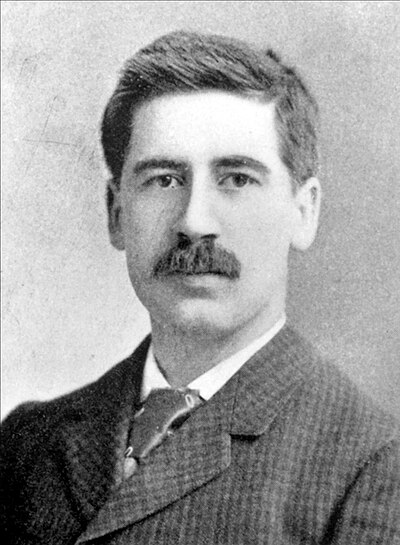
- Edward P. Cheyney(protagonist)
- Professor of European History at the University of Pennsylvania and author of this comprehensive work. He serves as the scholarly guide through England's industrial and social transformation from medieval times to the early 20th century.
- Alfred the Great(major)
- King of Wessex (871-901) who defeated the Danes and established foundations for English unity. Described as one of England's greatest rulers who promoted learning and military organization.
- William the Conqueror(major)
- Duke of Normandy who conquered England in 1066, fundamentally transforming English society, government, and culture. Established the Norman dynasty and feudal system.
- Henry II(major)
- Angevin king (1154-1189) who restored royal authority after the anarchy of Stephen's reign and established the foundations of English common law through judicial reforms.
- Edward I(major)
- Known as one of England's greatest kings, he conquered Wales, attempted to conquer Scotland, and developed Parliament into its modern form with representation from commons.
- Henry VII(major)
- First Tudor monarch who established strong personal government, encouraged commerce, and laid foundations for England's later expansion through support of exploration.
Link to this book
Add a free, dofollow link to Lex on your blog, forum, syllabus, or reading list.

<a href="https://lex-books.com/book/an-introduction-to-the-industrial-and-social-history-of-england-4de3630e-d3bc-4efe-ae31-56ca7f2306a1"><img src="https://lex-books.com/badges/read-on-lex.svg" alt="Read An Introduction to the Industrial and Social History of England by Edward Potts Cheyney free on Lex" width="160" height="40"></a>[](https://lex-books.com/book/an-introduction-to-the-industrial-and-social-history-of-england-4de3630e-d3bc-4efe-ae31-56ca7f2306a1)[url=https://lex-books.com/book/an-introduction-to-the-industrial-and-social-history-of-england-4de3630e-d3bc-4efe-ae31-56ca7f2306a1][img]https://lex-books.com/badges/read-on-lex.svg[/img][/url]Read An Introduction to the Industrial and Social History of England by Edward Potts Cheyney free on Lex: https://lex-books.com/book/an-introduction-to-the-industrial-and-social-history-of-england-4de3630e-d3bc-4efe-ae31-56ca7f2306a1Cite this book
Reading this edition for a paper or guide? Copy a citation.
Cheyney, Edward Potts. An Introduction to the Industrial and Social History of England. Lex, lex-books.com/book/an-introduction-to-the-industrial-and-social-history-of-england-4de3630e-d3bc-4efe-ae31-56ca7f2306a1.Cheyney, E. P. (n.d.). An Introduction to the Industrial and Social History of England. Lex. https://lex-books.com/book/an-introduction-to-the-industrial-and-social-history-of-england-4de3630e-d3bc-4efe-ae31-56ca7f2306a1Cheyney, Edward Potts. An Introduction to the Industrial and Social History of England. Lex. https://lex-books.com/book/an-introduction-to-the-industrial-and-social-history-of-england-4de3630e-d3bc-4efe-ae31-56ca7f2306a1.