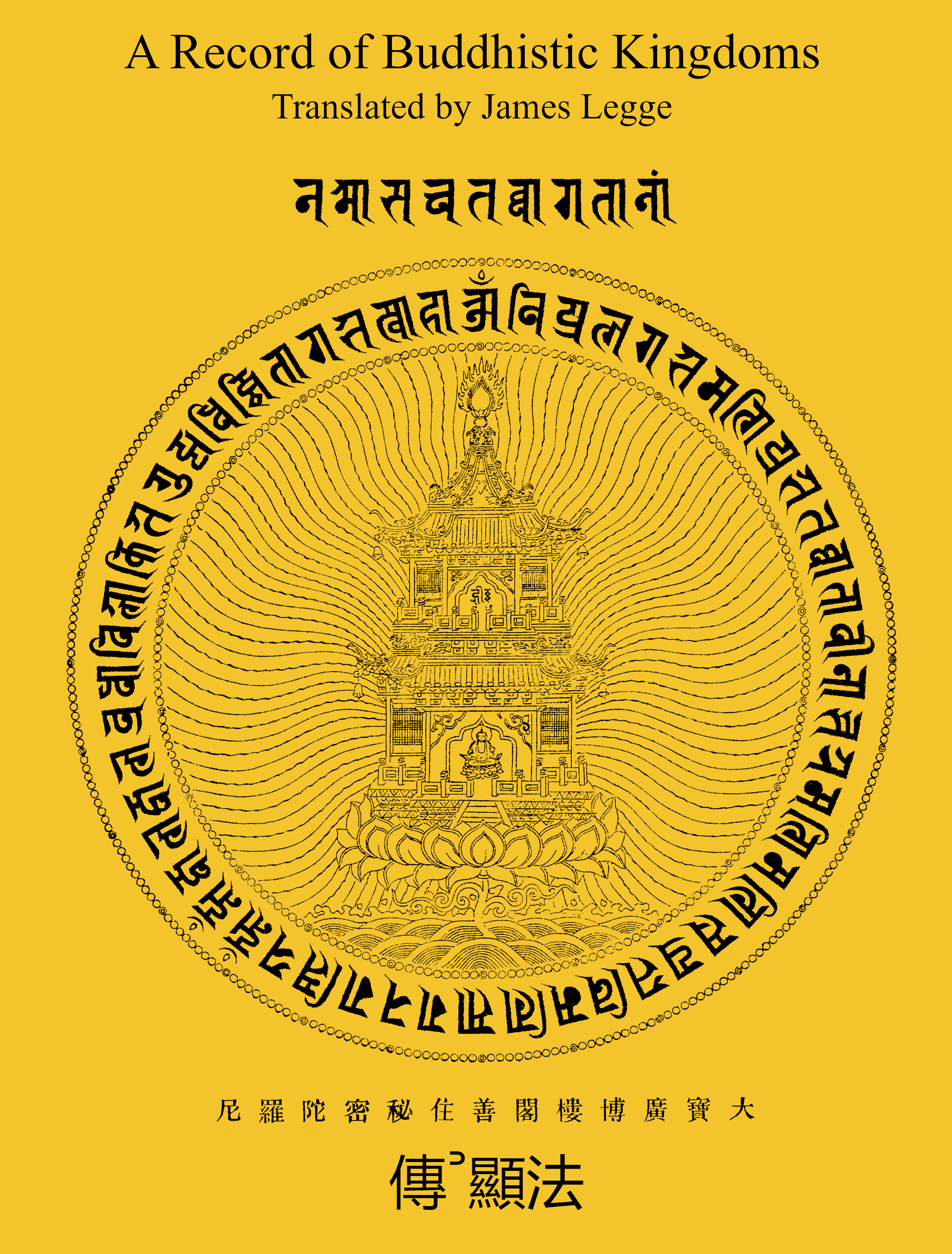
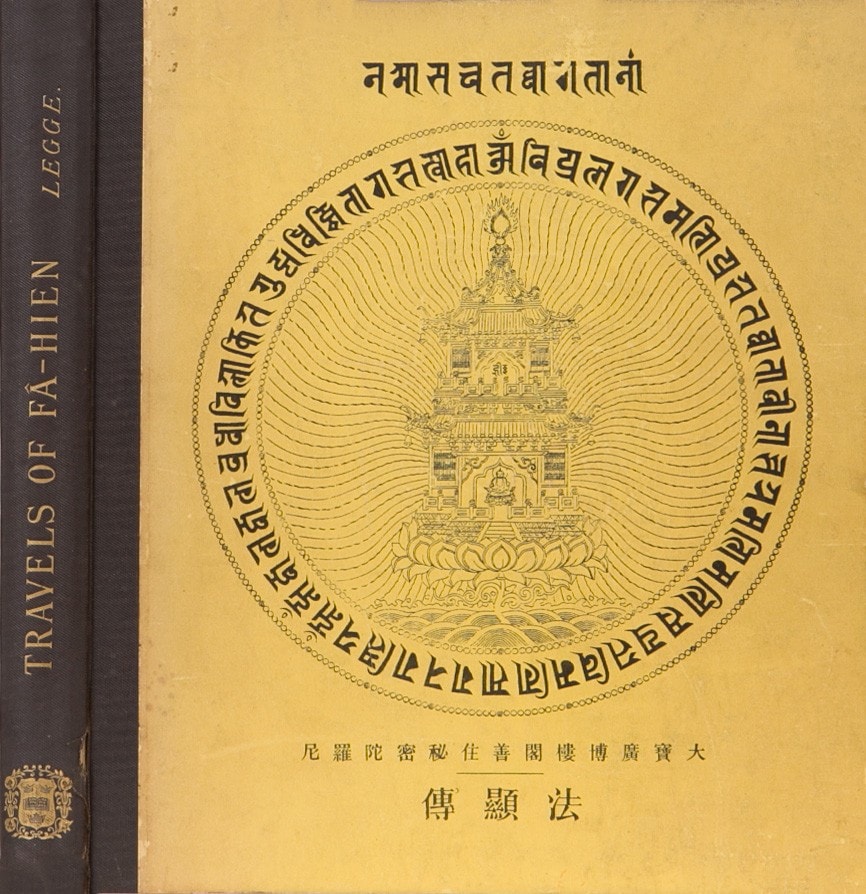
A Record of Buddhistic Kingdoms: Being an Account by the Chinese Monk Fa-Hsien of Travels in India and Ceylon (A.D. 399-414) in Search of the Buddhist Books of Discipline
1877
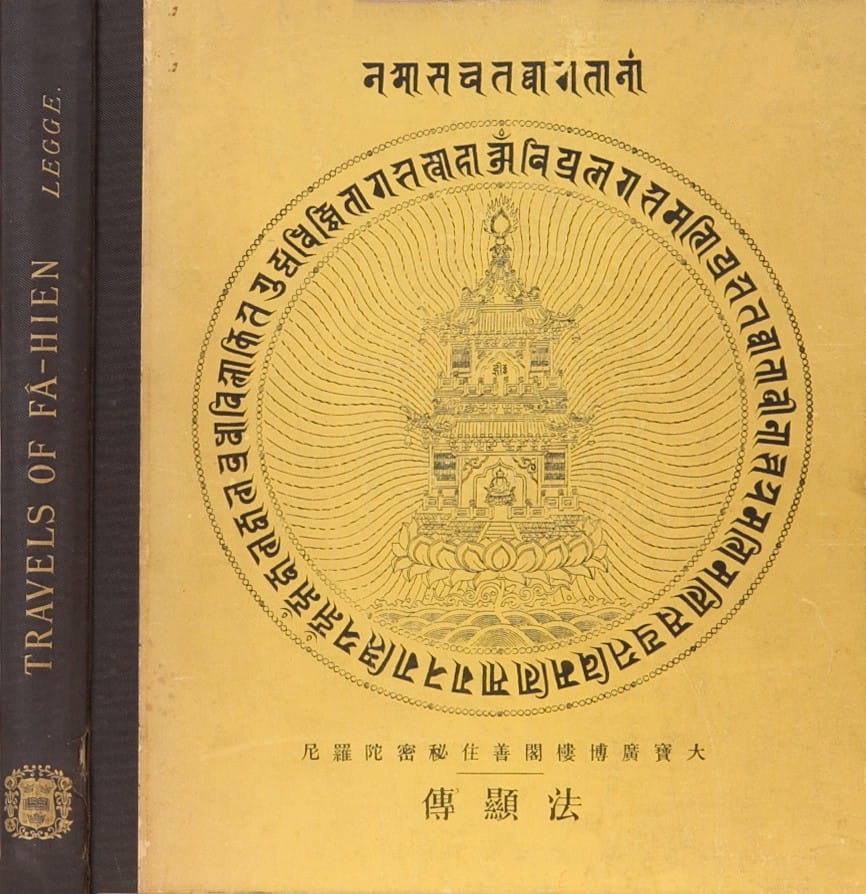
A Record of Buddhistic Kingdoms: Being an Account by the Chinese Monk Fa-Hsien of Travels in India and Ceylon (A.D. 399-414) in Search of the Buddhist Books of Discipline
1877
Translated by James Legge
In the year 399 AD, a Chinese monk named Faxian abandoned the comforts of his monastery and set out on an audacious fifteen-year pilgrimage across Central Asia to India and Sri Lanka. His singular mission: to locate complete copies of the Buddhist Vinaya, the sacred Books of Discipline that governed monastic life, texts that had become corrupted or lost in China. What he found instead was a civilization. Faxian's account stands as one of the oldest and most remarkable travel narratives in world literature. Traversing the Gobi Desert, scaling the deadly passes of the Hindu Kush, and sailing the pirate-infested waters to Sri Lanka, he documents with clear-eyed precision the Buddhist kingdoms of ancient India: their grand stupas, their tens of thousands of monks, their kings who protected the Dharma. His observations remain invaluable, offering a rare firsthand account of a civilization at its height, decades before the Gupta empire's decline. This is travel writing as spiritual quest, history as lived experience. For anyone drawn to the early spread of Buddhism, to ancient world geography, or to the extraordinary lengths humans will go in pursuit of sacred knowledge.
Editions

X-Ray
“Fifty le east from the city was a garden, named Lumbini,(17) where the queen entered the pond and bathed. Having come forth from the pond on the northern bank, after (walking) twenty paces, she lifted up her hand, laid hold of a branch of a tree, and, with her face to the east, gave birth to the heir-apparent.(18) When he fell to the ground, he (immediately) walked seven paces.””
— Faxian
“There are four places of regular and fixed occurrence (in the history of) all Buddhas:--first, the place where they attained to perfect Wisdom (and became Buddha); second, the place where they turned the wheel of the Law;(20) third, the place where they preached the Law, discoursed of righteousness, and discomfited (the advocates of) erroneous doctrines; and fourth, the place where they came down, after going up to the Trayatrimsas heaven to preach the Law for the benefit of their mothers.””
— Faxian
Link to this book
Add a free, dofollow link to Lex on your blog, forum, syllabus, or reading list.

<a href="https://lex-books.com/book/a-record-of-buddhistic-kingdoms-being-an-account-by-the-chinese-monk-fa-hsien-of-aa58a601-7dfd-4a2f-a80b-54e68388f080"><img src="https://lex-books.com/badges/read-on-lex.svg" alt="Read A Record of Buddhistic Kingdoms: Being an Account by the Chinese Monk Fa-Hsien of Travels in India and Ceylon (A.D. 399-414) in Search of the Buddhist Books of Discipline by Faxian free on Lex" width="160" height="40"></a>[](https://lex-books.com/book/a-record-of-buddhistic-kingdoms-being-an-account-by-the-chinese-monk-fa-hsien-of-aa58a601-7dfd-4a2f-a80b-54e68388f080)[url=https://lex-books.com/book/a-record-of-buddhistic-kingdoms-being-an-account-by-the-chinese-monk-fa-hsien-of-aa58a601-7dfd-4a2f-a80b-54e68388f080][img]https://lex-books.com/badges/read-on-lex.svg[/img][/url]Read A Record of Buddhistic Kingdoms: Being an Account by the Chinese Monk Fa-Hsien of Travels in India and Ceylon (A.D. 399-414) in Search of the Buddhist Books of Discipline by Faxian free on Lex: https://lex-books.com/book/a-record-of-buddhistic-kingdoms-being-an-account-by-the-chinese-monk-fa-hsien-of-aa58a601-7dfd-4a2f-a80b-54e68388f080Cite this book
Reading this edition for a paper or guide? Copy a citation.
Faxian. A Record of Buddhistic Kingdoms: Being an Account by the Chinese Monk Fa-Hsien of Travels in India and Ceylon (A.D. 399-414) in Search of the Buddhist Books of Discipline. Lex, lex-books.com/book/a-record-of-buddhistic-kingdoms-being-an-account-by-the-chinese-monk-fa-hsien-of-aa58a601-7dfd-4a2f-a80b-54e68388f080.Faxian (1877). A Record of Buddhistic Kingdoms: Being an Account by the Chinese Monk Fa-Hsien of Travels in India and Ceylon (A.D. 399-414) in Search of the Buddhist Books of Discipline. Lex. https://lex-books.com/book/a-record-of-buddhistic-kingdoms-being-an-account-by-the-chinese-monk-fa-hsien-of-aa58a601-7dfd-4a2f-a80b-54e68388f080Faxian. A Record of Buddhistic Kingdoms: Being an Account by the Chinese Monk Fa-Hsien of Travels in India and Ceylon (A.D. 399-414) in Search of the Buddhist Books of Discipline. Lex. https://lex-books.com/book/a-record-of-buddhistic-kingdoms-being-an-account-by-the-chinese-monk-fa-hsien-of-aa58a601-7dfd-4a2f-a80b-54e68388f080.