A History of Mediaeval Jewish Philosophy
A History of Mediaeval Jewish Philosophy
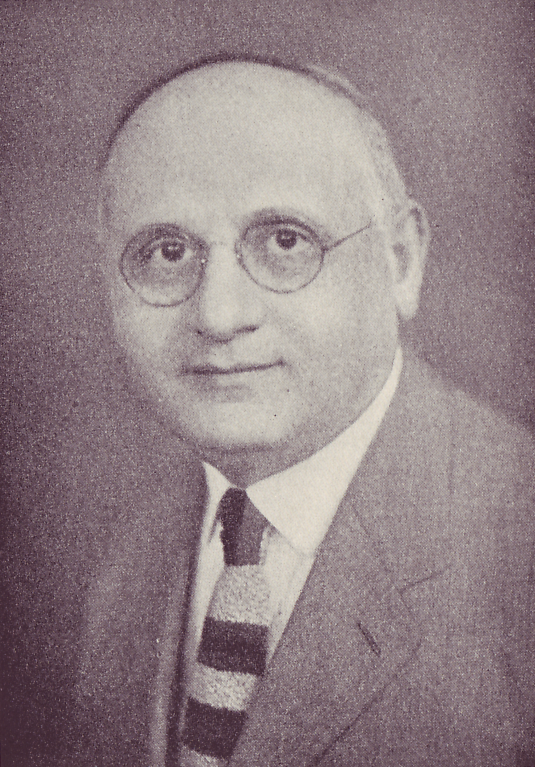
The medieval Jewish philosophers weren't just thinkers, they were radicals trying to forge a path between ancient revelation and Greek reason. Isaac Husik's landmark study traces that electrifying intellectual journey: from Saadia's bold attempt to harmonize faith with logic, through Maimonides' towering synthesis that scandalized and inspired generations, to the brilliant dissidents who followed. This is a world where every text was a battlefield, where the very soul of Judaism hung in the balance between rationalism and tradition. Husik writes with the precision of a scholar and the narrative drive of someone who understands that ideas have consequences. Whether you're encountering Ibn Daud's Aristotelian turn or Halevi's fiery counter-attack against rationalism, you feel the urgency, that these weren't abstract debates but questions that could reshape a civilization. This remains the essential English-language introduction to a tradition that shaped not only Judaism but the entire course of Western thought.
Editions
X-Ray
First Jewish philosopher of medieval period, physician and court physician to Fatimide Califs. Neo-Platonist who combined Aristotelian concepts with emanationist metaphysics.
Early Jewish philosopher and Mutazilite rationalist. Preceded Saadia and may have influenced him according to some accounts.
First major Jewish philosopher, Gaon of Sura academy. Systematically harmonized Jewish doctrine with Mutazilite rationalism in his masterwork 'Emunot ve-Deot'.
Blind Karaite philosopher and thoroughgoing Mutazilite rationalist. Gave logical priority to reason over revelation.
About A History of Mediaeval Jewish Philosophy
Chapter Summaries
- Introduction
- Establishes the historical context of medieval Jewish philosophy, explaining how Jews encountered Greek philosophy through Arabic translations and Islamic schools. Outlines the fundamental tension between revelation and reason.
- I
- Examines the first Jewish philosopher, a physician who combined Aristotelian logic with Neo-Platonic metaphysics. Israeli developed an emanationist cosmology but avoided explicit Jewish theological engagement.
- II
- Introduces an early Mutazilite Jewish philosopher who may have influenced Saadia. Al Mukammas developed sophisticated theories of divine attributes and the nature of good and evil.
Key Themes
- Reason vs. Revelation
- The central challenge of reconciling rational philosophical demonstration with divine revelation. Most thinkers sought harmony, while some like Judah Halevi questioned philosophy's adequacy for religious truth.
- Creation vs. Eternity
- The crucial debate over whether the world was created in time (supporting Biblical doctrine) or existed eternally (following Aristotelian physics). This became the foundation for proving God's existence.
- Divine Unity and Attributes
- The sophisticated problem of how to ascribe qualities to God without compromising divine unity. Led to theories of negative attributes and the distinction between essential and active attributes.
Characters
- Isaac Israeli(major)
- First Jewish philosopher of medieval period, physician and court physician to Fatimide Califs. Neo-Platonist who combined Aristotelian concepts with emanationist metaphysics.
- David ben Merwan Al Mukammas(major)
- Early Jewish philosopher and Mutazilite rationalist. Preceded Saadia and may have influenced him according to some accounts.
- Saadia ben Joseph Al-Fayyumi(protagonist)
- First major Jewish philosopher, Gaon of Sura academy. Systematically harmonized Jewish doctrine with Mutazilite rationalism in his masterwork 'Emunot ve-Deot'.
- Joseph Al-Basir(major)
- Blind Karaite philosopher and thoroughgoing Mutazilite rationalist. Gave logical priority to reason over revelation.
- Jeshua ben Judah(major)
- Karaite philosopher and pupil of Joseph Al-Basir. Followed Mutazilite Kalam and atomic theory while opposing extreme occasionalism.
- Solomon Ibn Gabirol(protagonist)
- First Spanish Jewish philosopher and celebrated poet. Neo-Platonist who developed doctrine of universal matter underlying all existence except God.
Link to this book
Add a free, dofollow link to Lex on your blog, forum, syllabus, or reading list.

<a href="https://lex-books.com/book/a-history-of-mediaeval-jewish-philosophy-33ec0856-4aad-47a8-8a57-e7e4ed6b162e"><img src="https://lex-books.com/badges/read-on-lex.svg" alt="Read A History of Mediaeval Jewish Philosophy by Isaac Husik free on Lex" width="160" height="40"></a>[](https://lex-books.com/book/a-history-of-mediaeval-jewish-philosophy-33ec0856-4aad-47a8-8a57-e7e4ed6b162e)[url=https://lex-books.com/book/a-history-of-mediaeval-jewish-philosophy-33ec0856-4aad-47a8-8a57-e7e4ed6b162e][img]https://lex-books.com/badges/read-on-lex.svg[/img][/url]Read A History of Mediaeval Jewish Philosophy by Isaac Husik free on Lex: https://lex-books.com/book/a-history-of-mediaeval-jewish-philosophy-33ec0856-4aad-47a8-8a57-e7e4ed6b162eCite this book
Reading this edition for a paper or guide? Copy a citation.
Husik, Isaac. A History of Mediaeval Jewish Philosophy. Lex, lex-books.com/book/a-history-of-mediaeval-jewish-philosophy-33ec0856-4aad-47a8-8a57-e7e4ed6b162e.Husik, I. (n.d.). A History of Mediaeval Jewish Philosophy. Lex. https://lex-books.com/book/a-history-of-mediaeval-jewish-philosophy-33ec0856-4aad-47a8-8a57-e7e4ed6b162eHusik, Isaac. A History of Mediaeval Jewish Philosophy. Lex. https://lex-books.com/book/a-history-of-mediaeval-jewish-philosophy-33ec0856-4aad-47a8-8a57-e7e4ed6b162e.